

Want a video version? Here you go:
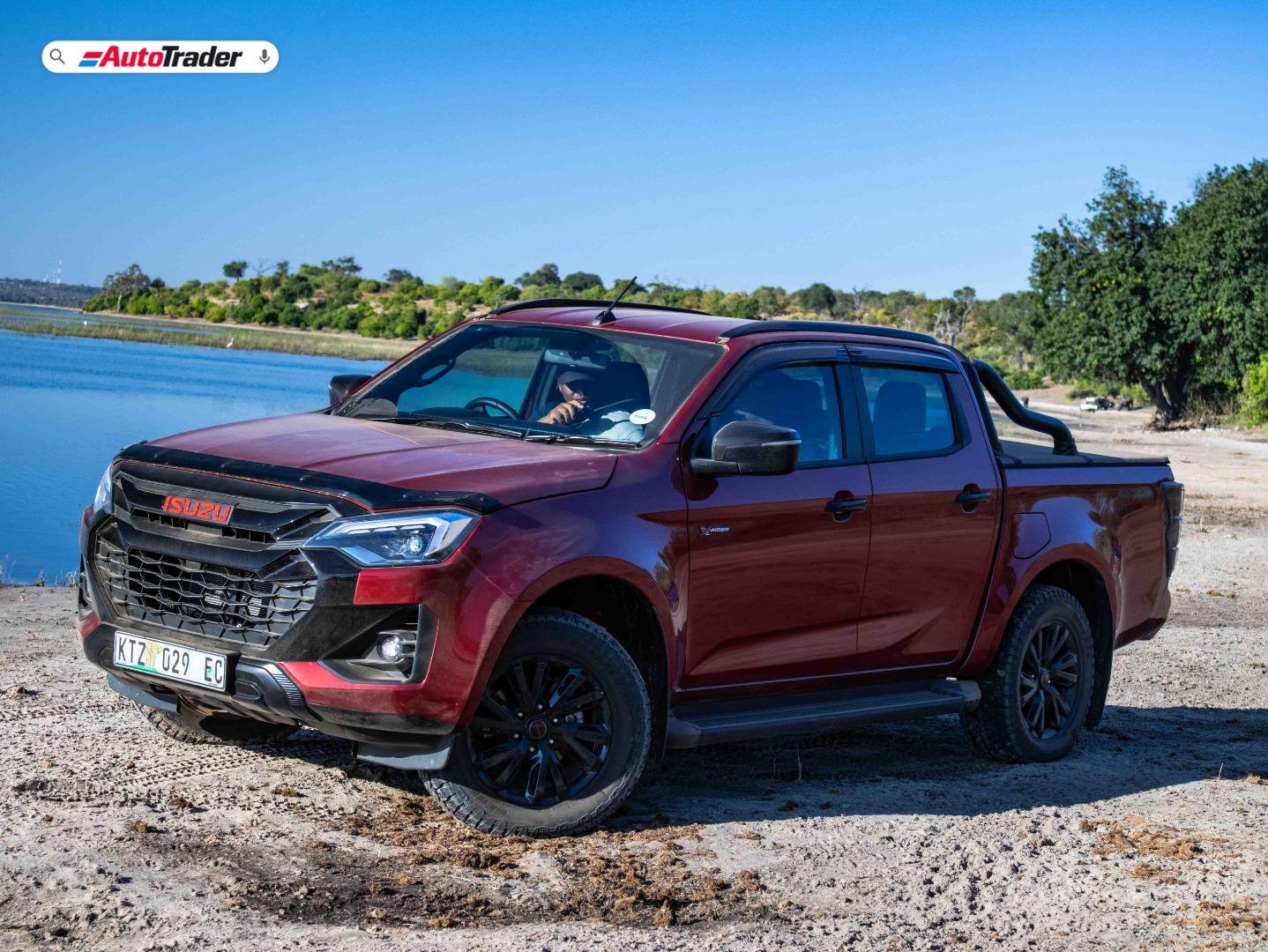
The bakkie world is going through some interesting changes, including hybrid powertrains, more potent petrol powerplants, and even EVs, but you still can get the traditional back-to-basics bakkie, and here's one of them. The updated Isuzu D-Max is still manufactured in the Eastern Cape, with significant demand.
Market demand in African markets has increased to the point where they're matching, and in some cases even overtaking, certain territories, such as Australia. In 2025 alone, Isuzu sold 26,122 vehicles in the LCV segment, including the D-Max and other commercial models, which are common sights on South African roads. Isuzu isn't planning to jump ship any time soon.
The D-Max in NAAMSA's new-car monthly sales figures has frequently ranked third in bakkie sales. Will these new updates still keep that momentum going?
We sampled the vehicle in Kasane, at the border of Botswana, with both off-road and on-road driving.

Styling
The little bits make a big impact with the updated D-Max. The most significant styling change is the front fascia, an evolution of the Isuzu Hexa Pod design language. The theme is around the hexagon shape. The updated D-Max took what was an aggressive front end on the pre-facelift and made it look cheekier. It works in the D-Max's favour; it looks good in the metal. In the rear, much remains the same, apart from adjusted badging, sharper tailgate contours, and small changes to the taillights. One significant feature is the addition of an air curtain to reduce wind noise. There are also new alloy wheel designs for you to choose from, and my favourite was the 18-inch ones found on the V-Cross.

Interior and Space
In the cabin, we have three new changes. For one, the Miura Ori pattern on the dash trim and door cards is a three-dimensional, origami-like design. Secondly, in the leather-upholstered models, a different seatback pattern. The biggest change here is the new infotainment system with touch-sensitive controls and rotary dials this time. In the entry-level models, the screen is 8 inches and touch controls are included, with a USB-C port just below these. In the higher-tier models, the screen is 9 inches, but the 2x USB-C ports are located in the centre stack, next to the 12V socket and 4x4 controls. This is a marked improvement from the pre-facelift layout. The UI is better, the controls feel more intuitive, and the rotary dials are welcome. Praise also goes to the D-Max's properly comfortable seating. Overall, the cabin feels nicely appointed.

The Drive
In the 1.9TD-equipped units, the engine has undergone extensive changes to improve power delivery while remaining the more efficient option. A new turbo, fueling, tweaking and tuning result in a much more responsive drive with a linear powerband. It's much more drivable now from our over-the-border testing, but we'll see how it fares in South African conditions. Power remains at 110 kW / 350 Nm, but the gear ratios have been adjusted to complement the changes. We felt the 6-speed automatic boxes across all available variants, and they felt compliant.
The 3.0TD remains largely unchanged, though, with 140 kW / 450 Nm to play with. It's still a very meaty power mill, but some engine computer tuning could help in the lower end of the rev range. You'll now find the 3.0TD in other variants like the X-Rider, for example. This motor can also be paired with a 6-speed manual or a 6-speed automatic, depending on the variant you choose.
Regarding the 2.2-litre turbodiesel units found in overseas markets, the unit is undergoing fuel-quality testing for the South African market, as unfortunately, South African fuel quality leaves much to be desired. It's not entirely an Isuzu thing, as this is affecting other manufacturers as well.
Other updates include a new Rough Terrain Mode for the 4x4 models, which essentially is a trick system to maximise the traction in off-road conditions. Our off-road driving stints mostly consisted of fine sand and gravel, with some descents, bumps, and yumps. Axle busting wasn't on the menu for this time, though.
As expected of Isuzu bakkies, all the models we tested off-road were composed and confident. This could also be a new-car thing, but we noticed the suspension and handling were noticeably taut, which added to the updated D-Max's overall handling. These were lovely bakkies to pilot.

Notable Safety
The updated D-Max hasn't been NCAP tested yet, but we'll show the pre-facelift ANCAP scores here:
★★★★★
Other Notable Safety Features in the D-Max range include:
- Up to 6 airbags
- Front and Rear Parking Sensors with Reverse Camera
- Hill Descent and Start Assist
- ABS, EBD, ESC
- ADAS

Pricing
| Body Style | Pricing |
| Single Cab | from R433,860 |
| Extended Cab | from R533,690 |
| Double Cab | from R574,010 |
There are 33 variants to choose from with the D-Max, from the new humble workhorse Low Rider to the snow-demolishing AT35.
All new D-Maxes come with Isuzu's 5-year/90,000km service plan and 5-year/120,000km warranty.
*Pricing stated here was correct when publishing and is subject to change without prior notice.

Competitors
- Toyota Hilux
- Ford Ranger
- Nissan Navara
- GWM P-Series
- Mitsubishi Triton
- LDV T60
- JAC T9
- Volkswagen Amarok
- Kia Tasman

The Verdict
The less-is-more approach is evident here and quite impactful. The current D-Max was already a tough and dependable bakkie. Still, the additions here make it a little sweeter while staying true to the traditional bakkie formula, with an emphasis on utility and capability rather than a luxury barge, as some competitors have moved towards. Is it enough to keep up with the times?