
New vs used Ford Transit Custom: what are the top 3 differences?
For many small businesses the purchase price of a panel van is an important consideration. There are advantages to buying used, as there are in buying new. The Ford Transit Custom (TC) excels at load carrying, with a gross payload of 1 155 kg in the Sport SWB and 1 505 kg in the 92 kW Ambiente LWB. But, what are the main differences between a brand new TC and a pre-owned specimen?


1. Warranty and service plan
The confidence and peace of mind that comes with a new vehicle’s after-sales support hold a lot of value. Ford sells the TC with a comprehensive 4-year or 120 000 km warranty, a 6-year / 90 000 km service plan, a 5-year corrosion warranty, and roadside assistance for three years.
The TC requires a service every 15 000 km. This makes the advantage to owning a nearly-new TC clear. The service plan provides six services. If you buy a TC with 30 000 km on the clock, you have another three or four services (on average) left, before the plan expires. That will give your business cash-flow some welcome breathing space.
Related: Ford Transit Custom Panel Van vs Nissan NV350 vs Hyundai H1 – here’s our winner

2. Price
You can obviously save on the purchase of a used van, but how much? These days, Ford South Africa only sells the 92 kW 2.2 TDCi LWB Ambiente 6MT (R505 100) and the 114 kW 2.2 TDCi SWB Sport 6MT (R537 600). Half a million bucks is a significant financial outlay for a small or medium-sized business. Buyers who don’t shy away from pre-owned vehicles are in luck, for there are bargains to be found.
Like most things that get around on wheels, the TC suffers fierce depreciation between registration and its first birthday. This means you can get a 2019 Transit Custom LWB with low kilometres for R100 000 less than the price of a new van. And because the country’s economy has seen better days, some Ford dealers will now sell you a new Transit Custom for around R40 000 less than the listed retail price.
Related: We compared Ford Transit Custom engines, and the efficiency crown goes to…

3. Major changes in December 2018
If you consider buying a pre-owned TC, you have to be aware of the following. This generation of the Transit arrived in South Africa in 2013, and in December 2018 it received a big facelift.
This meant a smarter appearance, better seats and lots of tech. After the upgrade, the TC could boast an enviable suite of safety equipment.
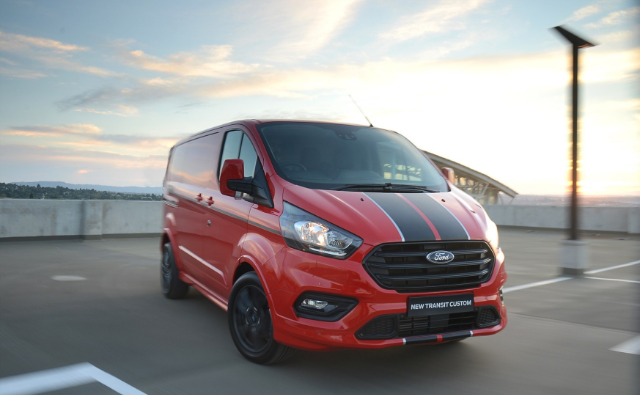
Active driving safety was enhanced with the fitment of the Electronic Stability Programme (ESP) across the range, incorporating Hill Launch Assist (HLA), Load Adaptive Control (LAC), Roll-Over Mitigation (ROM) and optional Trailer Sway Control (TSC), which is activated with the fitment of a tow bar at a Ford dealer. This was bolstered with ABS brakes that include Electronic Brakeforce Distribution (EBD).
Driver and passenger airbags are standard equipment. Parking is easy, thanks to front and rear sensors, with a parking camera display in the rear-view mirror.
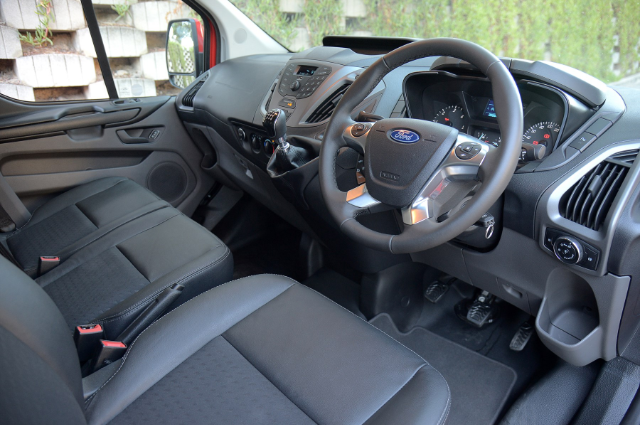
There’s remote central locking with double-locking facility, drive-away locking with crash unlocking, along with a perimeter anti-theft alarm. Cruise control with speed limiter, electric windows and steering wheel controls for the built-in audio system come standard too. It incorporates Bluetooth, USB and Aux connectivity, plus steering-mounted controls. The air-conditioner has an integrated pollen filter.
If the absence of any of these gadgets seems like a deal-breaker, make sure you buy a used TC that started work in 2019, to make sure the example you choose benefited from the facelift.
Recommended next:
Nissan NV350 vs Ford Tourneo Custom vs Hyundai H1: which one has the lowest running costs?
