
New vs old Ford Kuga: the top 4 differences
New vs old Ford Kuga: the top 4 differences


By Martin Pretorius
Ford was quite quick to hop onto the mid-sized SUV bandwagon with their first-generation Kuga, so when the second-generation model arrived in 2013, it was ready to roar right from the outset. It achieved reasonable success in a very competitive market segment, so when the time came for its mid-cycle facelift, the changes were limited to a few very specific areas. We highlight the differences between the older Kuga and the latest iteration.
1. Refreshed styling
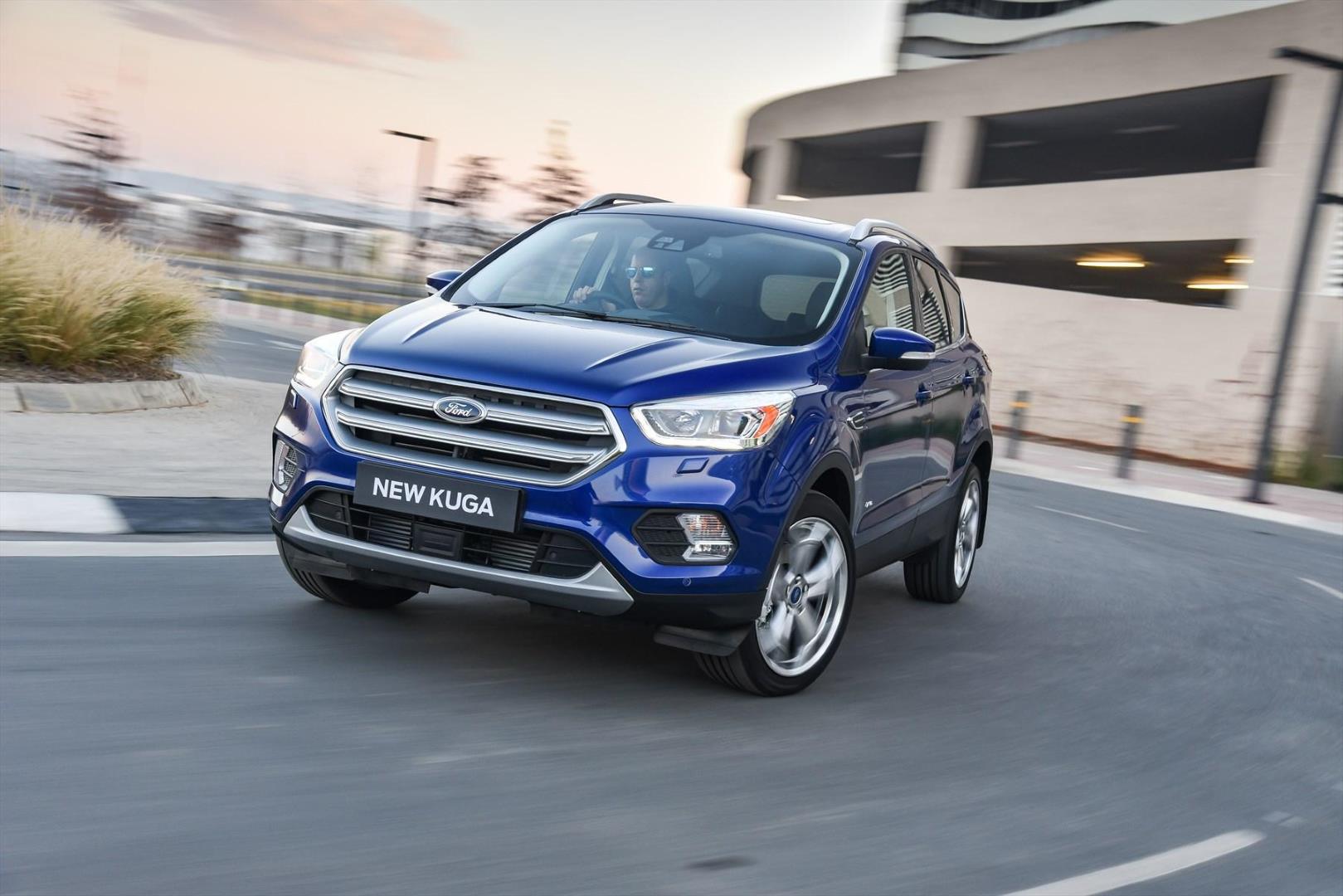
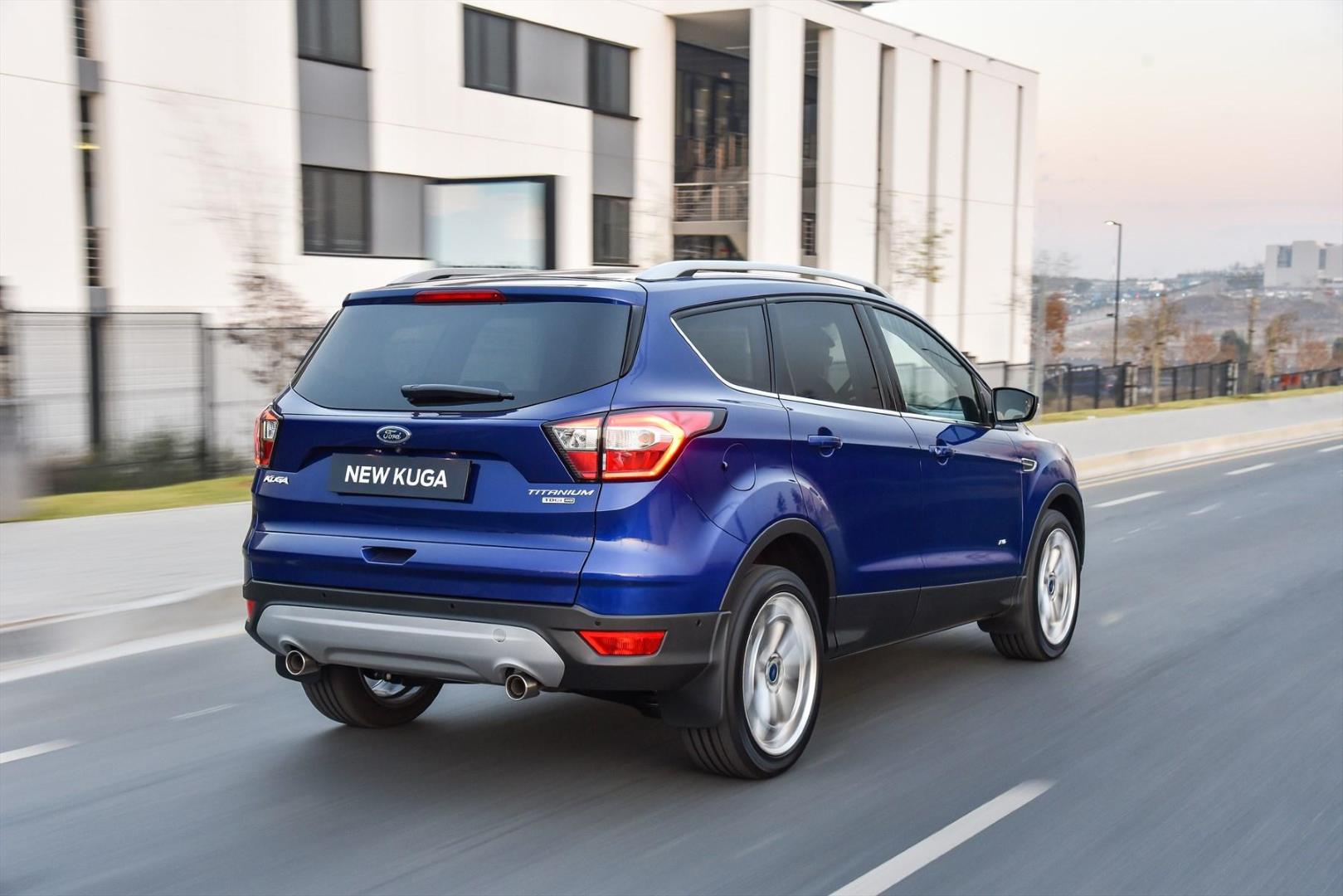
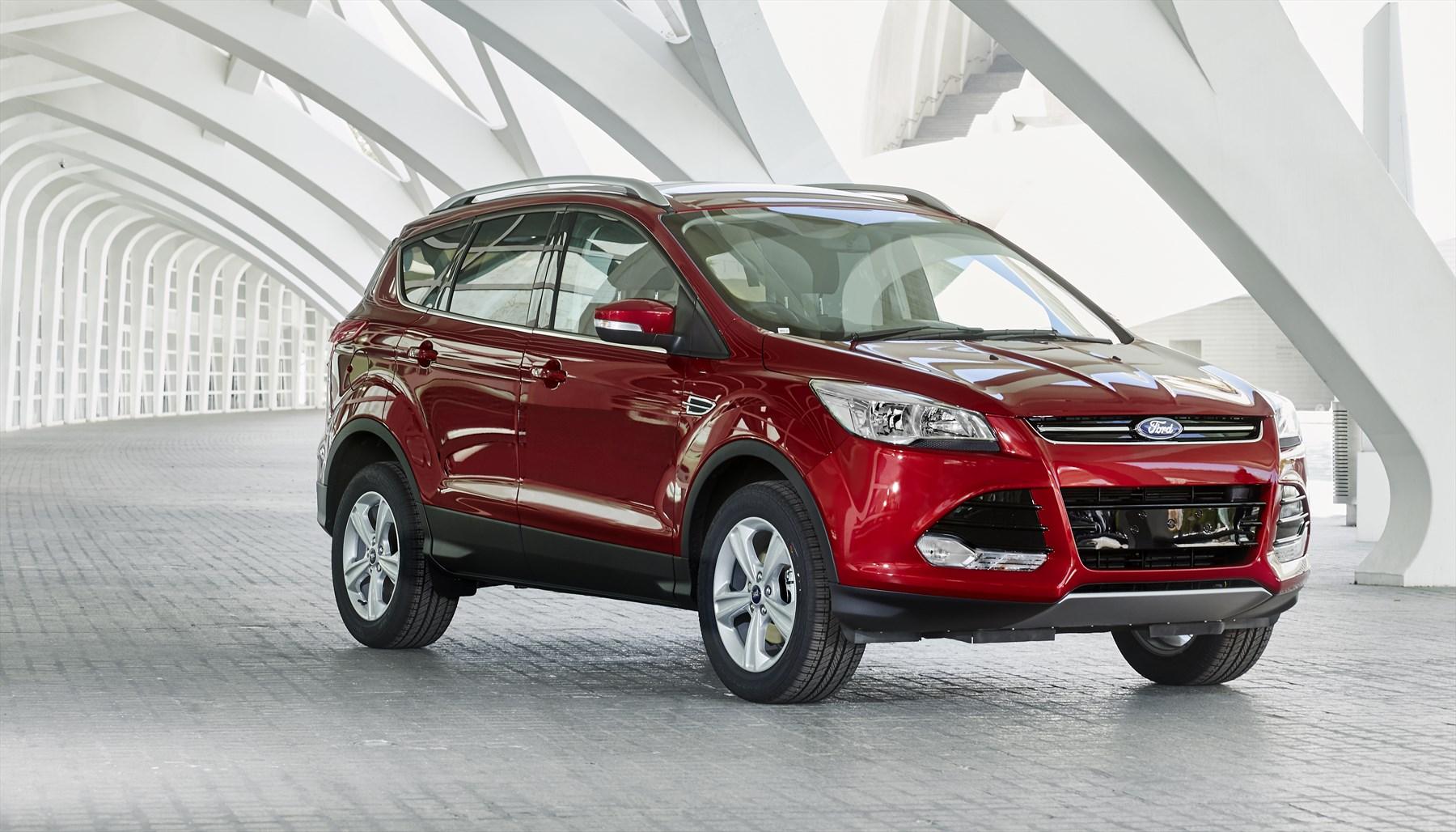
Ford’s corporate design language has evolved a bit since 2013, and this new style was applied to the Kuga as part of the facelift. The changes aren’t massive, but still enough to set the latest Kuga apart from its predecessor. Most noticeable are the new headlamps, bracketing an enlarged version of Ford’s corporate grille. The rear end also received new tail lights, and a selection of new alloy wheels (from 17- to 19-inch in size) provides further cosmetic differentiation.
2. Revised drivetrain selection and re-aligned model range
The Kuga can be had with 5 engine options, in either manual- or automatic flavors (all with 6 speeds), and with either front- or all-wheel drive. The smaller petrol engines were in fact updated early in the pre-facelift model’s lifetime, and these basic engines were carried over as they were. However, the smallest engine can no longer be paired to the AWD drivetrain – that is now exclusive to the two 2.0-litre engines, and is only available alongside two automatic gearboxes. Additionally, there's a new 1.5-litre TDCi 4-cylinder diesel with 88 kW and 270 Nm, and either a manual- or automatic gearbox.
Starting from the bottom of the range, the 1.5-litre 4-cylinder turbo petrol has two available power outputs, depending on the gearbox. Both 1.5-litre mills provide 240 Nm of torque, but produce 110 kW in manual gearbox guise, or 132 kW when paired to the automatic transmission.
The 2.0-litres come as either a turbo petrol with 177 kW and 340 Nm (using a torque-converter automatic), or in diesel form, which is good for 132 kW and 400 Nm (using a dual-clutch automatic). In addition, Ambiente-, Trend- and ST-Line trim levels are spread across the range, with entry-level Ambiente and Trend trim exclusive to the 1.5-litre variants and the 2.0-litres only coming in top-level ST-Line trim.
3. Improved infotainment
Trend- and ST-Line variants now feature Ford’s latest SYNC3 colour touchscreen infotainment system, and includes Apple CarPlay and Android Auto as standard (and optional for Ambiente trim). Navigation is optional for all SYNC3 systems as well. This represents a big forward step, compared to the antiquated system of the pre-facelift Kuga.
4. It can now park itself almost anywhere
As part of the Driver Assistance Pack, which is optional on Trend- and ST-Line derivatives, the new Kuga features enhanced self-parking abilities. While the older car could perform parallel parking manoeuvres by itself, the latest version adds perpendicular parking to its repertoire. In traditional terms, this means that it can do reverse alley docking on its own.
Additional features of the Driver Assistance Pack also include adaptive cruise control, blind spot monitoring, lane departure warning, lane keeping assistance, and low-speed automatic emergency braking. This may just be the most comprehensive semi-autonomous driving suite in the Kuga’s price bracket.
In spite of all the negative publicity which surrounded the Kuga nameplate in the wake of its recent (but resolved following a recall, according for Ford SA's statements) self-igniting issues, the revised range still offers a lot of sophisticated technology and a wide selection of optional extras to set it apart as a high-value choice in its market segment. With prices ranging from R 391 900 to R 570 900, it also covers a wide spread of budgets, so there may just be a Kuga to suit your needs and your pocket.
* Pricing was accurate at the time of writing, but may change without any prior notice.