
Mercedes-Benz Vito vs Volkswagen Kombi vs Hyundai Staria: here's our winner.
Airport shuttle services love them, and so do large families who value a modicum of comfort and can afford to pay for the privilege. But the marketplace is quite busy: The Mercedes-Benz Vito aims for an upper-class image, Volkswagen’s Kombi focuses on overall abilities, and Hyundai offers a high-value alternative. But which minibus works best as a versatile people-mover?



Get a load of this!
Apart from its obvious appeal as a cargo transporter, the boxy shape of a minibus also makes it ideal for carting people around. Our contenders are all profiled towards passenger-carrying duties, with a strong slant towards private-user appeal, rather than the public transport angle pursued at the other end of this market segment. Apart from these three contenders, the similarly-priced Kia Sedona should also be considered, as well as the latest, luxurious Toyota Quantum. Quite a busy market segment, indeed!
But there’s a 3-pointed star at play as well, and that’s the one we’ll compare to these established players from Volkswagen and Hyundai. Let’s meet the contenders!
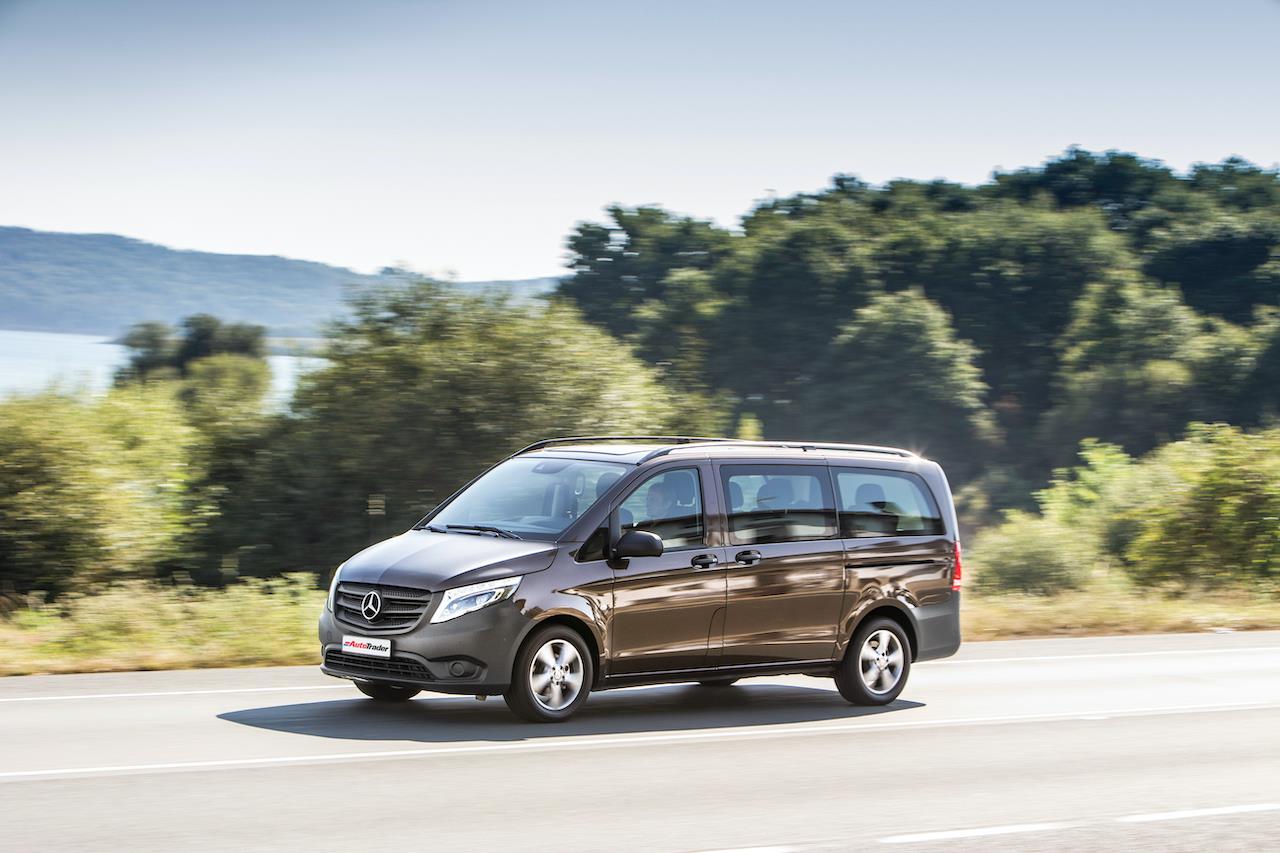
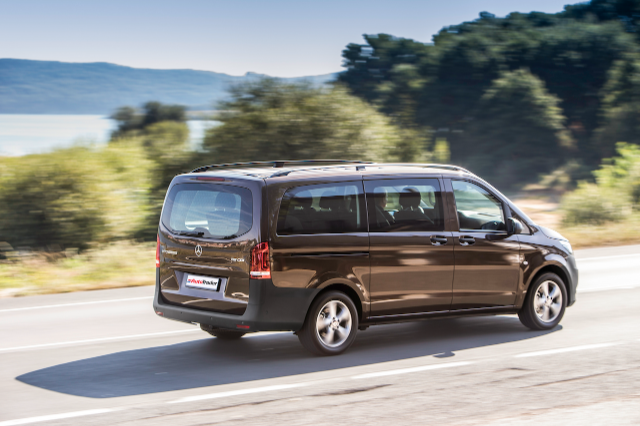
Mercedes-Benz Vito 111 CDI Tourer Pro
Related: Top 3 Mercedes-Benz V-Class articles on AutoTrader.
Engine, performance and consumption

Output-wise, there isn’t a huge lot to get excited about. Power from the Renault-sourced engine peaks at 84 kW, while maximum torque amounts to 270 Nm. Combine those numbers with a kerb weight of 1900 kg, and you end up with predictably lazy performance: 0 – 100 km/h happens in 15.1 seconds, says Mercedes, but the top speed is a surprising 169 km/h. One wonders what that acceleration time would look like with a full load of people and their chattel, though...
Fuel consumption is claimed to be stellar, with an average consumption figure of only 6.3 ℓ/100 km. It’s unlikely to do that well in real life, though, as the little engine will have to be worked quite hard to keep up with modern traffic conditions.
Standard equipment
Tourer Pro denotes the least-expensive people-mover variant in the Vito Range – the commercial vans and crew cabs are considerably less expensive, but pretty bad at family duties as well. It’s not too luxuriously equipped, though, with electric front windows, a USB/Bluetooth-compatible audio system, remote central locking and air conditioning being the main attractions.

Related: Find out more about the Mercedes-Benz Vito range here.
Safety
Safety specification is decent-ish, with stability control and ABS featuring on the list, but there are only two airbags on call, and no ISOFIX child seat anchors. We were unable to obtain crash test data for the FWD Vito derivatives (there are RWD variants in the range as well), but it should offer decent occupant protection, being a Mercedes and all.
Seating capacity
The Vito’s main downside is that it’s the contender with the fewest available seats. But, while the seating capacity amounts to only 7 seats but optionally, you can get 8 seats. `It must be noted that those 7 seats have a pretty decent amount of space available to them. The luggage compartment is impressively large as well, thanks to generous exterior proportions.

Price and value proposition
It’s pretty expensive, too: the Vito 111 CDI Tourer Pro has a list price of R 901 246 before options. Included in that price is a warranty for 2 years with no mileage limit. The service plan is optional with the Mercedes Benz ServiceCare Service Plan, with a plethora of plans available. That service plan helps to make the purchase price more palatable, but it’s still quite a lot of money for a rather basic minibus with pedestrian performance and only 7 seats.
The Competition
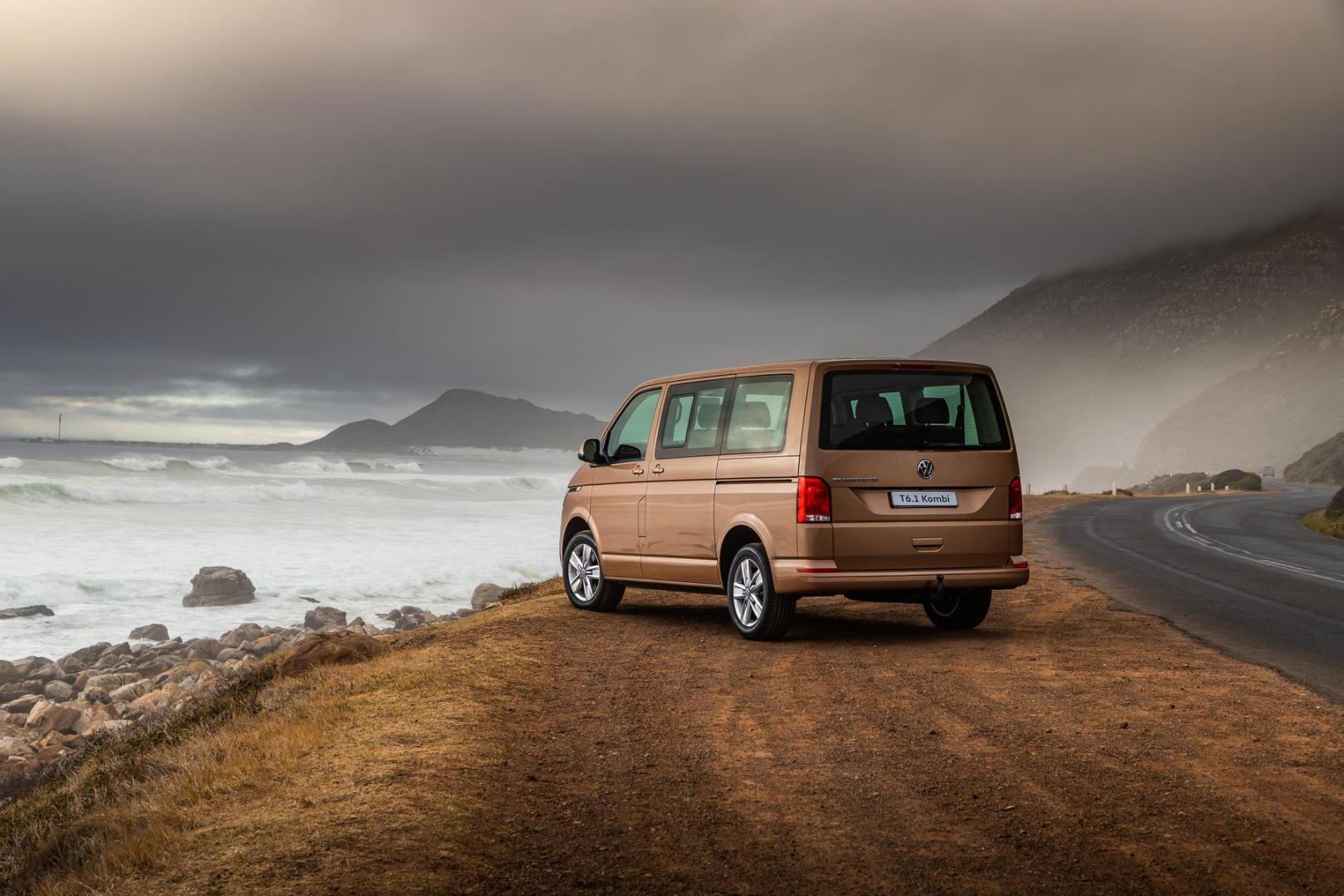
Volkswagen Kombi 2.0TDI SWB Trendline
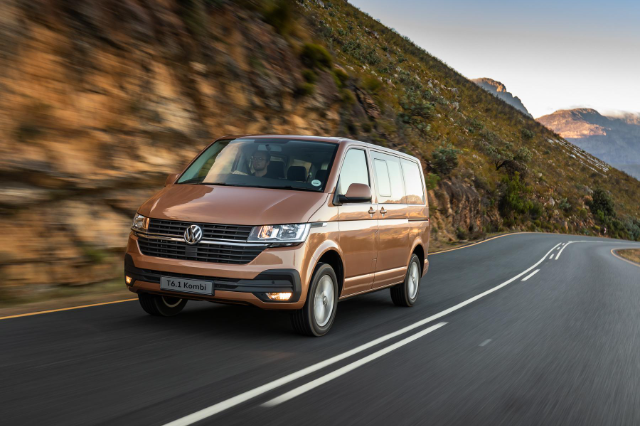
This is the least-expensive passenger van in the Kombi family, with the most basic trim level. You will get electric front windows and mirrors, air conditioning, and power steering as standard.
Safety equipment is slightly better than you’d get in the Mercedes, because it adds rear ISOFIX child seat mountings to basically the same safety spec list. Once again, there are only two airbags, but the seat count rises to 8. That’s quite remarkable for the shortest and narrowest vehicle in this group, actually.
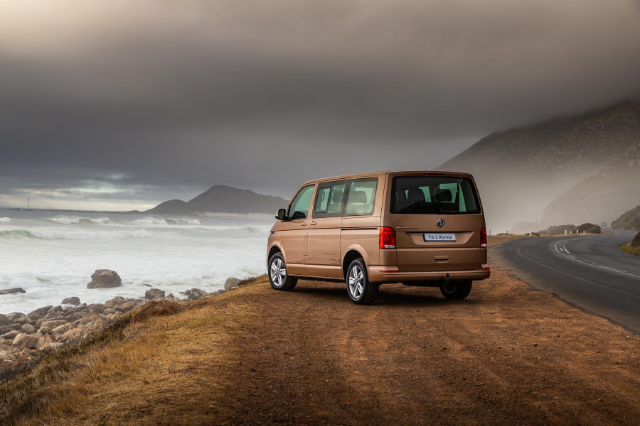
Engine-wise, there’s yet another deployment of the Volkswagen Group’s 2.0TDI engine, tuned for a modest 81 kW and 250 Nm. Power goes to the front wheels via a 5-speed manual gearbox. With slightly less power and torque than the Mercedes, along with greater weight by about 70kg, performance is just a tad slower. From a standstill, 100 km/h eventually comes up in a claimed 15.5 seconds, and the top speed is only 164 km/h. It’s not even particularly light on fuel either compared to the Vito, with a claimed average consumption of 6.9 ℓ/100 km.
There’s a lot of money to be saved by going for this Kombi instead of a Vito, though: at R 840 000, it’s more than R 61 246 less expensive than the cheapest 7-seater Vito. A warranty for 3 years or 120 000 km and a maintenance plan for 5 years or 60 000 km makes the deal even more appealing, and may just be enough to convince some buyers to rather opt for the higher-value Volkswagen. It’s the bargain in this bunch.
Hyundai Staria 2.2 D Executive
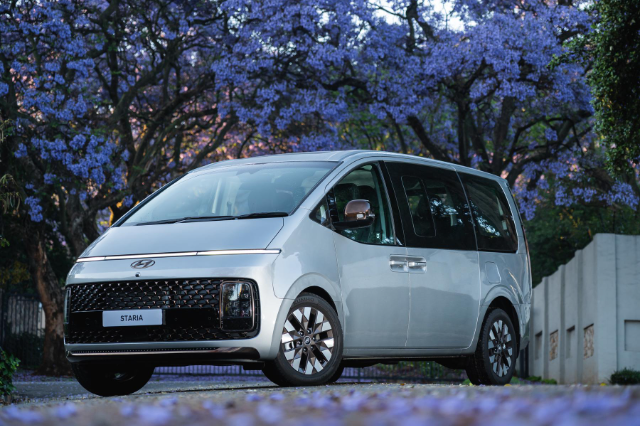
The Hyundai Staria is the spaceship replacement for the Hyundai H-1. A more interesting model name and futuristic looks compared to the H-1, the Staria steps up things by being available in up to 11 seat configurations. For this comparison, we'll use the 2.2 D Executive which has 9 seats.
Related: Everything that you need to know about the Hyundai Staria
Out of all the vans here, the Staria has the biggest engine at 2.2 litres, produces the most power at 130 kW and 430 Nm with power sent to the front wheels via an 8-speed automatic gearbox. The 0-100 km/h sprint will be done in 12.4 seconds with a top speed of 180 km/h. Unfortunately the Staria, compared to our other vans here has the highest claimed fuel consumption at at 8.7l /100km. However, the Staria is quite perky.

Safety one-ups both the Kombi and the Vito, thanks to the inclusion of 6 airbags - 2 in front, and 2 on the sides in front and 2 curtain airbags. Like the others, it also features stability control and ABS and there's ISOFIX child seat latches in the second row.
With all these advantages, the Staria Executive's price premium starts to make some sense. R 869 900 is just a slot above the Kombi's pricetag but well below the Vito's, but that relatively small price difference buys you a lot of extra toys and better performance. Add to that the easy-driving nature of an automatic gearbox, and the extra outlay suddenly really becomes worth it. As a sweetener, the Staria also comes with an outstanding warranty (5 years/150 000 km on the vehicle and an additional 2 years/50 000km powertrain warranty), as well as a service plan for 6 years or 90 000 km.
Related: Hyundai Staria 2.2D Luxury (2022) review: Back to the future
Facts and figures:
Let’s quickly recap the important numbers:
|
Mercedes-Benz Vito 111 CDI Tourer Pro |
Volkswagen Kombi 2.0TDI SWB Trendline |
Hyundai Staria Executive |
|
|
Engine size (cyl/size) |
4-cyl, 1.6-litre turbodiesel |
4-cyl, 2.0-litre turbodiesel |
4-cyl, 2.2-litre turbodiesel |
|
Power/Torque |
84 kW/270 Nm |
81 kW/250 Nm |
130 kW/430 Nm |
|
Kerb Weight |
1 900 kg |
1 976 kg |
2 200 kg |
|
Length (mm) |
5 140 |
5 006 |
5 253 |
|
Airbag count |
2 |
2 |
6 |
|
Seat count |
7 (Opt 8) |
8 |
9 |
|
Top Speed (km/h) * |
169 |
164 |
180 |
|
Ave Consumption * |
6.3 ℓ/100 km |
6.9 ℓ/100 km |
8.7 ℓ/100 km |
|
Warranty |
2 yr/Unlimited km |
3 yr/120 000 km |
5 yr/150 000km (ad. 2 yr /50 000km powertrain warranty) |
|
Price |
R 901 246 |
R 840 000 |
R 869 900 |
* Manufacturer's official claimed figures.
Verdict

The Mercedes-Benz Vito is a fine people-moving van, with good looks, admirable fuel efficiency, and plenty of space all round. The problems only arise from its imbalance between features, performance, and price. If your prime motivation is moving plenty of family members around as cost-effectively as possible, this isn’t the solution you need. In this company, it’s out-classed on value by both opponents, and that’s a serious downside if you’re trying to get the most bang for your buck.
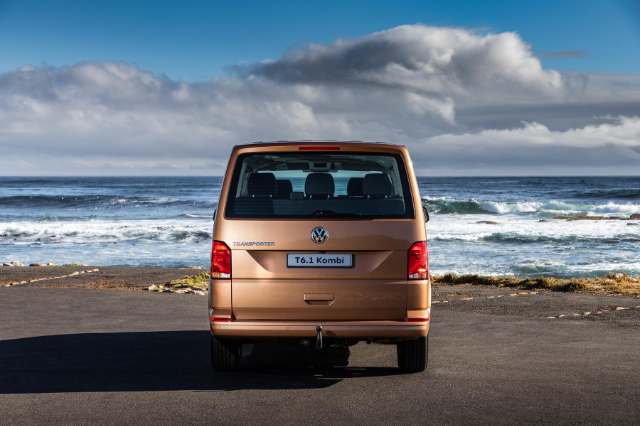
One has to admire the value proposition on offer in the Volkswagen Kombi 2.0TDI. Yes, it’s basic and pretty spartan, and it’s not quick at all, but that killer maintenance plan and significant cost saving makes it worth a second look. Putting it differently: it makes sense to buy a Kombi in this trim level, and then add some choice comfort- and appearance options, because it will still be less expensive and better value for money than the most basic Mercedes Vito bus. For this reason, it earns its second place in this comparison.
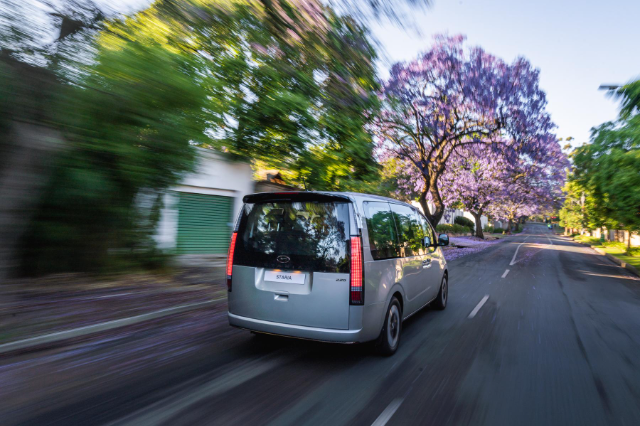
The first place just has to go to the Hyundai Staria, however. If you can afford a Vito 111 CDI bus, your budget can surely stretch just that little bit further to get a whole lot more value for your money. The Staria would be perfect for family vehicle duties, and its plush trimmings and imposing new styling would be a lot more satisfying to luxury shuttle passengers than the sparsely-trimmed Mercedes. In the end, it comes down to your budget: if you can afford the Hyundai, it will make you very happy; but if your budget only stretches to Kombi level, you’ll get great value for the bu(ck)s. But in neither scenario does a shooting star feature...
* Pricing was accurate at the time of writing, but may change without prior notice.
Recommended Next:
Shop new & used Mercedes-Benz Vito cars for sale here.
Shop new & used Volkswagen Kombi cars for sale here.
Shop new & used Hyundai H-1 cars for sale here.


