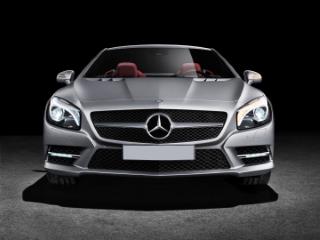
Mercedes-Benz CLA vs Audi A3 vs BMW 220i GC: which compact executive is the best value for money?
In this battle between compact executive cars, we’ll investigate the lower reaches of three premium brands’ product ranges: The fairly new Mercedes-Benz CLA takes on the equally-fresh BMW 2 Series Gran Coupé and aged Audi A3 Sedan to prove its value proposition. Read on to see which one really offers the most bang for your buck!



Compact executive cars are highly aspirational for South African buyers. They offer the status that comes with a premium brand, and are usually styled for maximum kerbside appeal as well. For this reason, mainstream brands have largely been forced to abandon this segment: if a buyer is going to shell out such a large chunk of money, it’s logical that they would want the prestige that comes with a high-end badge as well.
It's for these customers that Mercedes-Benz offers their CLA-Class with two lower-powered engines as alternatives to the more-exclusive (and much more-expensive) AMG variants, and why you can even buy an Audi A3 or a BMW 2 Series Gran Coupé with a downsized 3-cylinder power unit. Those variants certainly look the business, but there isn’t really enough appeal under the bonnet...

However, the Mercedes-Benz CLA range opens with a turbocharged 4-cylinder petrol engine, with a base price of R 665 200 before options. We’ll use this derivative (known as the CLA 200) as our baseline in this comparison, so we selected its opponents based on their similar pricetags. From the Audi’s camp, we have the A3 Sedan 40TFSI in S line guise, with BMW’s opponent coming in 218i Gran Coupé M Sport trim.
The reason for this rather disparate choice can be found in the base-trim CLA 200’s pricetag, which is quite a lot higher than the entry point of either of the other two ranges: the Audi A3 sedan opens at R 529 410, and the least-expensive BMW 2 Series GC can be had for as little as R 587 420. Consequently, we selected two petrol-powered opponents that cost closer to the Benz’s base price, even though they are both still markedly less expensive than even the most-basic CLA.

As selected, the Audi A3 40TFSI S line carries a price tag of R 621 090, and the BMW 218i GC M Sport costs R 623 120. In all fairness, Mercedes-Benz also offers an A-Class sedan with the same underpinnings at a far more palatable price, with an entry price that compares almost exactly with the list prices of these two opponents. This means that a CLA will never be a high-value choice, and instead cater for those who want a more-upscale image than the sedan can offer.
Related: Shop for new and used Mercedes-Benz CLA cars for sale here.
Facts and figures:
First, let’s look at the key numbers:
|
Mercedes-Benz CLA200 |
Audi A3 Sedan 40TFSI S line |
BMW 218i Gran Coupé M Sport |
|
|
Engine size (cyl/size) |
4-cyl, 1.3-litre turbopetrol |
4-cyl, 2.0-litre turbopetrol |
3-cyl, 1.5-litre turbopetrol |
|
Power/Torque |
120 kW/250 Nm |
140 kW/320 Nm |
103 kW/220 Nm |
|
Kerb Weight |
1 047 kg |
915 kg |
1 046 kg |
|
Length (mm) |
4 688 |
4 458 |
4 526 |
|
Airbag count |
7 (opt 9) |
7 |
6 |
|
Load Volume |
460 litres |
425 litres |
430 litres |
|
Top Speed (km/h) * |
229 |
250 |
213 |
|
0 – 100 km/h * |
8.2 seconds |
6.8 seconds |
8.7 seconds |
|
Ave Consumption * |
5.5 ℓ/100 km |
5.6 ℓ/100 km |
5.9 ℓ/100 km |
|
Price |
R 665 200 |
R 621 090 |
R 623 120 |
* Manufacturer's official claimed figures.
Prices quoted exclude optional extras, include all taxes, and were accurate at the time of writing, but may change without prior notice.
Analysis
Power, performance, and drivetrains
There are three factors in common between all three contenders: they’re all front-wheel driven, they all employ 7-speed dual-clutch gearboxes to transmit power from the engine to the wheels, and they’re all boosted by turbochargers. That is where the similarities end, however, as their engines are rather different design in all other aspects.

Our Mercedes-Benz CLA200 benchmark has the smallest engine displacement in this trio, with a 1.33-litre (Nissan/Renault-sourced) 4-cylinder turbo unit providing 120 kW and 250 Nm in this application. These outputs place it midway between these opponents, for a good balance between performance and economy. Claimed headline performance figures for the CLA200 include a 0 – 100 km/h sprint in 8.2 seconds, and a top speed of 229 km/h.
The Bavarian contender presents far less-favourable statistics, thanks to its 1.5-litre turbo 3-cylinder’s 103 kW and 220 Nm. In reality, this engine should really be compared to Audi’s “35TFSI” power plant, although even that mid-level Audi A3 sedan offers higher output figures than the smallest BMW mill could muster (and still costs less than the most-basic 218i GC variant in spite of its power advantage).

It’s clear that the BMW 218i GC turbo triple is completely outclassed by these opponents’ power units, with the Audi’s “40TFSI” engine offering the most power in this group – as it should be, considering that it has the largest displacement here. 140 kW and 320 Nm makes the A3 sedan 40TFSI S line a winner in this company, giving a claimed 0 – 100 km/h sprint in only 6.8 seconds, and a top speed of 250 km/h.
Those are some great statistics for the least-expensive car here, but value-minded buyers can save even more by forgoing the S line’s sportier body styling. In its most-basic trim, the Audi A3 sedan 40TFSI can be had for less than R 600 000, making it the definite performance bargain in its class, whatever the specification level.

Why did we select the BMW 218i GC instead of the 220i GC? Well, the least-expensive 220i GC starts at R 671 800, which makes it even more expensive than the already-pricey basic CLA200. Opting for the 220i GC will give a decent boost in power, however, and elevate the BMW to the middle performance position, between the Mercedes and the Audi.
Related: Shop for new and used Audi A3 cars for sale here.
Economy
The BMW 218i GC doesn’t only have the most leisurely performance here, but it’s also the thirstiest one in this trio. With an official claimed average consumption of 5.9 ℓ/100 km, it slots in slightly behind the second-placed Audi (at 5.6 ℓ/100 km) and first-placed Mercedes-Benz (with its claimed average of 5.5 ℓ/100 km).

These figures are all theoretical, however, because none of them will get close to their average consumption claims in the real world. Expect mid-to-high 6 ℓ/100 km average consumption from them all in mixed-cycle driving, in the hands of moderately-conservative drivers. However, using official figures as our guideline, the Mercedes-Benz CLA200 (barely) grabs first place in the fuel-economy contest.
Related: Shop for new and used BMW 2 Series Gran Coupe cars for sale here.
Practicality
This criterion delivers mixed results, because our contenders prioritise different practical aspects. The Mercedes-Benz has the largest boot, but is also the one with the least cabin space – thanks to that low-profile roofline and sloping rear end. However, partly due to it being the longest car in this group, the CLA has the largest luggage compartment here, even if that cargo hold is more difficult to access than with the others.

The BMW regains some points for a second-place finish in this department, because its boot is slightly larger than the Audi’s, even though it offers similar cabin space. That said, the Audi A3 sedan is not very far behind, but it’s not quite spacious and practical enough to end up higher than third place in the practicality stakes.
Equipment
Seeing as all three cars carry German premium badges, it should be clear in advance that the really nice toys can only be found in their option sheets. However, they all have the basic modern conveniences as standard, with power steering, air conditioning, electric windows all round, electric rear-view mirror adjustment, cruise control, touchscreen colour infotainment systems with smartphone mirroring, and remote central locking fitted to them all.

There are some curious omissions and additions in both the Audi and BMW, though. The BMW has to make do with manual air conditioning (climate control is standard in the Mercedes and Audi), yet it offers navigation as standard (the only car here to do so). In turn, the Audi cannot be ordered with blind-spot monitoring or lane keeping assistance (even as options, as the others offer), but, like the BMW, it includes split/folding rear seats as standard.
The Audi is also the only one to offer auto-dim exterior mirrors, a rather unusual feature in this class. Add to that the fact that S line trim includes a host of cosmetic upgrades, and the basic Mercedes-Benz CLA200 suddenly looks rather plain in comparison. Overall, the Audi has the longest list of standard features, and offers those in spite of the lowest base price here, earning it the first place in the equipment race.

Safety
One of the advantages of buying a premium-brand car is top-notch safety credentials. All three of these contenders scored 5 stars in Euro NCAP crash testing: the Audi A3 received that rating in 2012, while both the BMW 2 Series Gran Coupé and Mercedes-Benz CLA achieved that score in 2019. Standard safety equipment is first-rate across the board, with ISOFIX child seat anchors (rear seats only in the BMW and Benz, rear seats and passenger seat in the Audi), stability control, and automatic emergency braking fitted to them all.
The only major differences concern their airbag counts, where the Mercedes-Benz and Audi offer 7 (optionally 9 in the Benz), and the BMW has to make do with 6 airbags. This places the Mercedes-Benz in first place, followed very closely by the Audi in second, and the BMW slotting into a still-honourable third place.

Aftersales support
The aftersales package forms a large part of the premium-brand ownership experience, especially for first owners (those who buy these cars new). None of them have earth-shaking warranty cover, especially when compared to mainstream Korean manufacturers. The Audi fares worst here, with a warranty for only 1 year but with no mileage limit, while the others have warranties for 2 years with no distance limitations.
However, they feature excellent maintenance plans, with full cover for 5 years or 100 000 km in all three cases. This should provide plenty of peace of mind, whichever car is selected. The Audi’s skimpy warranty nets it a second-place finish here, with the BMW and Mercedes-Benz sharing first position in this department.

Verdict
The odd one out in this comparison has to be the BMW 218i Gran Coupé M Sport, so it is also to be the first to fall. It has the laziest performance in this group, consumes the most fuel, and, standard navigation apart, has the lowest level of standard equipment. Adding insult to injury, it’s also more expensive than the Audi A3, and doesn’t achieve top scores in any department apart from its warranty. Value for money certainly isn’t the 2 Series Gran Coupé’s strong suit, and it ends up in third place here.

In contrast, the Mercedes-Benz CLA200 offers a well-rounded package with many strong attributes. Its only real downside is its pricetag, with a bare-bones (non-AMG Line) CLA200 costing a good bit more than either of the other two. It’s more appealing than the BMW 218i GC, sure, but it still doesn’t offer as much for its steep asking price as you’d get in the (cheapest here) Audi A3 sedan 40TFSI S line.

It's actually remarkable that a car in its run-out phase still manages to snatch the first place among such distinguished (and much newer) opponents. This just proves how far ahead of its opposition the third-generation Audi A3 has always been, and the upcoming fourth-generation model shows all the promise of keeping up this tradition. It might be the oldest car here, but it’s also the quickest and has the most standard equipment, yet it carries the lightest price tag. That makes it the value winner in this trio.