
Which Mercedes-Benz CLA is better: diesel or petrol?
The Mercedes-Benz CLA isn’t exactly a mass-market car, seeing as this model is focused on a very small market niche. Discounting the two wild (and very impressive) AMG derivatives, buyers can also select non-AMG CLAs with a choice of two engines – one fuelled by petrol, and the other by diesel. Which one suits this small luxury car best?

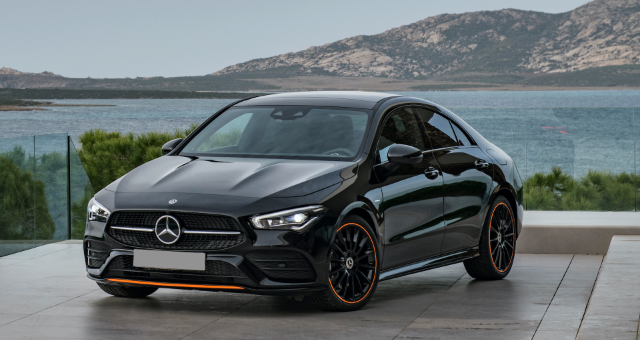
The current crop of entry-level Mercedes-Benzes are very impressive cars in almost all respects. Whether it’s the basic A-Class hatchback or sedan, the GLA crossover, the B-Class people mover, or the CLA “four-door coupé”, they’re all endowed with cutting-edge drivetrains, very nice new interiors, plenty of technology, and thoroughly developed driving dynamics.
Related: The top 3 things you need to know about the Mercedes-Benz CLA-Class.

Seeing as the CLA appeals to a very specialised market segment, the basic model range consists of one petrol- and one diesel engine, both paired to a 7-speed dual-clutch automatic and front-wheel drive. Before we decide which one is better, let’s first look at the relevant statistics.
|
|
||
|
Engine Type |
1.3-litre, 4-cylinder, turbo petrol |
2.0-litre, 4-cylinder, turbo diesel |
|
Power/Torque |
120 kW/250 Nm |
140 kW/400 Nm |
|
Performance Data * |
0-100 km/h in 8.2s, 229 km/h |
0-100 km/h in 7.1s, 244 km/h |
|
Fuel Consumption * |
5.5 ℓ/100 km |
4.4 ℓ/100 km |
|
Price ** |
R 665 200 |
R 713 240 |
* Manufacturer’s claimed figures for performance and average fuel consumption.
** Base trim prices; accurate at the time of writing, but may change without prior notice.
Related: Top 3 Mercedes-Benz CLA trims head to head – here’s our winner.
Which engine is right for you?
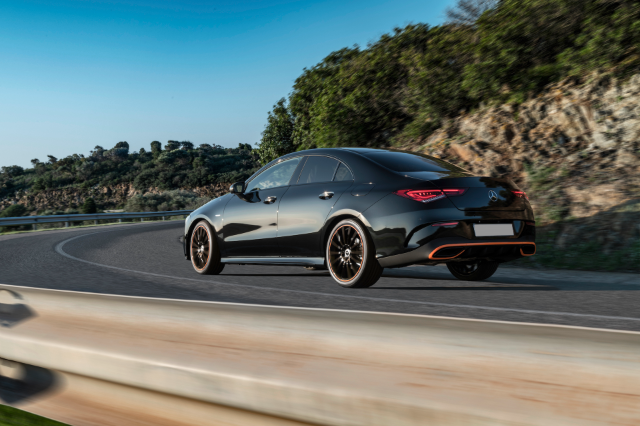
We’re well-acquainted with the 1.3-litre turbo engine employed in the least-expensive CLA200, because it also powers the base-trim A-Class and B-Class variants with reasonable conviction. And, in spite of the CLA’s weight disadvantage (compared to an A-Class), it does a decent job in the entry-level CLA too.
Key figures are a 0 – 100 km/h dash in a claimed 8.2 seconds, and a top speed of 229 km/h (largely on account of a very slippery body). Aerodynamic efficiency (along with the downsized engine and multitude of gear ratios) also helps with fuel consumption, because the CLA200 manages to post a commendable claimed average consumption figure of only 5.5 ℓ/100 km.
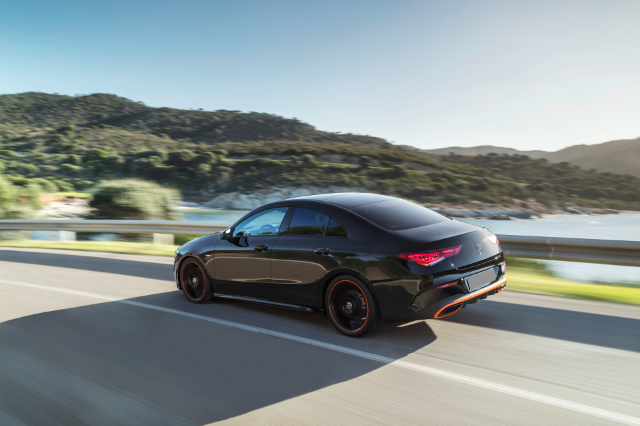
The CLA220d trounces the CLA200 in every metric except price, however. It has a 20 kW and 150 Nm output advantage, giving stronger performance and even better fuel efficiency. This larger engine’s peak outputs of 140 kW and 400 Nm drops the 0 – 100 km/h sprint to a claimed 7.1 seconds and gives rise to a scarcely-believable claimed maximum speed of 244 km/h. In addition, it has decidedly lower fuel consumption, with a claimed average figure of only 4.4 ℓ/100 km.
Related: Reviewing the Mercedes-Benz CLA200, we were impressed by its technology, image, and driving experience.

The Verdict
While there’s no denying the CLA200’s price advantage of almost R 50 000, the CLA220d’s much higher torque output, notable performance advantage, and improved fuel efficiency may just be enough to offset its higher pricetag. It will definitely make for a more-economical runabout, and that added torque will make overtaking and hill-climbing a breeze.
And, given the context of these cars (essentially, they are functional fashion accessories), it’s unlikely that a prospective buyer will be too concerned about value for money in any case. All these factors combine to make the diesel Mercedes-Benz CLA the clear winner in this comparison: a CLA200 will do the job, but a CLA220d will do it all quicker while stretching the distance covered between fuel stops.
Related: Running cost comparison – Mercedes-Benz CLA vs BMW 2 Series Gran Coupé vs Audi A3 Sedan.

Recommended next:
Shop for new and used Mercedes-Benz CLA-Class cars for sale here.
