
Mercedes-AMG GT vs Porsche 911 vs Aston Martin DB11: which drop-top is the best value for money?
In a market segment where an elevated pricetag can often be seen as part of a car’s appeal, these three sports cars are all perfect for capturing the affections of wealthy customers. This is a world of searing performance and thundering soundtracks, and dropping their roofs adds even more visual- and audible drama to the equation. But which one of these three soft-top seducers is the best value for money?


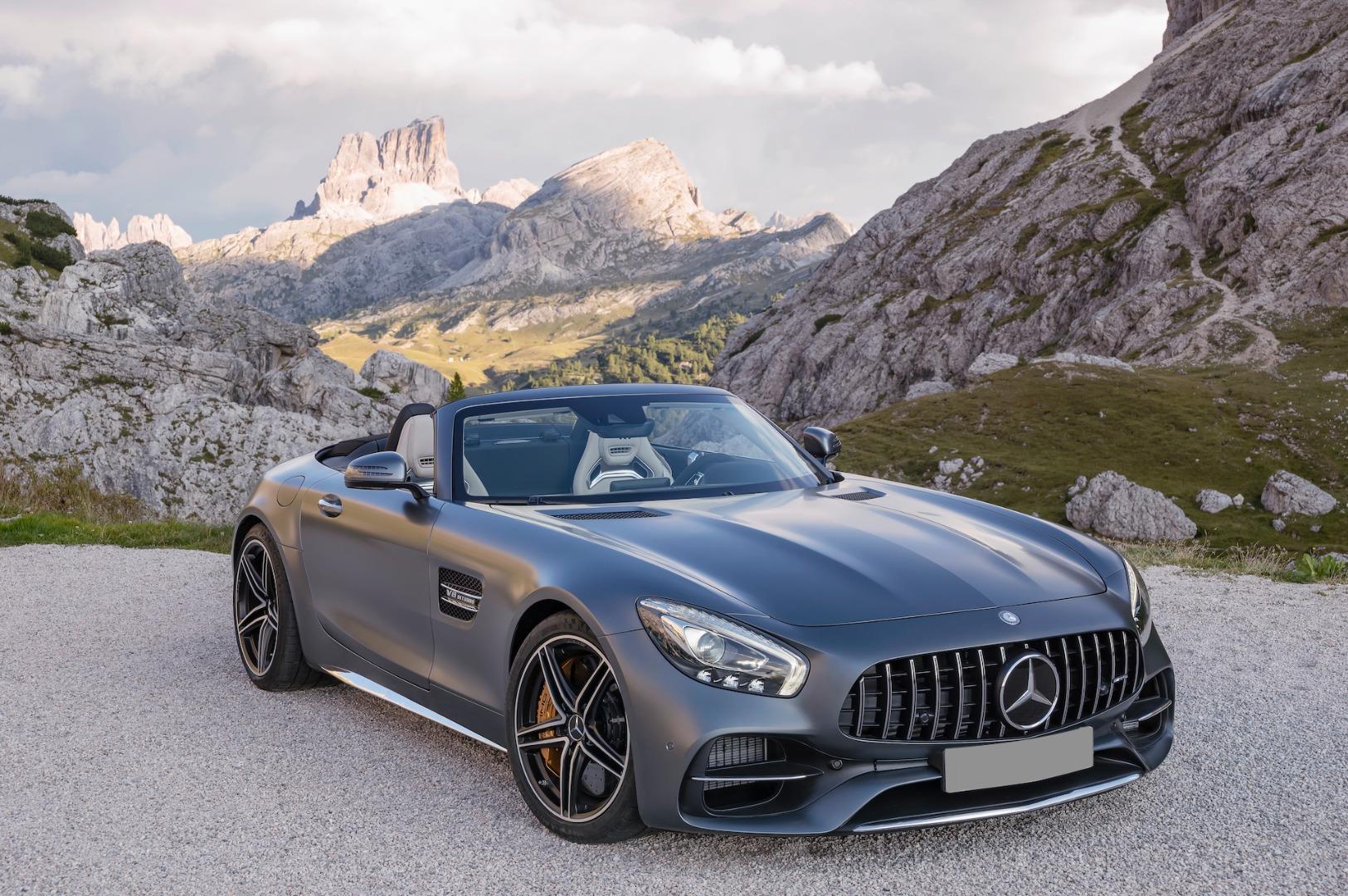
Far more than mere means of transport, these cars are as much about showcasing their driver’s personal success as they are about the driving experience on offer. Kerbside appeal is a key decider here, along with a surfeit of power, to ensure that few road-legal machines can keep up with any of them. In this context, value for money becomes subjective, and revolves around the cars’ images as well as their actual abilities.
We selected the Mercedes-AMG GT C Roadster as the baseline for this comparison, because it represents the “softest” AMG GT currently on our market (the previous entry-level GT and GT S derivatives were recently dropped from the local model range). Don’t think this means that the drop-top GT a fading wallflower, mind you – in GT C trim, it packs 410 kW (a lot more than the old GT S had), and the chassis is enhanced with a whole bunch of tricks that were never available on the older entry-level versions.

Going up against the AMG GT C, we have the perennial Porsche 911 turbo cabriolet, which promises even more power than the AMG has, along with the secure traction of full-time AWD. They are joined by the drop-dead gorgeous Aston Martin DB11 V8 Volante, which has less power than the German contenders, but compensates with an even higher-ranking badge and greater exclusivity.
Related: Aston Martin DB11 vs DB9: What are the top 3 differences?

Facts and figures:
First, let’s look at the key numbers:
|
Mercedes-AMG GT C roadster |
Aston Martin DB11 V8 Volante |
Porsche 911 turbo cabriolet |
|
|
Engine size (cyl/size) |
V8, 4.0-litre twin-turbo petrol |
V8, 4.0-litre twin-turbo petrol |
Flat-6, 3.7-litre twin-turbo petrol |
|
Power/Torque |
410 kW/681 Nm |
375 kW/675 Nm |
427 kW/750 Nm |
|
Kerb Weight |
1 735 kg |
1 870 kg |
1 700 kg (DIN) |
|
Length (mm) |
4 544 |
4 739 |
4 535 |
|
Airbag count |
7 |
8 |
6 |
|
Load Volume |
165 litres |
270 litres (roof up) |
291 litres (combined F+R) |
|
Top Speed (km/h) * |
316 |
300 |
320 |
|
Ave Consumption * |
12.5 ℓ/100 km |
9.9 ℓ/100 km |
11.3 ℓ/100 km |
|
Warranty |
2 yr/Unlimited distance |
3 yr/Unlimited distance |
2 yr/Unlimited distance |
|
Price** |
R 3 424 680 |
R 3 999 000 |
R 3 539 000 |
* Manufacturer's official claimed figures.
** Base price including VAT and CO2 tax, excluding options. Pricing was accurate at the time of writing, but may change without prior notice.
Analysis

Power, performance, and drivetrains
While these three cars are aimed at the same customers, they go about their business in quite widely divergent ways. The Aston Martin and the Mercedes-AMG is closer to each other in concept (being front-engined with rear-mounted gearboxes and RWD), and share their basic 4.0-litre V8 power units as well, albeit in different states of tune. However, the AMG employs a 7-speed dual-clutch automatic transmission instead of the Aston Martin’s 8-speed torque converter unit, making it quite a bit more aggressive when swapping cogs than its British counterpart.

The Porsche is truly the odd one out here, however. In time-honoured 911-style, its horisontally-opposed, 3.7-litre, 6-cylinder engine is mounted behind the rear axle, and its 8-speed dual-clutch automatic transmission sends power to all four wheels. AWD has been a staple of 911 turbos for more than two decades now, and played a large part in finally taming the rear-engined flag-bearer’s wayward earlier road manners.
As a result of all that traction, the Porsche 911 turbo deploys its greater power to devastating effect. 427 kW and 750 Nm sees off the next-most-powerful AMG GT C’s 381 kW and 675 Nm with ease, dispatching the 0 – 100 km/h sprint in a claimed 2.9 seconds, compared to 3.7 seconds for the GT C. The Aston Martin is the slowest car here, needing a claimed 4.0 seconds to do the same run, and gives it the lowest top speed of this group as well (see table).

At this point, it must be noted that there’s another drop-top Aston Martin on the price lists, which employs the same powertrain (albeit with slightly more torque) in a much lighter body shell to give somewhat stronger performance. The Vantage roadster is notably less-expensive than this trio, too, and will give you most of the AMG’s accelerative abilities for almost half-a-million Rand less. It’s still nowhere near potent enough to even smell the Porsche’s exhaust fumes, however...
Related: If you want the ultimate purist-focussed Porsche 911, you’ll love our GT3 RS review.

Economy
Let’s be upfront about this: none of these cars are even close to winning any fuel-efficiency awards. The flipside is that no buyer who can afford to drop upwards of R 3.4-million on a personal indulgence like any one of these cars is likely to care much about fuel costs, apart from the inconvenience of more-frequent refuelling stops.
With that said, the heaviest and least-powerful car here somehow also manages to claim the lowest fuel consumption: Aston Martin reckons that the DB11 V8 Volante should consume only 9.9 ℓ/100 km on average, beating the Porsche’s claimed 11.3 ℓ/100 km and the AMG’s claim of 12.5 ℓ/100 km quite handily. Real-world driving will however see all of them drinking to the tune of 15+ ℓ/100 km in normal use, if only for the fact that so much power is pretty addictive.
Related: What factors influence a car’s fuel efficiency?

Practicality
This trio would typically be their owners’ third- or fourth cars, used for occasional wind-in-the-hair driving fun, with cargo-carrying duties and the school run being delegated to the luxury SUV undoubtedly also in their drivers’ personal fleets. None of them are particularly practical, partly because their folding roof mechanisms take up a lot of volume behind the seats.

The Porsche comes closest to being practical, however, because it has the largest combined luggage volume here. There’s 128 litres available in its front trunk and another 163 with the rear seatbacks folded down, giving a respectable total cargo capacity of 291 litres. The Aston Martin DB11 Volante comes close with its roof erected (270 litres), but much of that disappears when the folding roof is stowed away at the top of the boot. However, the Aston Martin's rear seats could also double as a supplementary loading area. AMG doesn’t even pretend that the GT C has any practical aspirations, as is evident from its laughable 165-litre luggage compartment (without much extra space behind the seats).

The GT C is also the only two-seater here, and its very restricted in-cabin stowage space means that it will be far less useful in the daily grind as well. The four-seater Porsche and Aston Martin at least have their nominal rear seats to offer added cabin room: although those rear seats are all but useless for actual humans, they at least increase the available shelf space inside the cars.
Related: Even the older Mercedes-AMG GT S was a serious driver’s car, as revealed in this review.
Equipment and safety
At this level in the local car market, it stands to reason that all three contenders will be loaded to the gunwales with standard equipment – and yet, there are plenty of optional extras available as well. Interestingly, the Aston Martin has the highest level of standard equipment, but the shortest option list.

For instance, while the DB11 has parking sensors at both ends, supplemented by surround-view cameras, the Porsche only has a rear-view camera – and even that item is optional on the AMG. All three have cruise control, but only the Porsche and AMG offer the upgrade to make it adaptive as well.
Blind spot monitoring is likewise optional for the 911 and GT C, but isn’t even available as an option for the DB11. These are strange oversights on the Aston Martin's options sheet, but it is still the best-equipped car here before the ticking of option boxes commence - as it should be, at its price premium.

Safety credentials are strong across the board, with at least 6 airbags and the complete alphabet soup of safety assistance as standard for them all. The AMG ups the airbag count to 7, but the Aston Martin trounces them all with 8 airbags as standard. However, only the DB11 and 911 has ISOFIX child seat anchors (and then only in the front passenger seat), making the AMG the only one that clearly doesn’t cater for any inclination towards carrying youngsters.
Related: Find out everything you need to know about the Aston Martin DB11 here.

Verdict
Value for money is relative in this market realm, because cars of this calibre are always chosen for the statements they make instead of their practical attributes or standard equipment. For what it’s worth, the Mercedes-AMG GT C is the least-expensive car here (and will likely remain so even if the buyer selects some options to achieve spec parity with the others).

That’s a fair trade-off for losing those theoretical rear seats, and, while the GT C also has serious practicality shortcomings, this will probably not bother its owner in the least. It won’t be the best choice for a cross-country trip, though, simply because there’s precious little cabin- or luggage space.This is where the Porsche makes its strongest statement: not only is it only marginally more-expensive than the (base) AMG GT C, but it’s also quite a lot quicker and has the potential to carry more people and/or luggage.

But for ultimate pose value and exclusivity, the Aston Martin has to be the first choice: it has the most-prestigious brand name, comes near enough to the AMG on performance, has the longest standard kit list, and almost matches the Porsche on all-round usability. Yes, it is the most-expensive car here, but in this market segment, that may actually count as the biggest drawcard.
Related: Four Aston Martin DB11 accessories you didn’t know you needed.
Recommended Next:
Shop for new or used Mercedes-AMG GT cars for sale here.