The demise of the affordable compact and mid-size sedan is a sad one. We have, over the last decade, watched as several notable offerings have fallen by the wayside in favour of the SUV and Crossovers that have been designed to replace them. We've lost the Jetta and Passat, the Sonata and the Elantra. Many more have fallen victim, including the three cars listed here; the Mazda6, Honda Accord and Ford Fusion.
This is a pity though as these held the promise of being great cars in the years to come. Sadly, the market has dictated otherwise and now these models are relegated to the used car section of our website and car lots.
Recommended next: 6 reasons why you should buy a used Mazda6
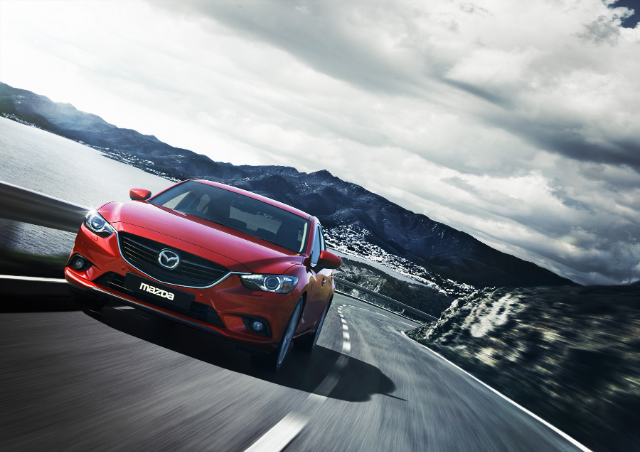
There is some good that comes from this though. The lack of demand for compact and mid-size sedans that offer compliant rides and stout engines means that the depreciation in value is passed on to the next buyer who is able to pick up a low-mileage, clean example for the same money that a new compact hatchback commands.
But before you rush out, it's worth remembering that digital technology has made many advances in the last 5-years and that the infotainment systems that you will find in these models are... well... let's put it this way; they tried hard.

Mazda6 (2014 - 2016 discontinued)
Our rating: 2/5
Individual and Atenza models topped the range in the Mazda6 with both petrol and diesel engines on offer. These models were equipped with a somewhat dated infotainment system that was sorely lacking in performance when compared to its peers. It made use of a 5.8-inch touchscreen interface with a MZD-style commander in the centre console. This, combined with the multifunction steering wheel made the bank of shortcut buttons on either side of the screen rather obsolete. The centre controller featured a rotary knob with six shortcut buttons placed around it.

The system supported AM/FM radio bands, had Bluetooth and iPod connectivity and would accept USB and CD input as well. This system was not bundled with navigation but did feature a 6-speaker audio system that sounded rather good for the time.
The menu wasn't particularly complicated when compared to its peers but as a whole, the system was slow to respond and detection of external sources could take as long as 2-minutes (USB and iPods).

Honda Accord (2014 - 2016 discontinued)
Our rating: 3/5
Executive and Exclusive models were fitted, as standard, with a fairly robust infotainment system that featured a dual-screen arrangement. While a little more commonplace nowadays, this was class-leading and revolutionary. The upper screen was a non-touch screen of 8-inches while underneath it, a smaller touchscreen offered additional options and input methods. Apart from the touch inputs, the touchscreen was flanked by two rotary knobs and two buttons nearest the driver. A CD slot with power and eject buttons could be found above the touchscreen.
The system featured AM/FM tuner functionality and would accept CD, USB, Bluetooth and Aux input with support for Apple iPods. Voice control was also included but the system was nowhere near as refined as one would have liked it to be with manual inputs proving to be faster and more intuitive.
The menu system made use of simplified icons for shortcuts, as displayed on the touchscreen section but scrolling through the upper screen functions would require one to make use of the rotary knob with a push for selection. The menu was slightly slower to respond than desirable, but still quicker than the Mazda6 system. Audio was played through a 6-speaker outfit with an integrated subwoofer.

Ford Fusion (2015 - 2017 discontinued)
Our rating: 3.5/5
The pick of the Fusion litter was undoubtedly the Titanium model. This model was not only fitted with Ford's SYNC2 infotainment system, but offered a host of safety and semi-autonomous driving features that were well ahead of its time.
The SYNC2 system employed an 8-inch touchscreen infotainment system with a full-colour display. While the resolution wasn't as high as what you will find today, this system was still more than acceptable for the time. This unit housed Sony components for audio playback from AM/FM, CD, USB, Bluetooth, SD card and even RCA for video playback from external players with stereo sound output. The photo browser allowed for personalised backgrounds to be used on the home menu.

Touch input was the primary control method and the menu system was relatively intuitive with clear icons. A few minutes is all it would take for you to be able to navigate your way through all the menus and sub-menus. A large volume knob was provided in the centre fascia, flanked by two buttons for skipping stations or tracks. This was supplemented by the multifunction steering wheel's audio controls.
Recommended next:
Mazda6 2.5 Individual Auto - Video Review
5 extras you should retrofit on a used Mazda Mazda6.
Mazda6 vs Honda Accord vs Lexus ES: which one offers the best value for money?