Land Rover Discovery Sport test drive: make sure to check these features out!
It’s been around for a few years already, but frequent updates has seen the Land Rover Discovery Sport remain fully competitive in its market segment. If you’re considering a Disco Sport as your next car, make sure to check out these features when you take one for a test drive.



While most of the updates applied to the Discovery Sport concentrated on a re-positioned model range and in-car technology improvements, its intrinsic goodness remained unaltered through the years. It’s always been a spacious family SUV, capable of carrying up to 7 people or plenty of luggage, with a selection of power units to suit a wide variety of buyers’ requirements.
It may not be quite as capable off-road as the larger (non-Sport) Discovery, but it’s certainly not a mere mall-crawler, either. All-wheel drive is standard across the range, and it can now be had with plug-in hybrid power as well. The latest round of updates include some new in-car technology features, and those are certainly worth a closer look during your test drive.
Related: Shop for new and used Land Rover Discovery Sport cars for sale here.
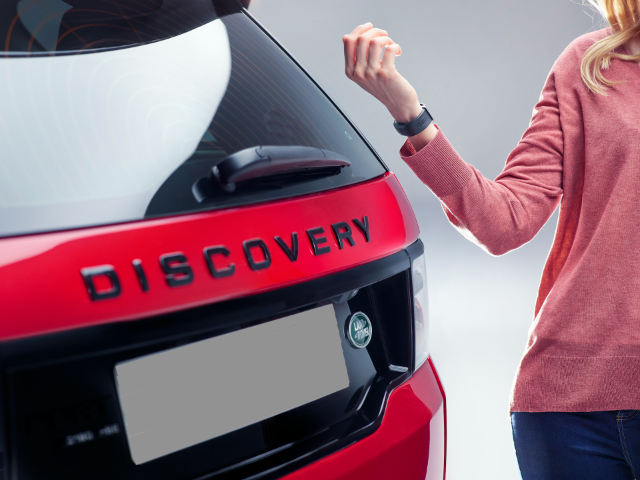
1. Second-generation Activity Key
Making its first appearance with the Jaguar F-Pace’s début, JLR’s (Jaguar Land Rover) Activity Key is one of those innovations most people never even knew they needed. Essentially a wearable, water-proof and shock-resistant keyless-entry remote for the car, the Activity Key can be used to lock/unlock and start the car, even without the actual key fob at hand.
It's a bit strange that it took development into its second generation for the Activity Key to incorporate an LCD watch, however, especially seeing as even generic-brand fitness trackers have had this function almost from the outset. Either way, it’s available now, and likely paves the way for near-field communication links between other smart watches and Land Rover products in the future.
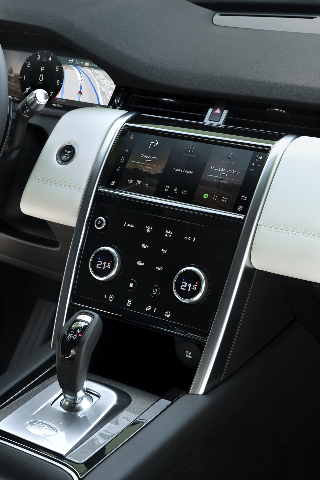
2. Pivi infotainment system
This is JLR’s latest infotainment interface, and is enabled by the new Electrical Vehicle Architecture employed in the latest Discovery Sport. It features a dedicated battery and is always connected to the internet via a dedicated data plan, enabling immediate operation upon start-up and unobtrusive over-the-air software updates in the background.
Available in standard Pivi format or as Pivi Pro with integrated navigation (depending on specification level or selected options), it can also provide a 4G Wifi hotspot to occupants, and serves as display unit for the various camera systems available across the Discovery Sport range.
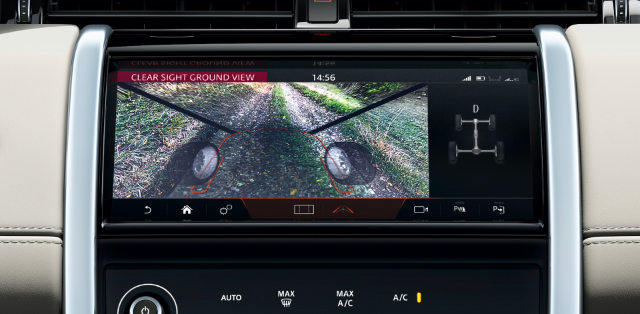
3. ClearSight Technology
First previewed as a work in progress in 2014 and then phased in across the model range, Land Rover’s ClearSight technology is now available in the Discovery Sport as well. This is quite a significant innovation, and allows drivers to see the previously-unseen.
The first (forward) component is named ClearSight Ground View, and it uses an array of front-mounted cameras to project a virtual 180-degree view beneath the front of the car onto the infotainment display screen. This effectively makes the bonnet “disappear” from view, making it easier to traverse rough terrain or those wicked kerbstones outside your favourite shopping mall.
Complementing Ground View, ClearSight Rear View offers a similar high-resolution, wide-angle view of the terrain around the rear of the car, by means of a high-res camera mounted above the rear windscreen. This boosts visibility towards the rear, even if the cabin is packed full of passengers and the boot is piled high with luggage.
The key difference between ClearSight Rear View and conventional rear-view cameras lies in the 50-degree field of view from a single camera, where normal systems either offer a much narrower view, or need multiple cameras to perform the same job. It also projects this improved rear view onto the normal rear-view mirror, making it all seem much more natural than peering at the infotainment screen to see what you’re used to seeing in the mirror.

4. Cabin air filtration
Pollen filters for cars’ ventilation systems are very common by now, but they’re largely ineffective against smaller irritants and particulates in the air. To this end, JLR (and a host of other premium manufacturers) have added an even finer filtration system to work alongside the existing cabin air ionisation technology (which itself is a fairly recent innovation in air quality control).
The combined effect of these high-tech cabin air filters gives super-fine filtration abilities down to PM2.5 – particles as small as 2.5 mm (micro-meter) can be removed from the in-cabin air. As a result, the air in a Discovery Sport will be among the cleanest you could find anywhere, keeping the smells of the world outside away from the cabin and its occupants free from sniffles and sneezes.