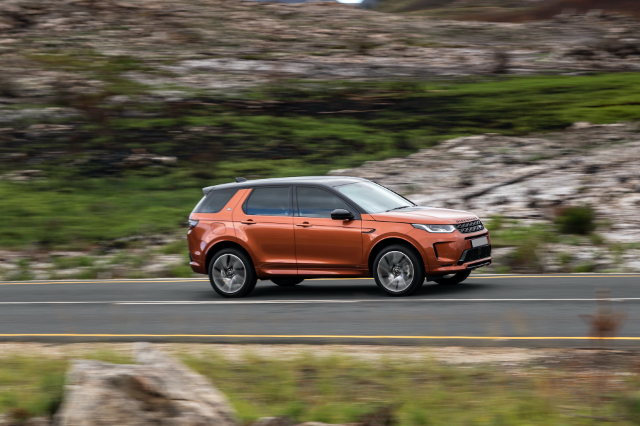
Which new Land Rover Discovery Sport is better: diesel, petrol or hybrid?
With their styling and in-car technology having been updated in 2020, the Land Rover Discovery Sport also received some under-bonnet work early in 2021. We compared the four current power units, to see which one is better.


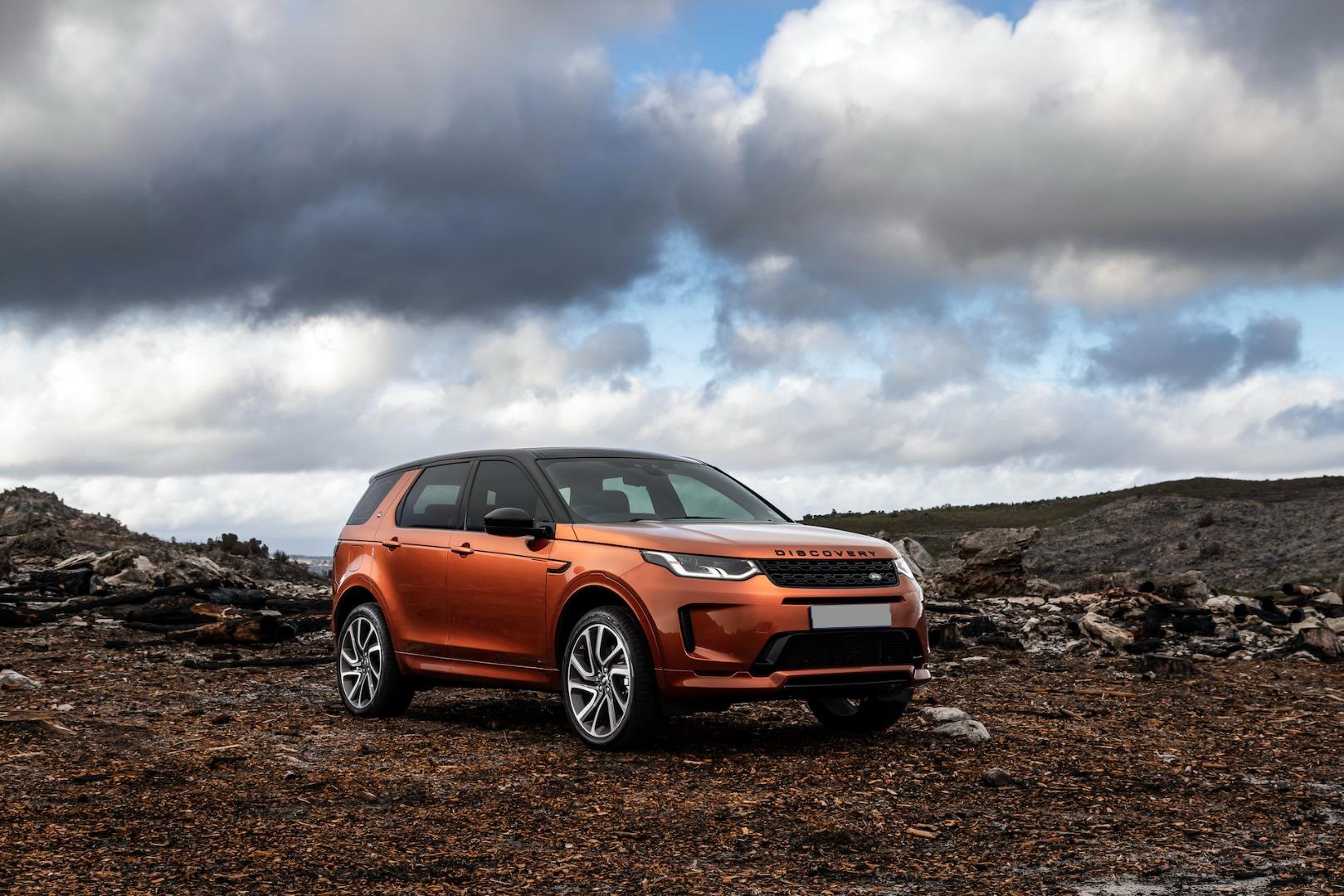
Soon after its initial arrival on local shores, the Land Rover Discovery Sport switched from Ford-based legacy engines to their in-house Ingenium family of power units, in both petrol- and diesel formats, and with various available output levels. This was later rationalised to a single petrol and a single diesel option, but the latest update saw some improvements to the diesel engine and added two new power units: a higher-powered petrol engine and a plug-in hybrid.
Related: Shop for new and used Land Rover Discovery Sport cars for sale here.

The diesel, lower-output petrol, and hybrid drivetrains are available with all trim levels (with a special edition here and there for extra spice), but the high-output petrol is only available in “R-Dynamic Black” trim – the sportiest-looking package to go with the sportiest engine option. We’ll consider the “R-Dynamic HSE” trim for the other engines, to keep their equipment levels (and comparative weight) as closely-grouped as possible.
All local Discovery Sports feature all-wheel drive and a 9-speed torque converter automatic gearbox, although different powertrain combinations (including FWD) are available in other markets.

|
|
Land Rover Discovery Sport D200 |
Land Rover Discovery Sport P250 |
Land Rover Discovery Sport P290 |
Land Rover Discovery Sport P300e |
|
Engine Type |
2.0-litre, 4-cylinder, turbo diesel |
2.0-litre, 4-cylinder, turbo petrol |
2.0-litre, 4-cylinder, turbo petrol |
1.5-litre, 3-cylinder, turbo petrol hybrid |
|
Power/Torque |
147 kW/430 Nm |
184 kW/365 Nm |
213 kW/400 Nm |
227 kW/540 Nm (combined) |
|
Performance Data * |
0-100 km/h in 8.6s, 209 km/h |
0-100 km/h in 7.8s, 225 km/h |
0-100 km/h in 7.4s, 233 km/h |
0-100 km/h in 6.6s, 209 km/h |
|
Fuel Consumption* |
6.1 ℓ/100 km |
8.1 ℓ/100 km |
8.1 ℓ/100 km |
2.1 ℓ/100 km |
|
Price ** |
From R 947 108 |
From R 983 744 |
From R 1 092 192 |
From R 1 327 100 |
* Manufacturer’s claimed figures for performance and average fuel consumption.
** Prices were accurate at the time of writing, but may change without prior notice.

Which engine is right for you?
As you’d expect, the diesel-engined Discovery Sport is claimed to use the least fuel among all the non-hybrid variants, with a significant 2.0 ℓ/100 km advantage. As an added bonus, the D200 (which replaces the old D180 version) isn’t too far from its petrol-only siblings on performance, either: less than a second separates it from the P250 in the 0 – 100 km/h sprint. The P290 is a fair bit quicker, though, and registers the best performance figures among all the non-electrified Discovery Sports.

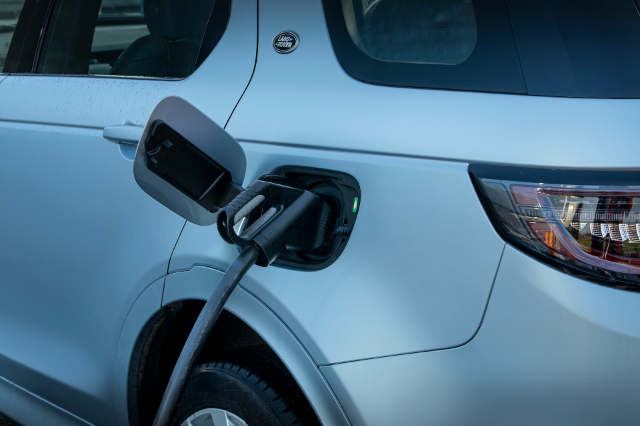
Evaluating the hybrid means changing parameters slightly, however: its claimed average consumption figure of 2.1 ℓ/100 km is commendable, but this is dependent on the vehicle’s usage pattern. Provided you can recharge it at home overnight, you can get up to 61 km of all-electric range, and thus use almost no petrol on short, low-speed commutes.
However, if you’re planning to tackle the open road, the hybrid’s advantage will disappear on account of sustained cruising not being ideal for electric powertrains. This means that, on the open road, the heavier P300e (211 kg heavier than the P290, courtesy of the electric drive add-ons) will likely consume at least the same amount of fuel as (but possibly more than) a normal, petrol-only Discovery Sport.
Related: Is the Land Rover Discovery Sport good for families?
The Verdict
For buyers who put performance first, the Discovery Sport P300e is undoubtedly the quickest variant in its range – there’s just no arguing with that instant, electrically-boosted torque when it comes to acceleration. It is unfortunately more than R 300 000 pricier than the P290 (and almost R 350 000 more expensive than a P250 in HSE trim), so that performance advantage comes with a hefty price penalty.
Choosing between the P250 and P290 is less clear-cut. While the lower-output petrol is less expensive than the P290, a case could be made that the higher-output petrol’s added power (and sportier trimmings) justifies its price premium. Seeing as their claimed fuel consumption figures are identical, we could call it a draw between the two petrol-only variants.
But the smart money will still go to the Discovery Sport D200, in whichever trim level you prefer. It’s less expensive than a P250 with the same trim, has a notable fuel efficiency advantage on the open road, and isn’t much slower in a straight line. Additionally, the D200’s extra helping of torque will make it better suited to heavy loads or towing duties. In combination, these reasons make a compelling argument for those with a longer commute or frequent cross-country trips to choose a diesel Discovery Sport over any of its stablemates.