
Kia Rio vs Mazda2 vs Opel Corsa: which one is the best value for money?
If you’re in the market for a compact hatchback, but want something that isn’t a Polo, Fiesta or Clio, there are a host of very compelling alternatives. Modern in design and fairly high on feature content, these contenders offer brand names that are somewhat out of the mainstream, and bring a touch of individuality to those who don’t want to follow the herd. We rounded up three of the best, and compared them to find out which one is the best value for money.



In this comparison, we have two contenders of Far-Eastern descent, as well as an ageing European contender. From Korea, we have the Kia Rio, here in middling-spec 1.4 LX trim, facing off against the mid-level Japanese Mazda2 1.5 Individual and the German Opel Corsa in entry-level 1.0T Enjoy specification.

Their list price variation amounts to R1 700 or less, and they’re all petrol-powered front-wheel drivers with manual gearboxes. But, even though they’re all similarly-sized and cost about the same, which one really gives you the best value for your money?

Facts and figures:
First, let’s look at the key numbers:
|
Engine size (cyl/size) |
4-cyl, 1.4-litre petrol |
4-cyl, 1.5-litre petrol |
3-cyl, 1.0-litre turbopetrol |
|
Power/Torque |
74 kW/135 Nm |
82 kW/145 Nm |
66 kW/170 Nm |
|
Kerb Weight |
1130 kg |
1050 kg |
1220 kg |
|
Length (mm) |
4 065 |
4 060 |
4 021 |
|
Boot volume (litres) |
325 |
280 |
265 |
|
Airbag count |
2 |
2 |
6 |
|
Top Speed (km/h) * |
176 |
188 |
180 |
|
Ave Consumption * |
5.8 ℓ/100 km |
5.5 ℓ/100 km |
4.6 ℓ/100 km |
|
Warranty |
5 yr/Unlimited km |
3 yr/Unlimited km |
3 yr/120 000 km |
|
Price |
R 262 995 |
R 261 700 |
R 263 000 |
* Manufacturer's official claimed figures.
Analysis
Power, performance, and drivetrains
Their pricetags might be similar, but the drivetrains in these three contenders are very different. All three of them are equipped with 6-speed manual transmissions, but the Opel brings a downsized 3-pot to a larger 4-cylinder party – albeit with the aid of turbo boost. Thanks to its forced induction, the Corsa delivers quite a lot more torque (25 Nm more than the nearest Mazda2 and 35 Nm more than the Rio), and much lower in the rev range, than its two naturally-aspirated contenders.

However, in Enjoy spec, the Opel's peak power is capped at 66 kW, instead of the 85 kW trim with which this Corsa was first launched. Both the Kia and the Mazda have significantly more top-end stamina, with 74 kW and 82 kW on offer, respectively. Combined with its lightweight construction (only 1050 kg), this power advantage hands the performance crown to the Mazda2, with the 80 kg heavier and 8 kW less powerful Rio 1.4 taking the second position on straight-line performance. In contrast, the Corsa 1.0T weighs 180 kg more than the Mazda (and 90 kg more than the Kia), which conspires with its lower peak power output to make it the slowest car of the trio.
This only tells part of the story, though. Because the Corsa’s superior torque is available from only 1800 r/min, it will be the more relaxing car in traffic, more capable of dragging heavy loads up hills, and suffer less of a power loss in Gauteng’s less-dense air. So, while it’s the slowest through the gears, the Corsa 1.0T will also be the superior load carrier, and offer stronger overtaking acceleration in top gear. Depending on the type of projected usage pattern, the Opel’s extra torque may just swing the overall performance balance its way.

Economy
It may be the heaviest and least-powerful here, but the Corsa’s little 3-cylinder engine does bring a major advantage in fuel efficiency. Its official claimed fuel consumption of only 4.6 ℓ/100 km hands it a clear win against these opponents, both of which are officially much thirstier: The Rio is claimed to average 5.8 ℓ/100 km and the Mazda2 has a claimed average figure of 5.5 ℓ/100 km, but the Rio is most likely to match its official claim on real roads.
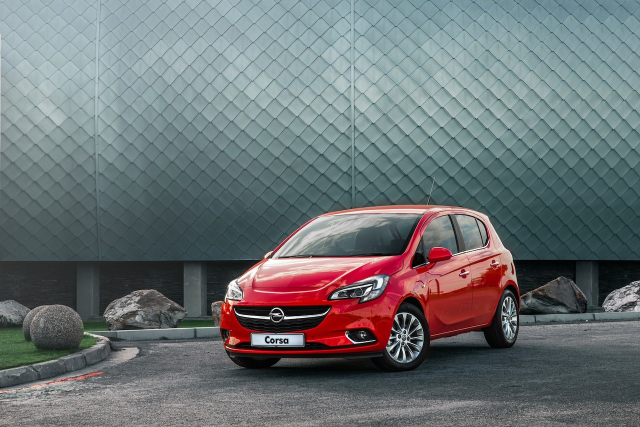
That said, none of these cars are exactly profligate drinkers, and drivers should be able to achieve low-6 ℓ/100 km average figures in real-world conditions without much effort. But the Corsa will still be the economy champ of this trio, as it’s proven to achieve low-5 ℓ/100 km overall consumption on test. It’s a win for the Corsa in this department, then, with the second- and third positions being a very close call in favour of the Mazda2 over the Rio.
Practicality
Even though it’s the heaviest car here, the Corsa is also the smallest overall, as well as the oldest, and this reflects in its packaging efficiency. It has the least interior space of this trio, as well as the smallest luggage compartment. However, Mazda also seems to struggle a bit with space utilisation, because the much newer Mazda2 barely manages to beat the Corsa’s boot space and merely matches it on rear seating room.

By contrast, the Rio has by far the largest luggage volume, and leads in terms of cabin space as well. Thank its squared-off rear end and clever packaging for all this extra space. Second position goes to the Mazda, with the Opel following closely behind in third place.
Equipment and safety
As a key factor in the value for money equation, we now have to determine which car gives you the most stuff for your hard-earned Rands. While all three cars are equipped with power steering, air conditioning, alloy wheels, and Bluetooth- and USB-compatible audio systems with steering-wheel-mounted remote controls, the rest of their spec sheets are surprisingly barren – their respective higher-trim variants have more toys, but at this price point, none of them exactly ooze luxury features.

The Opel shows a surprising omission here, with electric windows only in the front doors (all round on the others), although it does have a colour touchscreen infotainment with Apple CarPlay and Android Auto in compensation. It’s also the only car here that offers front- and rear parking sensors as options, neither of which can even be ordered for the others.
The Mazda2 ups the ante somewhat, and includes cruise control as standard, which ensures that it ends up in the first place as far as standard equipment goes. The Corsa’s IntelliLink infotainment system lifts it into the second place, while the rather basic Rio has to make do with third place. It must be noted that the up-specced Rio Tec and Mazda2 Individual Plus (the latter only available as an auto) trims adds many “big-car” features, but those derivatives are a lot more expensive, thus placing them well outside the boundaries of this comparison.

The Rio has a service plan for 4 years or 60 000 km, which betters those of the the Mazda2 (3 years with no mileage limit) and the Corsa (3 years or 60 000 km), so if frequent long trips are on the cards, the Rio's fixed-cost ownership for 4 years will undoubtedly count in its favour. It also has the strongest warranty, which helps to make peace of mind a standard feature.
In the safety stakes, the Opel walks away as the clear winner, partly because of its superior airbag count. Dual front-, side- and curtain airbags are standard on all Corsas, while the Rio needs to be upgraded to Tec trim (and the Mazda2 to Individual Plus specification) to receive the same number of airbags. And, while all three of these cars have ABS and ISOFIX rear child seat anchors, only the Corsa has stability control (no Rio has this safety feature, and only the top-trim diesel-powered Mazda2 comes so equipped).

Euro-NCAP crash testing bears this out, because all Corsas of this generation received a 4-star rating. In contrast, the Mazda2 needed a full complement of airbags (6 in total) to achieve the same result, while even the fully-specced (also with 6 airbags) Rio could only manage 3 stars. This ensures the Corsa's victory in the safety race, with the Mazda2 following in a distant second place and the Rio even further back in third.
Verdict
While we considered fairly low-end variants of these model ranges, the reality is that these cars will likely all end up on the same buyers’ shortlists, especially if they need to keep an eye on the budget as well. However, as similar as these three contenders are at first glance, they each have their own strengths and weaknesses.

Apart from its (comparatively) generous boot space and superior service plan and warranty, the Kia Rio 1.4 LX offers very little that you can’t find in its opponents: it’s a competent car with its own merits, but so are so many other alternatives. The fact that its list price is only R5 shy of the Corsa’s, in spite of its much more primitive infotainment system and dearth of safety features, only serves to relegate it to third place in this value comparison.

The Mazda2 Individual narrowly misses out on the first position, but only because of its comparatively poor standard safety specification. It is however the performance champion of this bunch, so if that’s a prime motivator in a buyer’s decision, that buyer will most likely choose the far more agile and quicker Mazda2 over any of the others.
The Corsa 1.0T Enjoy thus snatches a narrow victory over the sportier Mazda2, in spite of its more leisurely performance and smaller luggage compartment. In reality, the Corsa matches these opponents on most counts as far as standard equipment goes, but far surpasses them both on the safety front. The fact that it’s more economical merely solidifies the Opel’s value victory against these alternatives.
* Pricing was accurate at the time of writing, but may change without prior notice.
Related Reading:
For more info about the Kia Rio range, read our First Drive Impressions here.
The Kia Rio proved to be a likeable car, especially in Tec SR trim as we tested it last year.
We reviewed the Opel Corsa 1.0T Enjoy and liked it as well, although it still had 85 kW back then...
More details about Euro-NCAP safety ratings can be found on their website.