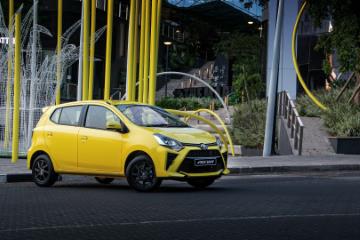
Is the Toyota Agya a good first car?
For quite a while, arguably Toyota’s most-interesting new car was to be found at the bottom of their model range. The Aygo offered quirky styling, strong safety credentials, and superb fuel efficiency, but it was also getting a bit long in the tooth after 2 generations and almost 16 years in production. Its replacement is no less quirky, but does its predecessor’s virtues for first-time buyers still apply to the newer Agya?



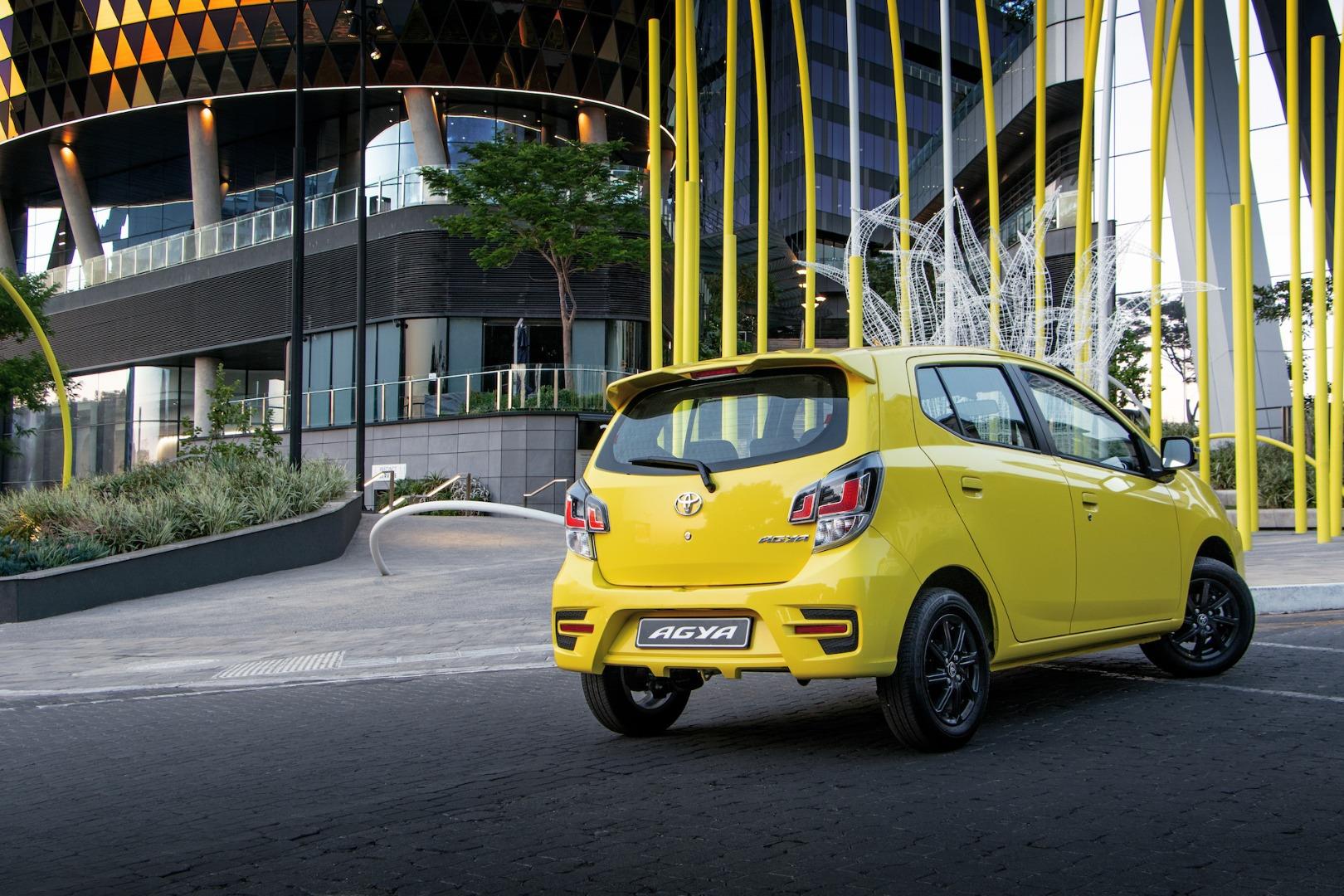
Unlike the Aygo, the Agya doesn’t have any European-branded siblings at all. While the Aygo was closely related to the Peugeot 107/108 and Citroën C1, the Agya can trace its ancestry to a Japanese-market “Kei” car. But, despite its microcar roots, the Agya is about 250 mm longer than its local predecessor (and a lot longer and wider than the Daihatsu from which it was developed).
Related: Everything you need to know about the Toyota Agya.
South Africa receives a single trim level, with the only model variations being the addition of a very basic audio system, or the substitution of the 5-speed manual gearbox for a 4-speed automatic transmission. Prices start at R 186 700 for a manual without audio, and tops out at R 205 200 for an automatic with audio.

The audio system adds R 4000 to the base price, incidentally – pretty steep when you can get a colour touchscreen unit with full smartphone mirroring on the aftermarket for less. Also remember to replace the speakers with something better, and maybe add an amplifier to get some tunes thumping, because the standard audio quality is mostly adequate for talk radio...
* Prices and specifications listed in this article were current at the time of publication, but are subject to change without prior notice.
Toyota Agya (From R 186 700)
First Car Rating: 5/5
Safety
New drivers need a car that’s easy to drive, practical, with good safety credentials and inexpensive insurance. The Agya meets all but one of these requirements almost to perfection, simply through the omission of stability control and parking sensors.
Don’t hold this against it, though: Exactly none of its price competitors have the former feature, and only the Datsun Go has rear parking sensors as standard. Consequently, we won’t penalise the Toyota Agya for these missing driver aids, and it’s not really fast enough to go out of control without considerable, deliberate driver effort anyway.

For the rest, it’s pretty much a full house of baseline modern safety kit, with ABS, 2 airbags, rear ISOFIX child seat anchors, and a 4-star ASEAN NCAP crash test rating. That last one is particularly reassuring, especially in the hands of a new driver.
Related: Get all the info about the introductory Toyota Agya line-up with this first drive report.
Space and practicality
Practicality is pretty good, given the Agya’s small size (it’s only 3.66-meters long). There’s 260-litres of boot space and enough cabin room for 4 average-sized adults.

Those occupants won’t find it stretch-out spacious by any means, but enough headroom and deep side windows (in front) means that claustrophobia should not be a problem, at least not for the front occupants. And, as per hatchback standards, the rear seat backrest fold down to increase potential cargo space.
Related: Toyota Agya test drive - be sure to check out these features!
It is very easy to drive
The Toyota Agya is really small, helping it fit into confined spaces, and it is also really easy to drive, thanks to low-effort controls and standard power steering. As an added bonus, those large front side windows and an upright profile makes the Agya easy to place on the road. The only exception here is the rear three-quarter view to the outside, where the (relatively) thick C-pillars and tapering rear side windows create some blind spots.

It even manages to project a somewhat assertive image despite its diminutive size, thanks to angry-eyed full-LED headlights and a selection of bright colours. It’s all show, though, because the Agya’s 49 kW and 89 Nm does not endow it with storming performance or high cruising speeds.
Related: Toyota Agya colours and price guide.
Low running costs
The upside to the pedestrian performance is excellent fuel efficiency. Toyota claims an average consumption of 4.8 litre/100 km, and real-world driving should return mid-5 litre/100 km without even trying to save fuel. And, because it’s rather slow, it’s also pretty inexpensive to insure – an especially important fact for young, inexperienced drivers.
Servicing and maintenance will be trouble-free, thanks to well-proven mechanicals and hundreds of Toyota dealerships spread across the country. The first 2 services are also included in the sales price (with no time limit applied), and the warranty runs for 3 years or 100 000 km.
Related: Read more about this "sophisticated starter-car" in our Toyota Agya review.

Verdict
Given the needs of a first-time car buyer, a Toyota Agya is perfect for duty as a first car. There are some provisos, though: It’s pretty useless for carrying large people or lots of luggage, and long-distance driving ability will be less than ideal. But, for a single youngster or a young couple with economical, predominantly urban driving in mind, we’d be hard-pressed to find much better for the money.