
Is the Subaru XV good for new drivers? Here’s our verdict
New drivers are often younger and rather strapped for cash, so they’ll need something affordable for their first car. But, rather than buying a new entry-level car, they might consider a nicer, larger late-model used car instead. The Subaru XV is a case in point: used examples can be had for the price of a new city car, but offer more space, ability, individuality and better safety credentials.


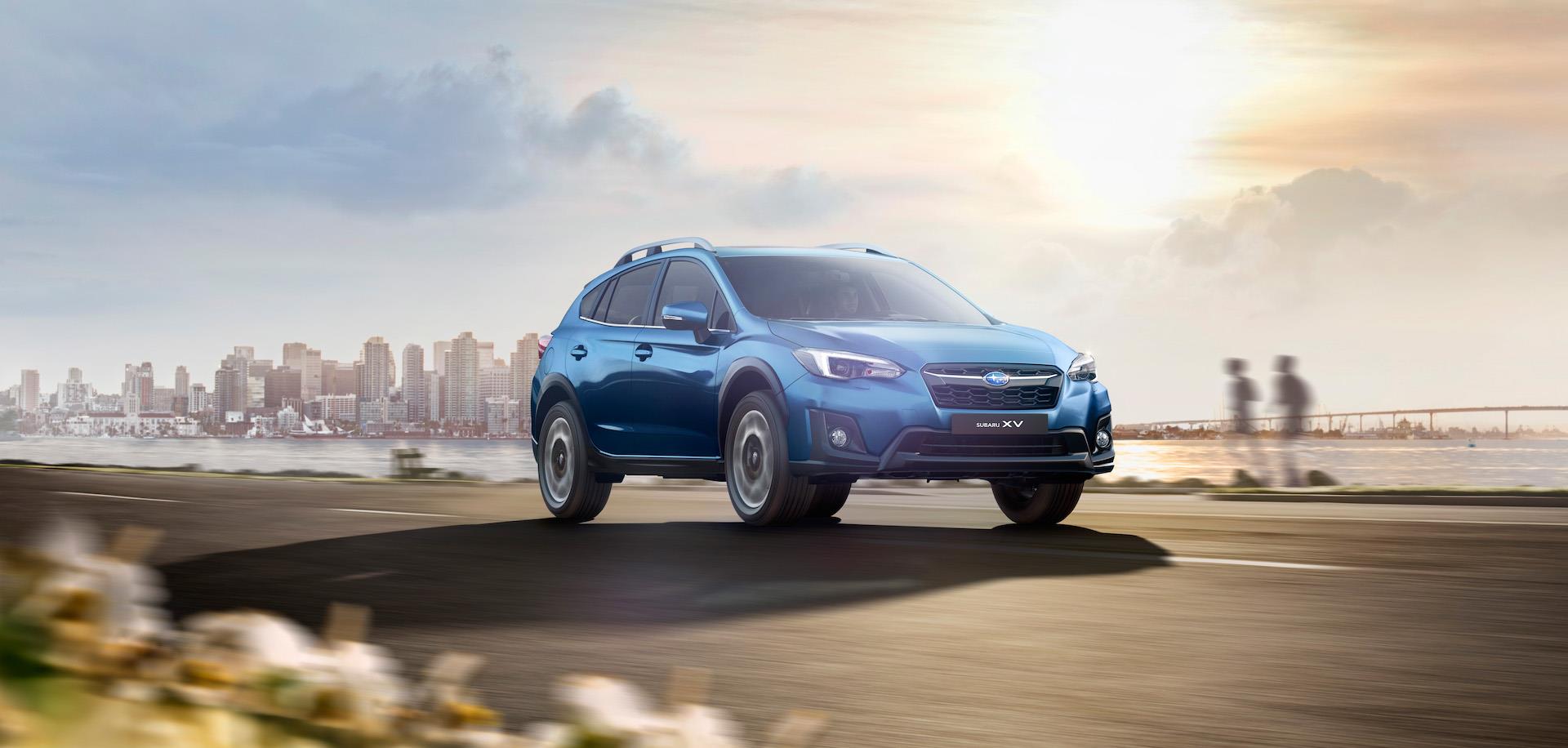
There are a number of elements which influence the suitability of a car for a new driver’s need. Firstly, it needs to be easy to operate: the inexperienced driver should not have to struggle to control the car’s motions and various driving functions. This seems like a no-brainer, but some modern cars are surprisingly difficult to operate properly.
Good sightlines and a clear idea of the car’s physical dimensions are also of paramount importance, with an elevated driver’s seating position instantly scoring points in both these respects. It also has to be safe, with very good brakes and reasonable body protection against parking miscalculations. With these factors in consideration, we take a closer look at the Subaru XV from the perspective of a new driver.

Size and space
With an overall length approaching 4.5-metres (the latest one is 10 mm longer than the first-generation model), the Subaru XV doesn’t really count as a small car, but its dimensions are still tidy enough to make it easy to pilot and to park. The upshot comes in its interior volume, which is significantly larger than the new city cars around the same price point.
Luggage space isn’t overly generous, though, with only 310-litres available in the boot. This probably isn’t the car with which to take a large family or a bunch of friends on a long road trip, although loading versatility is enhanced by the 60/40 split-folding rear seatbacks.

Safety
This is but one area where a Subaru XV is vastly superior to any new budget car – in fact, Subaru is widely regarded as the manufacturer of some of the safest cars available today. Even in base trim, the XV is loaded with 7 airbags, stability control, ABS with electronic brake-force distribution, and stellar occupant protection ratings.
The current model scored a full 5 stars in Euro NCAP crash testing, as did the first-generation model, back in its day. In reality, a used Subaru XV will offer far greater protection to its occupants than any new budget car, and that could be reason enough to buy one.
Second- (current-) generation models are also available with a host of driver aids, under the banner of “Subaru EyeSight”. This is a comprehensive suite of safety add-ons, and includes blind-spot monitoring, adaptive cruise control, lane departure warning, and automatic emergency braking, adding a further layer of guardian angels to keep a new driver safe.
Related: We put the Subaru EyeSight safety system to the test in this video review.
Ergonomics and tech
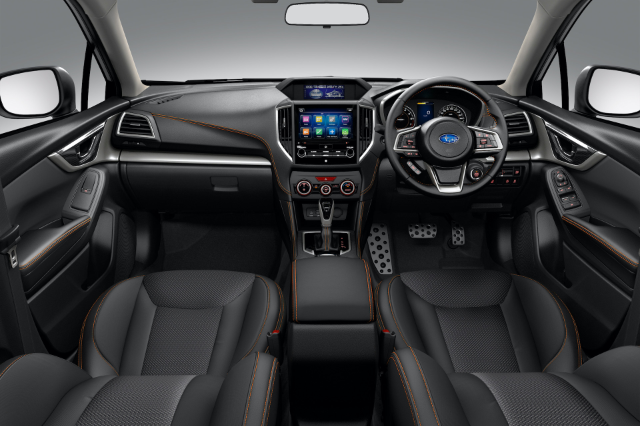
Apart from its rather limited side glass area, which leads to slightly restricted outward visibility for the driver, the Subaru XV has an elevated seating position to compensate for those broad roof pillars - specifically towards the rear. The second-generation XV addresses this issue to some degree, but older examples may take some getting used to.
The XV’s curvy body design does make it trickier to place in traffic and parking spots, however, and you’ll need to look at a higher-spec XV to get the parking sensors and rear-view camera to eliminate this drawback – these items are not standard in the base-trim XV. For the rest, the XV is really easy to operate, with intuitive main controls and easy-to-reach switchgear.

Fuel Economy
All local-market XVs employ a 2.0-litre, 4-cylinder “Boxer” engine with variable valve timing, but there is no turbo to be found anywhere in the range. But, because of its larger engine, bigger overall size, and heftier kerb weight, it stands to reason that an XV won’t be anywhere near as affordable to fuel as a similarly-priced new budget car.
First-generation XVs were claimed to consume 8.0 ℓ/100 km on average with the base 6-speed manual gearbox, while CVT-equipped versions were claimed to need 7.9 ℓ/100 km. Current-model XVs are said to require 7.3 ℓ/100 km (and can only be had with a CVT), but none of those figures are attainable in real-world driving – expect low-9 ℓ/100 km figures in mixed-cycle use with a moderately conservative driver behind the wheel.

Verdict
Apart from some concerns regarding outward visibility and fuel consumption, the Subaru XV ticks most of the boxes for new drivers. Not only is it very safe and pretty spacious, but its available technology (and current CVT-only range) makes it a low-effort car for daily driving.
Of course, maintaining and fuelling a more-complex car like an AWD Subaru counts against it, but it compensates nicely in other respects. If the new driver can afford to run it in the long term, there is no reason why a Subaru XV should not be on the shopping list.

What else is available at this price point?
For similar money to a used Subaru XV’s list price you could consider a Suzuki Swift or even a used Etios Cross. Both these alternatives will be less-expensive to run, but neither is as safe as an XV or as nice a place to spend time behind the wheel. It all comes down to running costs: if the Subaru’s operating costs are within your budget, you’ll have a much nicer car with a more-upmarket image and a better interior.


