Is it worth paying more for park assist?
Wondering if it is worth checking the Park Assist box on the order form? Unsure if a reverse camera is worth the extra money? We look at the different systems found in various cars to see what they do and how they can benefit you. More importantly, whether they're worth the money or not.




Not all park assist systems are equal, and figuring out whether it's worth it or not ticking that box in the options list, requires a little bit of thought.
With manufacturers all trying to differentiate their products as well as the tech and convenience available to you, many have created different names for what is essentially, the same thing, serving a similar purpose. The term Park Assist can be used to cover everything from distance control to fully-automated parking systems that will park the car for you, whether you're in the vehicle or not. So let's look at some of the different systems and some of their pros and cons.
Related: What is lane-keeping assist?
Park Distance Control (PDC)
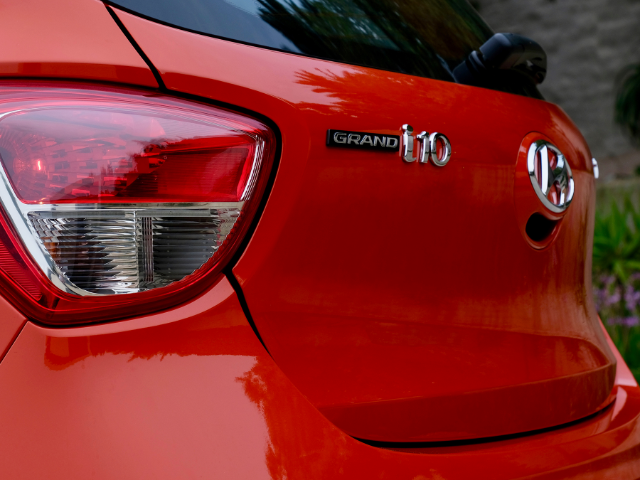
One of the first systems designed to help you in and out of tight gaps, PDC is the most simple system and one of the oldest. Using an array of ultrasonic or electromagnetic sensors mounted on or in the bumper, the system can gauge the distance between the sensor and an obstacle.
The simplest systems will merely emit a series of beeps, getting progressively louder or more frequent, when the distance between the vehicle and the obstacle closes. More advanced systems will have a display for the driver, usually with a bar graph, that will indicate the proximity to the other car or obstruction.
These systems are not perfect though and will sometimes not detect narrow items, such as small trees or poles that happen to slip between the sensors. This simple system is usually quite effective if installed correctly.
Is it worth it?
Yes, it is. This type of system is effective and shouldn't cost too much. Many consumer-orientated cars now feature this technology, showing that the costs are worth absorbing into the price for the feature.
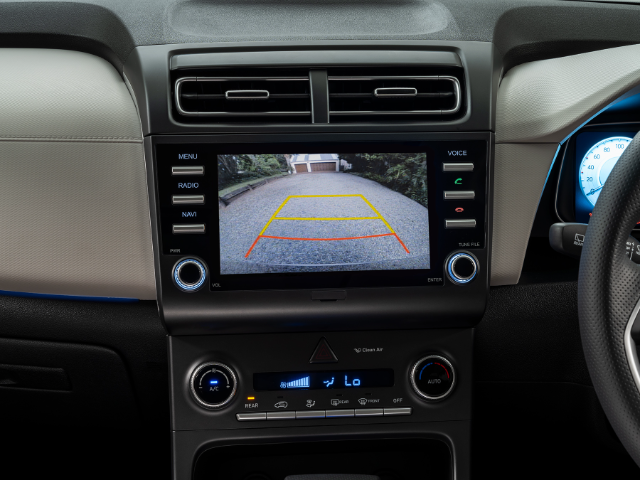
Reverse Cameras
Taking the parking assist to the next level is the inclusion of a small, wide-angle camera, usually at the rear of the car, that transmits an image to the driver, showing him or her their surroundings. This allows the driver to observe their environment when reversing, allowing them to gauge the distance between their vehicle and any obstructions.
Early systems would only show a single angle, often distorted due to the fish-eye-style lens, and the driver would have to gauge how and where the vehicle would travel while driving. This was assisted by the combination of Reverse Camera and PDC to further assist with manoeuvring.
Guidelines were soon added to represent a set, safe distance from the car. More advanced systems pulled a signal from the steering wheel, relaying the amount of turn dialled in and translating that into animated guidelines to show the expected direction of travel when reversing with the wheels turned.
Is it worth it?
Reverse camera systems are a little more intricate and involved than PDC systems and as such cost a little more. Clever use of the wing mirrors and a little practice can negate the need for the camera, although this is largely dependent on the amount of functionality included (i.e.: guidelines).
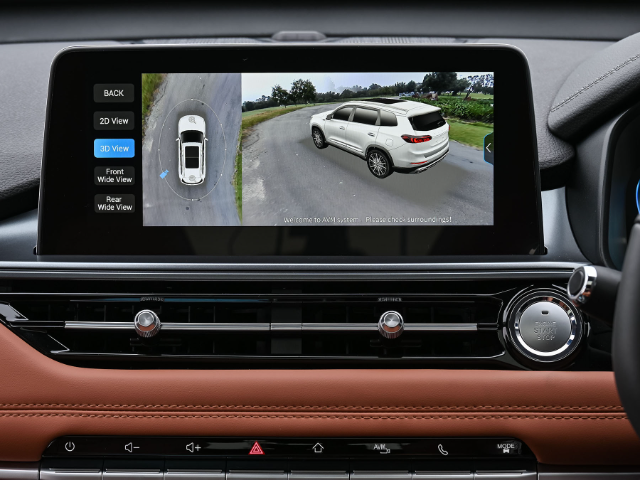
360-degree cameras
Generally reserved for the more luxurious offerings, 360-degree cameras employ a system of cameras, mounted in the wing mirrors, front and rear of the car, to create a series of images for all sides of the car. In some systems, these cameras are used to create a virtual “birds-eye” view, as if you were viewing the car from above, with a drone or helicopter.
This helps show proximity to pavements and other obstacles that regular PDC systems would miss, helping you prevent damage to your wheels. Some of these systems will include the animated guidelines similar to those that you would find in the reverse camera systems.
Is it worth it?
These systems, due to their multiple cameras, end up being rather expensive and while a nice to have, is not completely necessary. Skip this one and go for the reverse camera only if you have to.
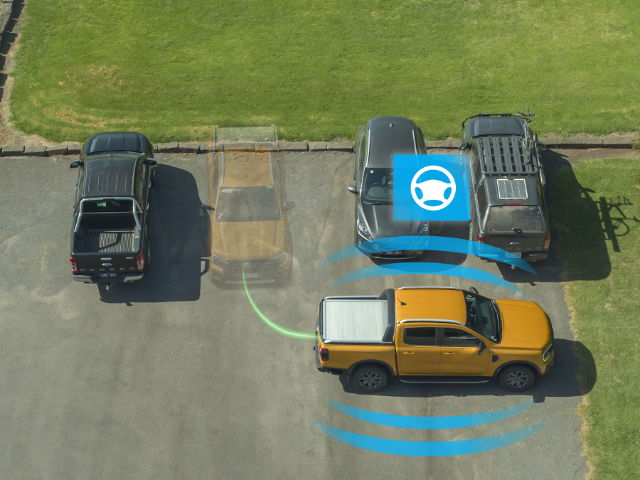
Intelligent / Automated Park Assist System (IPAS / PAS)
Taking the concept one step further removes the driver from the equation. IPAS systems use a combination of cameras and sensors to gauge the size of parking spaces alongside the vehicle and then takes over control of the car to manoeuvre it into the selected bay.
These systems can pull a car into a parallel, perpendicular and in some cases, angled parking spot without requiring the driver to steer the car. Some systems will require that the driver controls the gears and throttle inputs (i.e.: Opel Adam) while others will take full control, selecting gear and requiring minimal input from the driver.
While initially quite daunting to use, these systems can be quite handy if you never mastered the art of parallel parking or reverse alley docking but can be time-consuming if you do know how.
BMW, Mercedes-Benz, Opel, VW, Audi, Lexus, Toyota, Ford and Chrysler (Jeep) all have similar systems available, mostly on their upper-range models, all with varying success rates.
Is it worth it?
Frankly, unless you parallel park on a regular basis, the answer is no. And even then, regular practice will see you able to zip in and out of parallel bays in a fraction of the time it takes the car to assess the space and affect the manoeuvre.
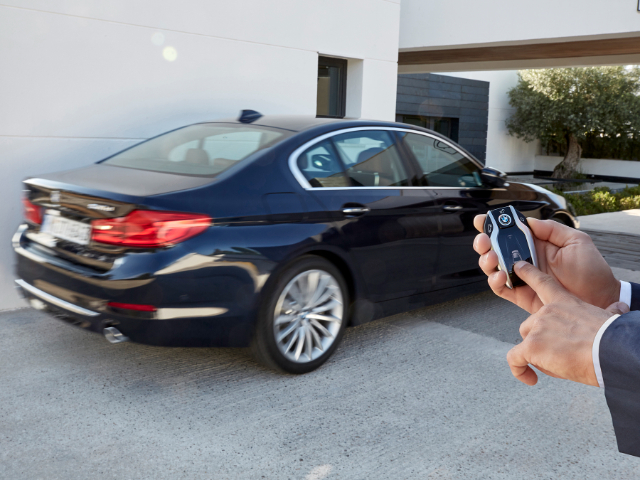
Remote Parking Assist
Making us all feel like kids again, BMW and Mercedes-Benz have created systems that allow you to park your car without even being inside of it! Their remote parking systems use either the BMW Display Key or the Mercedes-Benz Remote Parking Pilot app on a smartphone to wiggle the car in or out of tight parking paces – just like a life-sized remote control car!
While this technology is still relatively new, it does afford some benefits. Is the only available bay that tiny one up against the wall? No problem, climb out and let the app do the rest. Some idiot park too close for you to open the door? Simply back the car out with your Display Key.
This allows for the larger vehicles to be parked in tighter spots, which is useful in condensed, crowded environments where space is a premium. It is, however, a large expense to pay for something that you will probably only use to impress your friends.
Is it worth it?
The very small number of times that you would probably use it (unless you park your 7 Series in a tight, single garage, in which case you need to review your priorities) makes this largely not worth the high cost associated with this technology. Best spend that on an upgraded sound system which you will use more often.