
Hyundai i20 vs Suzuki Swift vs Volkswagen Polo: Which on is the best value for money?
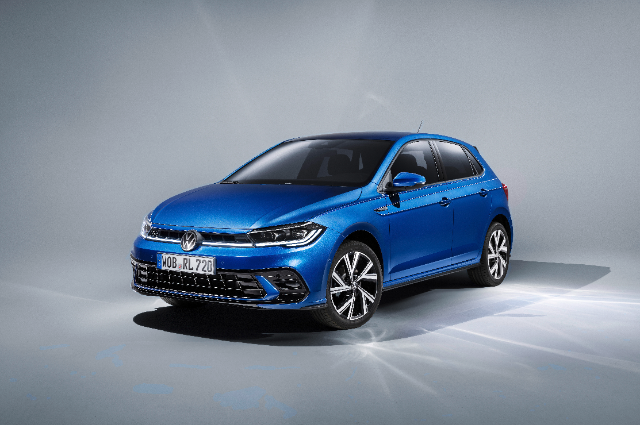
Hatchbacks with sporty looks are big business in 2022, with auto giant Volkswagen now making the R-Line Polo a standalone variant. Hyundai has done the same with its i20, now offering the N Line derivative. Does the i20 offer better value than the Polo and the Suzuki Swift Sport, though?



Performance hatchbacks have been popular for decades, however, there is a trend within the industry where manufacturers produce sporty-looking hatchbacks that retain the same powertrains, brakes and suspension used in the 'regular' models. These models have risen in popularity in recent years with many brands introducing a performance sub-brand to cater for those after the 'show', without the added 'go'.
When looking at Hyundai, the cosmetically enhanced models are badged 'N Line' while at Volkswagen, the sporty models are badged 'R-Line'. For today's comparison, we will be comparing the aforementioned i20 and Polo models with a true performance hatchback in the form of the Suzuki Swift Sport to determine which offers the best value for money.

Practicality
The Polo appears to be the biggest car in this comparison, being the longest, featuring the second-longest wheelbase and sporting the largest boot at 351-litres. The i20 just edges out the Swift, being longer, wider, taller and featuring a 311-litre boot versus a 242-litre boot in the Swift.

Performance
In terms of performance, the Suzuki has a clear advantage here, offering the most power and torque, the lowest kerb weight and consequently, the best acceleration. In terms of efficiency, the Volkswagen, on paper at least, appears to be the most efficient, followed by the Suzuki and then the Hyundai.
| Hyundai i20 N Line | Suzuki Swift Sport auto | Volkswagen Polo 1.0 TSI R-Line | |
| Engine | 1.0-litre, turbocharged, 3-cylinder petrol | 1.4-litre, turbocharged, 4-cylinder petrol | 1.0-litre, 3-cylinder petrol |
| Transmission | 7-speed dual-clutch automatic | 6-speed automatic | 7-speed dual-clutch automatic |
| Power | 90 kW | 103 kW | 85 kW |
| Torque | 172 Nm | 230 Nm | 200 Nm |
| 0-100 km/h | 9.9 sec | 8.0 sec | 11.3 sec |
| CO2 emissions | 126 g/km | 141 g/km | 123 g/km |
| Fuel consumption | 6.9 L/100km | 6.1 L/100km | 5.4 L/100km |
| Price | R411 900 | R399 900 | R432 500 |
*This table was compiled with information sourced from www.duoporta.co.za as well as the official press releases of each model.
Specification
All three models are well specified, with 16-inch wheels, climate control, cruise control, multifunction steering wheel, LED head and taillights, LED daytime running lights, rear park distance control (PDC), front fog lamps, 6 airbags, keyless entry/start(not on the Polo), front and rear electric windows. The Hyundai had artificial leather seats and a sunroof while both the Suzuki and the Volkswagen feature cloth-covered seats. Both the Suzuki and the Hyundai come with a reverse camera while the Volkswagen gets ambient lighting and front PDC. It is difficult to choose a winner in this category as all three products are well-specified, but we feel that the Hyundai just edges the Suzuki and Volkswagen in terms of specification.
Safety
All three of our contenders have been crash-tested, however, only Volkswagen and Suzuki have been tested by the Euro NCAP assessment programme. The Polo's 5-Star rating includes 96% for adult occupant safety, 85% for child occupant safety, 75% for pedestrian safety and 59% for its safety assistance systems. The Swift was rated at 4-Stars, with 88% for adult occupant safety, 75% for child occupant safety, 69% for pedestrian safety and 44% for its safety assistance systems. The Hyundai received a 3-Star rating from Global NCAP, with 8.84 points out of a possible 17 for adult occupant safety and 36.89 out of 49 points for child occupant safety.
Warranty and maintenance
In the warranty department, the Hyundai and Suzuki are impressive. The i20 comes with a 5-year/150 000km car warranty as well as an additional 7-year/200 000km drivetrain warranty and a 4-year/60 000km service plan. The Suzuki gets a 5-year/200 000km warranty and a 4-year/60 000km service plan. The Polo lags behind in this department with a 3-year/120 000km warranty and a 3-year/45 000km service plan.

Verdict
Looking at the data, one product emerges as the best value proposition, despite the fact that all three models are impressive in their own right. That product is the Suzuki Swift Sport, which is the cheapest, the best performer, is well specified, reasonably safe and comes with a good warranty and service plan.


