
Hyundai i20: 1.2 vs 1.4 engine
Hyundai i20: 1.2 vs 1.4 engine


By Farzana Chaumoo
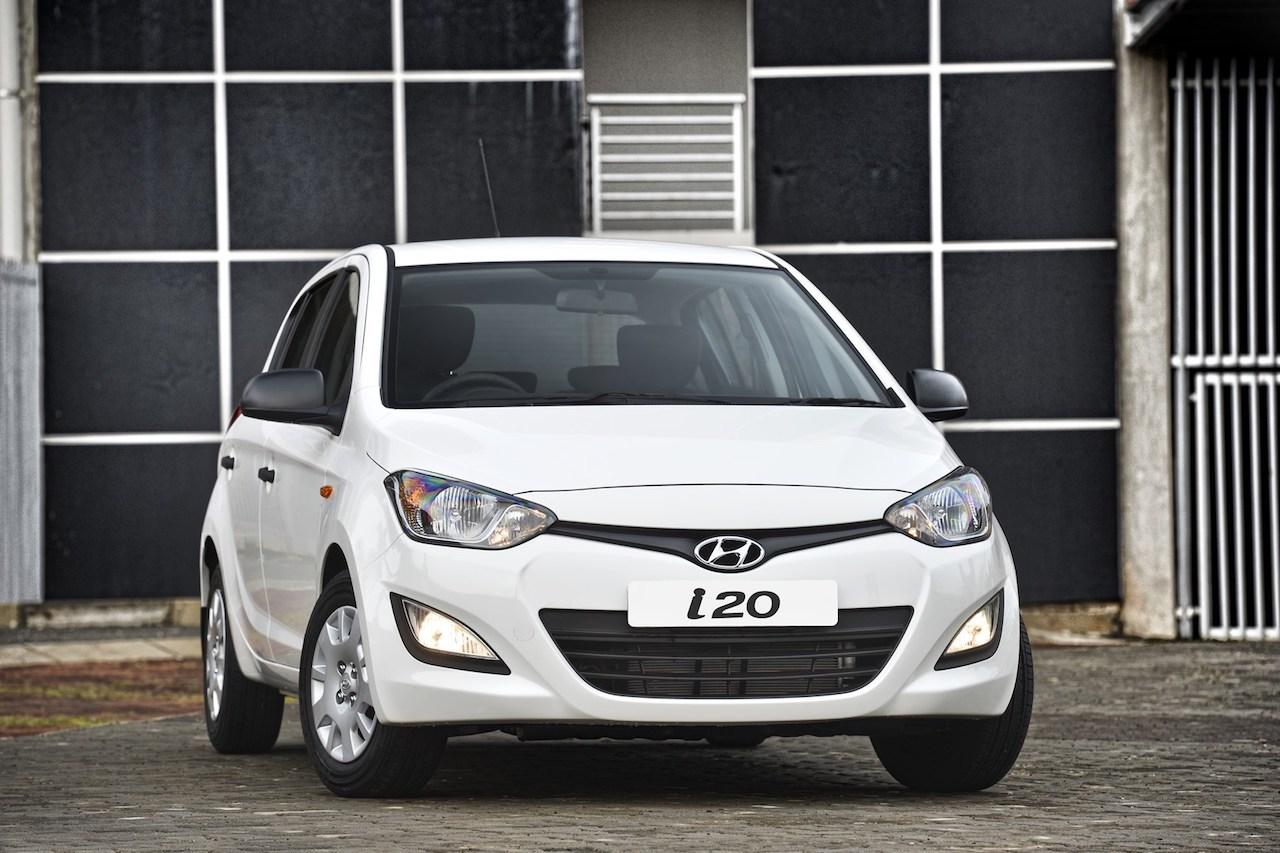
The refreshed i20 range offers a choice of two petrol multi-point fuel-injection powertrains: a 1.2-litre capacity and a 1.4-litre capacity.
i20 1.2
Capacity: 1,197 cc
Maximum power: 61 kW maximum power output at 6 000 r/min
Torque: 115 Nm at 4 000 r/min
Gearbox: 5-speed manual gearbox
Top speed: 165 km/h
Fuel economy (l/100km): 5.9
i20 1.4
Capacity: 1,368 cc
Maximum power: 74 kW maximum power output at 6 000 r/min
Torque: 133 Nm at 3 500 r/min
Gearbox: 6-speed manual or 4-speed torque converter automatic
Top speed: 182 km/h
Fuel economy (l/100km): 7.5 (auto), 6,5 and 6,7 (manual)
Easy to run, steady on the road
Steering feedback and precision has been greatly enhanced by the McPherson Struts on the front suspension and it features revised suspension geometry and a new tie rod design. This has also improved handling characteristics. At the rear, a coupled torsion beam axle optimizes the suspension to ensure comfortable driving. Improvements to the trailing arm geometry and rear springs contribute to a more stable and comfortable ride.
Ground clearance for the Motion and Fluid derivatives is 15 cm, but it was raised to 17 cm for the 1.4 Active, which – coupled with its 16-inch wheels and ample tyre profile – makes the Active a very capable car on a gravel road.
The i20s motor-driven power steering provides a sharper response when the steering wheel is turned, accurate handling, improved fuel economy and reduced driver fatigue.
All derivatives have ventilated disc brakes in front and solid disc brakes at the rear, with a 4-wheel electronic, 4-channel and 4-sensor Anti-lock Braking System and Electronic Brake Force Distribution (EBD).
Additional engine info:
Read Martin Pretorius's First Drive Impression on the Hyundai i20 Facelift. He breakdowns the drive and all changes made to this car last year.
2015 – 2018 Hyundai i20 engine efficiency