

Take the emotion out of it
It’s all too easy to say you shouldn’t get emotional when buying a car, but in practice, it’s often more difficult. Nevertheless, it is important. Salespeople have a sixth sense when gauging your desire for a particular vehicle. After all, it’s what they do: deal with customers or potential customers all day. Those who have been in the game for decades can spot a “tyre-kicker” from blocks away! And when you are super-keen on a certain car, you may as well wear a sign that says: “Take me, I’m yours!” If you want to sell your car, remember that AutoTrader can get you an Instant Offer.
Related: AutoTrader's Car Buying Glossary of Terms
Before you even get to the negotiating stage…
Be aware that your choice can very often be an emotional decision. One particular car floats your boat for status, nostalgia, or because you simply have to have the fastest ( longest, tallest, flashiest, etc.) car in the neighbourhood. But no matter how hot you are to trot, as the saying goes, step back and check the alternatives to the car you have set your sights on.
Check the alternatives
I recall a real-life case when I accompanied a colleague to a dealer, where he bought a dealer-modified hatchback for a fair amount of money. A week later, he was complaining about all the fuel the car was drinking (while trying to convince himself that those gargling side-draught carburettors made a sound manufactured in heaven). Only then did he start perusing recent road tests and realise that he could have bought an even quicker factory-developed hatchback with fuel injection and about 40 per cent better fuel economy!

Set a price ceiling. We are steering you towards the car you need, not necessarily want.
Set a price ceiling, and then see what other brands, and, this is important, what other types of cars you can buy for your money. For example, you may have your heart set on a certain coupe because your best friend used to drive one, and you can recall many happy memories of trips in that car. But a sedan or an estate version of the same car may be available. Or a sedan, estate or SUV of another make. These other variants or configurations may, in reality, suit your lifestyle better and yet offer much the same feel, performance and luxury.
Check out competitive brands, too
Check out competitive brands within your budget online to be as informed as possible. And then take one or two of those competitor cars for a test drive. Remember, once you have signed a finance agreement for your car, chances are you are going to be living with it for a couple of years
But once you are sure…
Once you are set on a particular make and model of car, narrow down your research to see what is on offer for the identical model from other dealers and private sales too. And take these cars for test drives, too.

Check out the differing model specifications and options
Your online search should also have focused on all the different models and options that were available on that car in that particular year. Get an idea, a ballpark figure, of what each of these options is worth or were worth. In the used car field, it is common knowledge that many options don’t necessarily add value to a used car. At least as far as a trade-in price is concerned.
Options are a negotiating tool for you, too
But a car lacking must-have options, such as air-conditioning and audio, even a sunroof inexpensive models, is often very difficult for a dealer to sell. A dealer will try to sell you the idea that options can add lots of money to the selling price, but be aware that he or she probably hasn’t paid too much extra to the previous owner for those extras. A dealer will typically quote the trade price without considering options, even though on an expensive car, these can run to thousands or even hundreds of thousands of rand above the list price. The tack you must take is that options are a nice add-on but not essential to the car you want, and thus, they aren’t a huge influence on a used retail price.
For you, knowledge is king
You are now armed with the powerful knowledge of a fair price for what that so-badly-wanted car is selling for elsewhere and a good basic knowledge of the different models available and what the options were worth (approximately). Also, check out the spare parts and tyre prices for your chosen vehicle. You don’t want big surprises further down the road!

Keep in mind that mileage is important
Mileage, as well as age, plays a big role in a used car’s value. Be aware of how much residual is in the warranty and the service plan when buying a late-model used car. A high-mileage car will have considerably less value than a low-mileage one.
You can always walk away
Always keep in mind that you can walk away from the deal. Repeat to yourself, over and over, that unless it is the last surviving Bugatti Royale ever built (there were only seven built, and that was back in 1933), you can find a very similar model for sale elsewhere. Set a ceiling price you will pay, and make your opening bid appreciably lower. You can always negotiate upwards but not down.
Keep your sense of humour
The salesperson’s job is to make a sale and make as much profit as possible from the deal. You aim to get the car you want at the most affordable price. If you keep the emotion out of it, the two of you should be able to reach a middle ground that makes the deal fair to both of you. You don’t have to like each other, but you should be able to respect each and your differing points of view.
Timing can be important
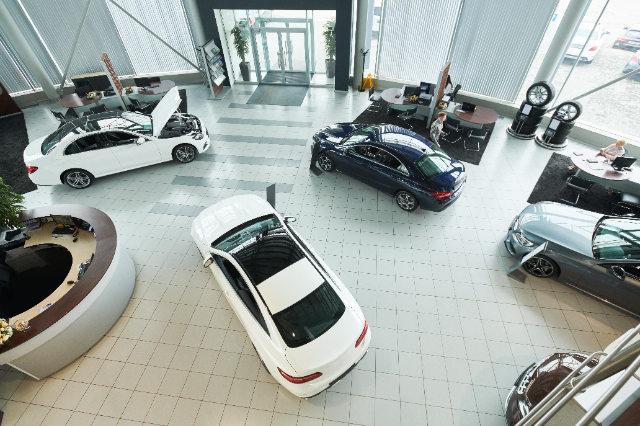
Note that one of the goals for the salesperson is to make a sale. Depending on the time of the month, the proximity of holiday periods, and sometimes the state of the broader economy, at differing times, there will be more pressure to make a sale than to make a very good profit.
A good time to approach a dealership to buy a car is often during the last week of the month when sales targets need to be met. And it is often best to go during a quiet time, say on a Wednesday afternoon when business is generally slow. Remember, stock sitting on a showroom floor costs a dealer money.
Organise finance in advance, if possible
And as all good dealers are aware, Cash Is King. So, if you are planning to finance your new or new-used car, it can be advantageous to have pre-organised finance in principle so you can close your side of the deal with the sure knowledge that you can come up with the cash.
Let the dealer know that, while you aren’t about to waste your money, you will have no problem laying the right amount on the table at the appropriate time. Providing your negotiations reach an amicable conclusion, of course.