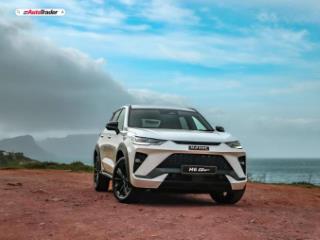
The refreshed Haval H6 range has arrived in South Africa, featuring a bolder design, increased power, and enhanced technology. Meanwhile, the all-new H6GT PHEV flagship brings genuine sports car performance to the family SUV market. We took both for a spin to determine if they offer the value, practicality, and thrill South African drivers expect, but this article only covers the H6.
Click below to read about the GT variant:
HAVAL H6 GT PHEV (2025) First Drive Review

Before we go further, let's look at 2025 Haval H6 pricing:

Styling
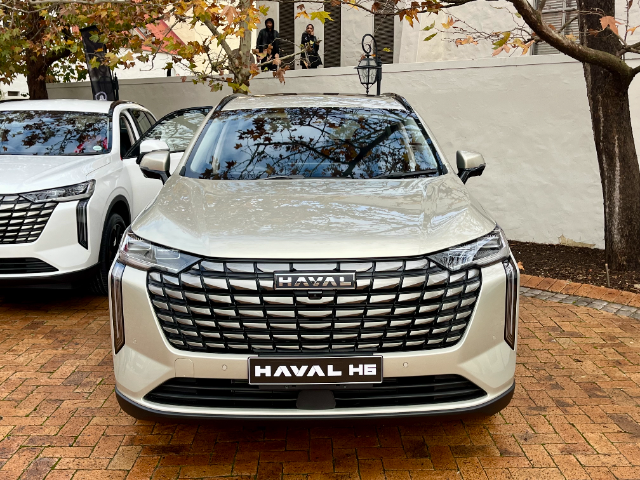
The H6 makes a strong first impression with an individualistic front grille and sleek LED headlights with vertical 'teardrop' DRLs, giving it a modern, purposeful face. Sculpted body lines flow smoothly around the SUV, complemented by new 19-inch alloy wheels and refined chrome detailing that add a premium touch.
Related: GAC Emkoo vs Haval H6 vs Kia Sportage
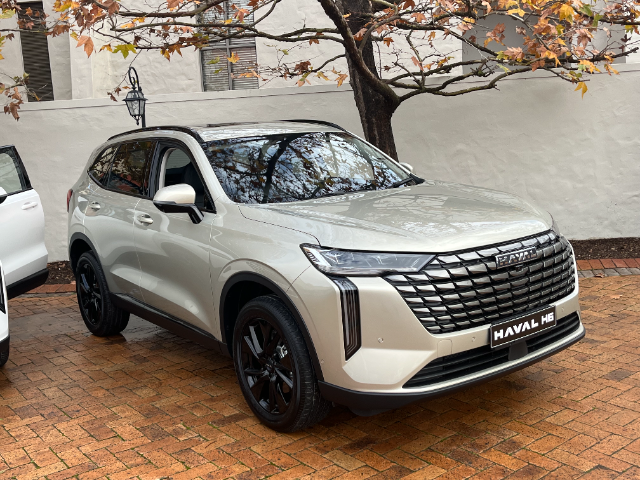
At the rear, shapely, 3D-effect LED taillights, now separate, enhance the car's contemporary look, and I think this is was a good design move that sets the H6 apart from all the other SUVs whose designers made them jump on the connected-strip bandwagon, after the Porsche Cayenne started it.

Available exterior colours include Hamilton White, Ayers Gray, Sun Black, and Noble Gold. We ran for the gold model because it photographs well: The H6 1.5T HEV Ultra Luxury DHT at R686 500.
The inside story
The 2025 Haval H6 takes a big leap forward inside. The interior is plush but minimalistic, solidly put together, and all surfaces are soft-touch.
The dashboard is modern and minimalist, with a two-tier design inspired by luxury brands. The old rotary gear selector is replaced by a gear stalk, freeing up space on the centre console for handy storage, including two cupholders and a perfectly positioned wireless charging pad for one phone.
Buying used? Read Chery Tiggo 8 vs VW Tiguan vs Haval H6

The large, ultra-high-res 14.6-inch touchscreen is now the centrepiece, paired with a clear, 10.25-inch digital instrument cluster. Most buttons are gone, and wireless Apple CarPlay and Android Auto come standard.
However, it's a little irksome that to change the air conditioning settings, you first have to switch the air-con off via the button and then change it on the screen. Settings for the lights are also only accessible from the menu on the touchscreen. This does not make one's life easier. I prefer to turn a dial or press a button to switch my headlights on or off, instantly.
Considering pre-loved? Read Chery Tiggo 8 Pro vs Haval H6 vs Mahindra Scorpio-N

There's also no rear wiper, which makes no sense when living in the Cape of Storms. We've all seen the extent of what rain can do up in Gauteng and the rest of SA. However, the H6 compensates with its comprehensive 360° panoramic camera system, providing a clear view around the vehicle.
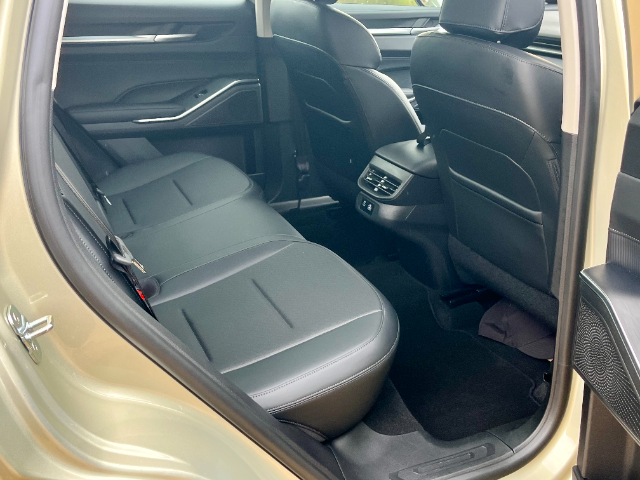
The rear seats remain roomy with USB-A and USB-C ports and air vents for the kids' devices, though the seats don’t recline or slide. Some plastics remain, but the interior feels more premium and comfortable overall. Heated and ventilated seats are available in the higher trim levels.

The cargo area is massive, and our overnight and laptop bags seemed to be swallowed whole. Our model also had a hands-free electric tailgate that opens automatically by simply swinging or waving your foot under the rear bumper in a kicking motion.
Our model also has a panoramic sunroof and heated, ventilated seats for extra comfort. To see specs for each variant, Download the entire HAVAL H6 brochure here.
Driving the H6
Unlike its GT PHEV sibling, which requires plugging in, the H6 Hybrid (HEV) is self-charging, just like the Toyota Corolla Cross hybrid, so hunting for plugs is not required.
Under its bonnet, a 1.5-litre turbo petrol engine perfectly harmonises with an electric motor. Together, they unleash a punchy 179 kW and 530 Nm of torque, enough muscle to make this family car sufficiently swift when required.
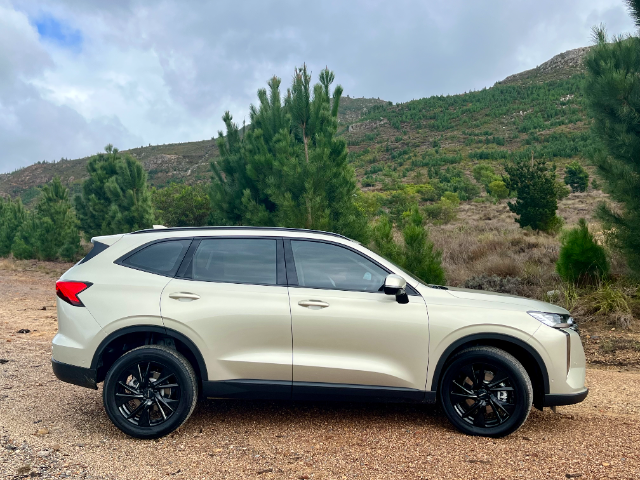
Need to overtake that dawdling tourist? Plant your right foot, and the H6 responds eagerly. The instant electric shove is there before the petrol engine even clears its throat, eliminating that moment of hesitation that plagues conventional cars. It won't blow your hair back; however, it's still a relatively heavy car that needs to be propelled.
Road noise is kept at bay, allowing conversation to flow without strain. The suspension soaks up rough patches without fuss while keeping the substantial body composed when the road gets twisty.

Our route from the Asara wine farm through the Franschhoek Pass provided a suitable test route for this family SUV. As the road climbed skyward, the hybrid powertrain delivered consistent thrust, never feeling breathless even on the steeper sections. Through the tighter corners, body roll is well-contained – it's no sports car, but it inspires confidence where many high-riding SUVs would have you easing off the throttle. Let's be honest, though; nobody will drive a family car like they stole it anyway. As for the new 9-speed DCT gearbox, it's pretty seamless.
Once we hit the open road heading back, the H6 settled into a relaxed cruise, with the hybrid brain constantly calculating the most efficient way to deploy its dual power sources. GWM claims 5.2L/100km, and while our enthusiastic driving on sweeping country roads yielded closer to 7L/100km, that's still remarkably frugal for a vehicle of this size tackling the ups and downs of the Western Cape.
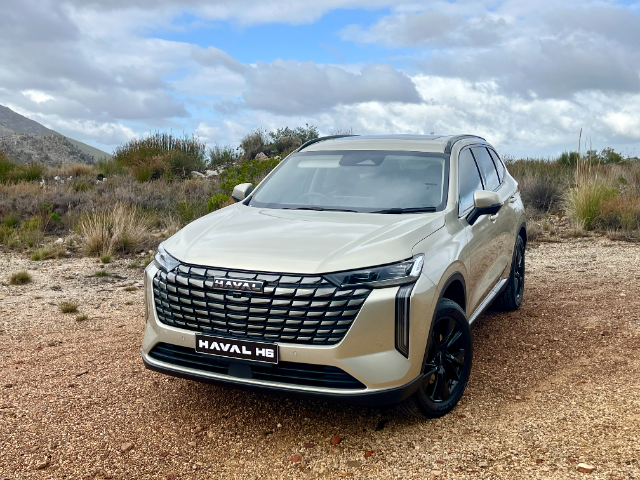
On our way to Franschhoek, we also took a small dirt road detour that allowed us to take some scenic photos. We drove under 80km/h on pure electric power, which allows for near-silent, emission-free travel.

Upon arrival in Franschhoek at a private location, a bevvy of H6 GT PHEV (plug-in hybrid) models were waiting for us on a private racetrack, which you will read about soon - watch this space.
Back to Asara in black ICE
The route back to Asara Wine Farm was quick and easy, but we had a different car on test; this time the four-wheel-driven 2.0T ULTRA LUXURY AWD DCT at R614 500 with 170 kW and 380 Nm.
Our route 'home' was short and traffic-laden, so there was little opportunity for anything but commuter-style driving. However, it gave me some time to focus on the L2 assistance systems, which worked well and, most importantly, are not intrusive. I am not a fan of the eye-monitoring camera on many other Chinese brands that throw a hissy fit whenever you turn your eyes away to look at your partner next to you or when you tell off a child in the rear-view mirror. Also, you can switch off most of what you're unwilling to live with.

Verdict
If you're comfortable with a tech-forward approach that relegates most functions to the touchscreen, the H6 variants represent exceptional value.
Whether you prioritise the hybrid's efficiency or the 2.0T's more traditional powertrain, you'll find that the comprehensive feature list, refined driving experience and GWM's generous warranty make it a smart buy for value-conscious consumers.
The Haval H6 comes with a 7-year/200 000 kilometre warranty. Hybrid models get an additional 8-year/150 000 kilometre battery warranty. All versions include a 7-year/75 000 kilometre service plan, transferrable to subsequent owners with 12-month/15 000 kilometre service intervals. Roadside assistance runs for 7 years with unlimited kilometres.