Ford Figo vs Suzuki Baleno vs Renault Sandero: which compact hatchback is the best value for money?
In tough economic times, many car buyers investigate the lower reaches of the new-car market, instead of the higher-end products they might have preferred in the past. Fortunately, today’s budget cars are really good all-rounders, as we noted while evaluating Ford’s entry-level Figo and two similar opponents for this value comparison.



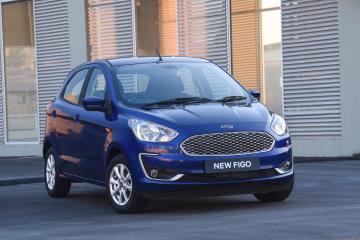
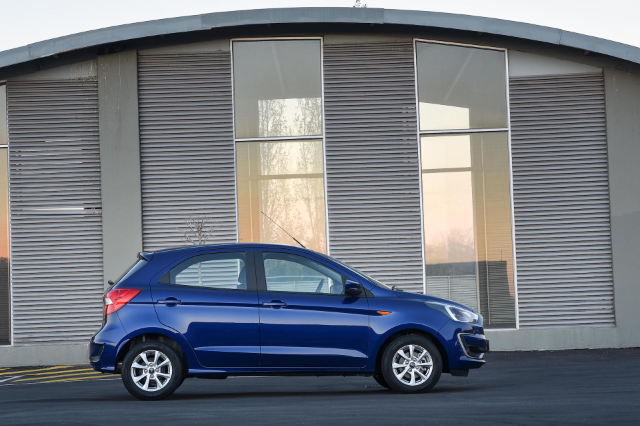
Seeing as value for money is the prime parameter in this comparison, we decided to select the most-basic Ford Figo as our comparison baseline. With a list price just below the R 220 000 mark, the Figo Ambiente is priced amidst a slew of smaller city cars, and has very decent performance for this price bracket.

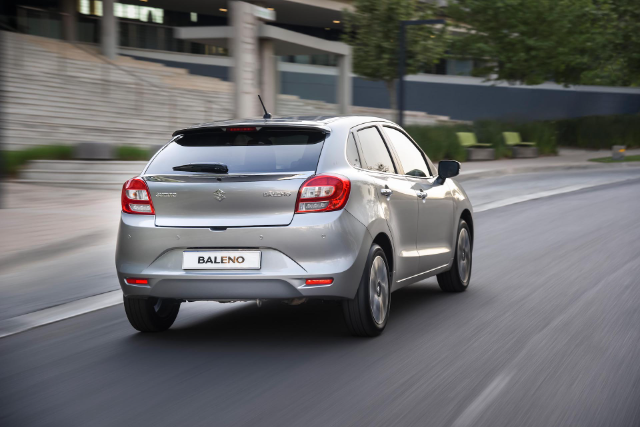
But the Figo is not the only “up-sized” player in this market segment, as the Suzuki Baleno and Renault Sandero are both larger than the smallest Ford, priced around the same point, and directly challenge the Figo in all other respects. Their respective entry-level variants are also clustered around the R 220 000 mark, giving a spread of less than R 4 000 between the cheapest- and most-expensive contenders in this group.
Related: Shop for new and used Ford Figo cars for sale here.

Facts and figures:
First, let’s look at the key numbers:
|
Ford Figo Hatch 1.5 Ambiente |
Suzuki Baleno 1.4 GL |
Renault Sandero 66 kW turbo Expression |
|
|
Engine size (cyl/size) |
3-cyl, 1.5-litre petrol |
4-cyl, 1.4-litre petrol |
3-cyl, 0.9-litre turbopetrol |
|
Power/Torque |
88 kW/150 Nm |
68 kW/130 Nm |
66 kW/135 Nm |
|
Kerb Weight |
1 047 kg |
915 kg |
1 046 kg |
|
Length (mm) |
3 886 |
3 995 |
4 059 |
|
Airbag count |
2 |
2 |
2 |
|
Load Volume |
256 litres |
355 litres |
292 litres |
|
Top Speed (km/h) * |
175 |
175 |
169 |
|
0 – 100 km/h * |
10.5 seconds (est) |
10.9 seconds |
11.1 seconds |
|
Ave Consumption * |
5.7 ℓ/100 km |
5.1 ℓ/100 km |
5.2 ℓ/100 km |
|
Price |
R 219 500 |
R 217 900 |
R 221 900 |
* Manufacturer's official claimed figures.
Prices include all taxes and were accurate at the time of writing, but may change without prior notice.

Analysis
Power, performance, and drivetrains
While all three cars have the same basic drivetrain layout (petrol-powered, front-wheel drive, with 5-speed manual gearboxes), their engines are rather divergent. The Suzuki is the most-conventional in this bunch, with a 1.4-litre, naturally-aspirated, 4-cylinder unit generating 68 kW and 130 Nm. This is good for a claimed 0 – 100 km/h dash in 10.9 seconds and a top speed of 175 km/h – roughly at the same level as the Ford, and ahead of the Renault.

The Sandero follows its established protocol with the well-known 0.9-litre 3-cylinder turbopetrol, producing 66 kW and 135 Nm. Renault claims a 0 – 100 km/h sprint in 11.1 seconds, but says that it runs out of puff at 169 km/h. This engine is a rather rough runner, though, and its power delivery is a bit laggy and lumpy around town. Being the slowest car in this group is one reason for a third place in the powertrain department; its engine's (un)refinement is another.
Like the Sandero, the Figo also uses a 3-cylinder engine, but it has the largest displacement in this group and no turbocharger. This 1.5-litre engine delivers 88 kW and 150 Nm, thanks to the 3-cylinder layout’s reduced internal friction (compared to a 4-cylinder) and clever variable valve timing, which help make it the most-powerful car in this group. And, using the experience gained with the 1.0-litre EcoBoost engine, Figo’s engine is also commendably smooth-running.

The Ford will not necessarily be quicker than the Suzuki, though, mainly because of its (and the Renault’s) weight penalties: the Figo and the Sandero are 127 kg and 126 kg heavier than the Baleno, respectively. However, its extra helping of torque should enable the Figo to handle heavier loads with less strain than the other two, making it our choice in the performance department (by the narrowest of margins).
Related: Shop for new and used Suzuki Baleno cars for sale here.
Economy
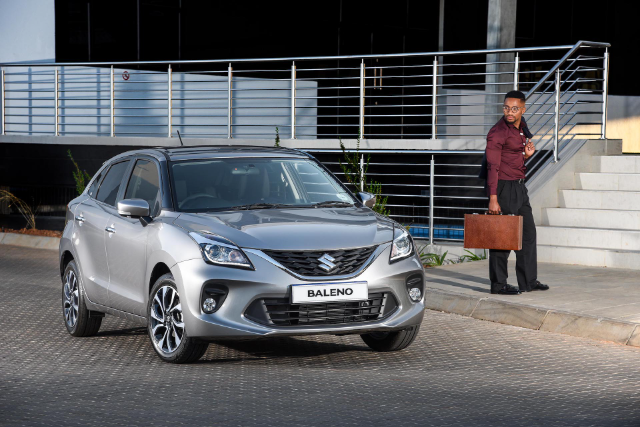
This is where the Suzuki and Renault regain some ground, both posting claimed average consumption figures that better the Ford’s by about 10%. The Suzuki wins both on paper and in the real world, though, with an official average of 5.1 ℓ/100 km compared to the Renault’s 5.2 ℓ/100 km.
The main difference between the Baleno and Sandero in mixed-cycle driving will be that the Suzuki is actually capable of meeting (or at least getting very close to) its official claims. As has been repeatedly proven in reviews, the Baleno should reward even a mildly-spirited driver with mid-5 ℓ/100 km average consumption, while the Sandero can only approach its claimed figure on the freeway (and with a very conservative driver behind the wheel).
There’s no real dishonour in the Ford Figo’s claimed figure of 5.7 ℓ/100 km, however. Remember that slight performance advantage and extra helping of torque? Well, this is where you pay the piper. In our review, the manual Figo proved capable of mid-6 ℓ/100 km averages with careful driving – not as good as the Suzuki, but roughly in line with the Renault’s figures in our review.
Related: Shop for new and used Renault Sandero cars for sale here.
Practicality
Once again, the Suzuki Baleno grabs the honours. It’s sized midway between the other two, but very clever packaging means that it has the most cabin space as well as the largest boot in this group. In fact, the amount of available room in the Baleno beggars belief, and its Tardis-like ability to be much larger inside than out is admirable.

The Suzuki’s 355-litre luggage compartment comfortably sees off the Renault’s 292 litres and the Ford’s disappointing 256 litres. These practicality downsides are quite understandable in the Figo, however, because it is the shortest and narrowest car in this group (and by quite a margin, too). At least the rear-seat compartment is roughly on par with that of the Sandero (the longest car here), so rear passengers need not suffer undue distress in either of the two runners-up.
Equipment
Comparing these three cars’ spec sheets show up some interesting discrepancies. For example, the Figo is the only car to offer steering wheel rake adjustment, yet it’s the only one without remote controls for the audio system. However, the basic comfort necessities are present in all three cars, in spite of them being in their most-basic trim levels.

Air conditioning, power steering, central locking, and electric front windows are common to them all. However, the Suzuki has the upper hand in convenience items, as the only one to offer rear electric windows and electric rear-view mirror adjustment as well, while joining the Ford in offering a trip computer and the Renault in including remote operation for the central locking. In spite of its base-trim status, the Suzuki Baleno GL is anything but spartan, and comfortably takes this department.
Safety
As for safety, there are enough question marks afoot to push all three contenders down to a joint third-place finish. The issue at hand is that, while they can all be considered fairly safe and secure in base trim, their manufacturers reserve the full safety specifications for high-trim variants.

However, the Figo fares slightly worse than the others, for two reasons: it doesn’t feature stability control, and there are no ISOFIX child seat anchors to be found. It scored 3 stars in Global NCAP crash testing in 2017 (in local specification with 2 airbags), which, while not excellent, isn’t terrible either. For 6 airbags in a Figo (which will significantly up the crash test rating), you’ll have to look at the Titanium trim (starting from R 255 800) – although that still doesn’t include stability control or ISOFIX.
The Sandero with only two airbags (as in Expression specification) scored a disappointing 1 star in Latin NCAP testing in 2018. Again, you’ll need to pay extra for better protection: The highest safety treatment in a Sandero starts just to the north of R 250 000 in the Stepway TechRoad, which receives 4 airbags and scored 4 stars in Euro NCAP testing in 2013 as a result.

While the Suzuki Baleno does feature stability control and rear ISOFIX child seat anchors across the range (like the Sandero), its crash safety rating likewise depends on how much you’re prepared to spend (also like the Sandero). Euro-NCAP testing of the Baleno gave it a reasonable 3 stars (without the optional safety pack), but that rating presupposes the fitment of 6 airbags – features that only appear on the high-trim Baleno GLX (at a price of R 259 900).
How well the Baleno GL, which has only 2 airbags (like the other two), will perform is anyone’s guess, as this variant hasn’t been hurled at an obstacle yet. It’s probably safe to estimate that the base Baleno would be about as safe as the base Sandero, given the similarity between their up-spec variants’ crash test results.
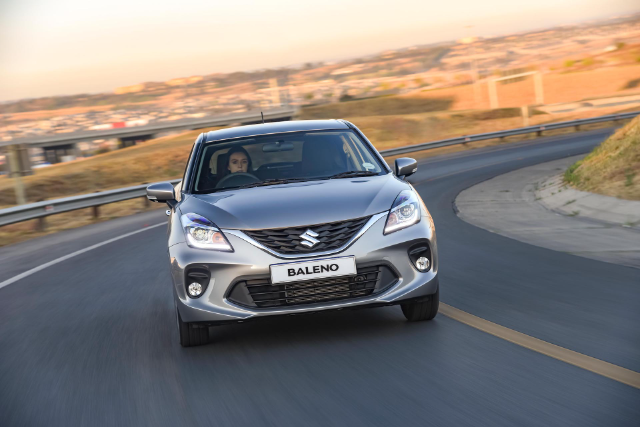
The Sandero and Baleno rate slightly higher for safety than the Figo, however, thanks to their stability control systems and ISOFIX child seat anchors. Fit these items to a Figo, and it would likely rocket to first place...
Aftersales support
All three manufacturers offer strong aftersales support, but the Suzuki Baleno nonetheless offers the best package in this regard. It has the longest warranty (5 years or 200 000 km) and a service plan for 4 years or 60 000 km, the latter of which equals that of the Ford Figo. The Ford’s warranty only runs for 4 years or 120 000 km, however.
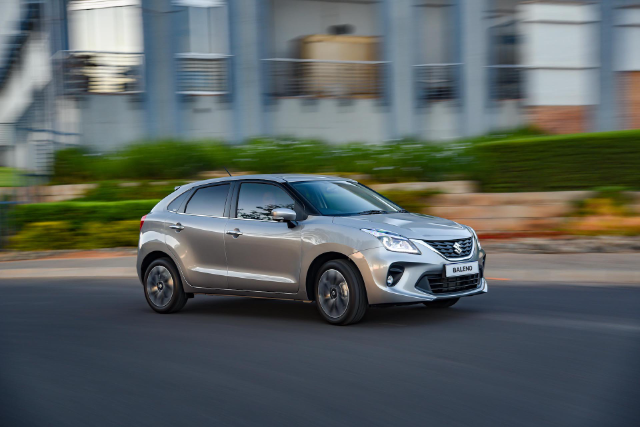
The Renault Sandero’s warranty falls midway between the other two (5 years or 150 000 km), but its service plan is the shortest here at 2 years or 30 000 km. In practical terms, the Ford’s and Suzuki’s service plans will hold definite benefits for new-car buyers, while the Renault’s warranty should provide similar peace of mind to that of the Suzuki.
Verdict
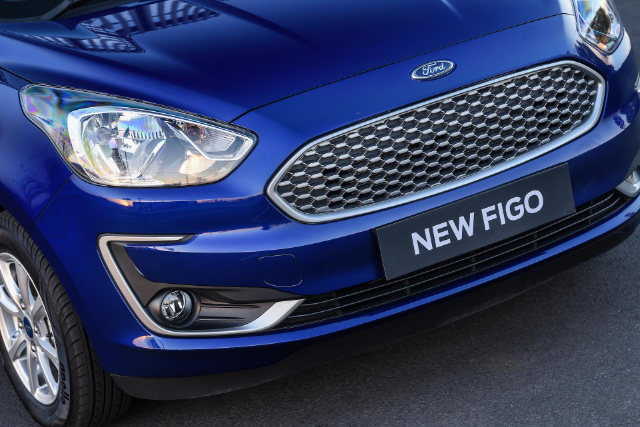
The first contender to fall by the wayside has to be the Ford Figo, simply because its safety equipment level isn’t quite up to scratch in this company. It received a lovely drivetrain and surprisingly engaging handling during its mid-2018 facelift, and the service plan is very attractive, but its standard features list is also just that bit too stingy for its price bracket. Add compromised practicality to the equation, and it becomes clear why the Figo Ambiente has to settle for third place in this value comparison.
The Renault Sandero’s second place came as a pleasant surprise, given its age: This model is about to be discontinued in South Africa, with a new crossover (named the Kiger) set to take its place in the local Renault line-up. However, while the higher-trim variants still offer great value for money even in their run-out phase, the base trim level shows up the design’s emerging deficiencies.
It rates comparatively poorly on packaging relative to its size, and employs a grumbly engine that’s feeling increasingly antiquated and underpowered by modern parameters. Add relatively sparse standard equipment and the weakest service plan here, and the Sandero’s value assessment has to slot in behind the Suzuki Baleno. However, its stability control proves to be the Sandero’s saving grace, and is enough to lift it to second place here.

The best value in this group will however be found at a Suzuki store, where the Baleno still offers a highly compelling package – even after almost 5 years on the market. It has the best practicality and the most space in this group, the lowest fuel consumption, the highest standard specification level, the strongest aftersales package, and at least comparable performance- and safety credentials.
The best value in the Baleno range is still to be found with the GLX trim level, though, with its full complement of safety goodies (including excellent LED headlights), more creature comforts, and an uprated appearance inside and out. If your budget can stretch that bit further, it’s definitely worth the premium.