
Everything you need to know about BMW
Everything you need to know about BMW




By Martin Pretorius
South Africans fell in love with BMW long before the company became one of the world’s most valuable car brands. In fact, some of the models which are most fondly embedded in our national psyche date from the era when BMW was still trying to move into the major leagues. See, BMW’s history has some dark spots, and the fact that they’re still around today is all as a result of a minor miracle that occurred many decades ago.
In the beginning, there was Dixi
In 1928, BMW was already an established aeroplane engine manufacturer, when they identified the need to expand their operations into the fledgling automotive arena. Fortunately, a company named Automobilwerk Eisenach, which had then just started to assemble the tiny (British) Austin Seven under license, came up for sale, and so BMW bought this enterprise. The little car was known as the BMW Dixi for its first production year, but as the revised 1929 model appeared, this name was dropped.
A period of rapid development ensued, eventually leading to BMW deploying a full model range and the first of their legendary straight-six engines, before the outbreak of the Second World War put the brakes on their expansion plans. After the war, the Eisenach factory (which was now in East Germany) resumed production of pre-war models, eventually becoming EMW, but the management at the mothership in Munich had bigger plans...
From small to big and back to small... and almost to oblivion as a result
Car production in Munich only resumed in 1951, with the launch of the new 501 model. This luxury car was however still powered by the old straight-six, and sales were consequently muted. By 1954, the 501 received a new 2.6-litre V8 engine to become the 502, but somehow buyers still stayed away in droves. Perhaps it was the fact that these flagship cars looked outdated even when the 501 first appeared, or maybe it was because of their hefty pricetags, but the first BMW V8 cars were a total commercial flop, selling only around 23 000 examples over their 14-year lifespan. This era did bring us the gorgeous 503 and 507 models, however – so the effort wasn’t entirely wasted.
The problem was that BMW bet heavily on their V8s, to the extent that they had neither a backup plan, nor a secondary product range to complement their luxury cars. This resulted in massive over-investment in a single product, which turned out to be a loss-making disaster in the long run. Desperate to make up production volumes, BMW bought a license to build the tiny Isetta bubble car, which served as a short-term help to keep the company afloat.
The next step was a small 2-door sedan and coupé called the BMW 700, which used a rear-engined application of a BMW motorcycle engine, but even this one’s life expectancy wasn’t too great. The problem was that German buyers were ready to move up to mid-sized sedans by the end of the 1950s, and BMW didn’t have anything to compete in this fast-growing market segment. This gap in their model range cost them dearly, and almost led to the company closing their doors due a lack of operating capital.
And then the miracle happened
In December 1959, BMW’s shareholders held a meeting, with the aim of wrapping up the business and pay off their creditors. In the end, the plan was to merge BMW with Daimler-Benz, which would surely have sounded the death knell for the very idea of BMW as a luxury manufacturer. One man had other ideas, though – a German business magnate named Herbert Quandt. Herr Quandt decided to increase his family’s shareholding in BMW from 30% to 50%, and in the process finance the development of a new series of mid-sized cars.
This new family of BMWs were known as the “New Class”, and they were a smash hit right from their launch in 1962. This range turned BMW’s fortunes around, and finally set them on the road which led to their current success. In fact, their design and mechanical parts would continue to influence BMW’s most popular products for the next three decades, allowing BMW to expand their range into the compact executive segment as well as the luxury car segment. While today’s 5 Series shares nothing mechanical with the 1962 BMW 1500, it shares the same spirit.
The South African Connection
The BMW plant in Rosslyn outside of Pretoria have been assembling BMWs since 1968, starting with the Glas-derived 1800 SA. Production switched to the New Class’s successors (the first 5 and 7 Series models) in the mid-70s, before the immortal E30 3 Series arrived in 1983. For the next 35 years, the 3 Series in all its subsequent generations would form the mainstay of Plant Rosslyn, only to be superseded in the local assembly halls by the latest X3 in 2018.
During this time, BMW South Africa built some remarkable, local-market-only cars, most of which were created to compete in motorsport. We had opportunity to sample two of these legends in May (the legendary 325iS and 333i), but other special developments included the 530 MLE (based on the E12) and 745i (with the M1 sports car’s engine). These are the cars which turned BMW into a locally revered brand, long before the rest of the world could realize where this manufacturer would go in the future.
What’s next?
Forget for a moment that BMW’s bread and butter doesn’t really come from their traditional strengths (sporting sedans) anymore, and look at the phenomenal success of their SUV/Crossover ranges. This is set to continue, with new crossovers being launched on a regular basis nowadays. The latest one is the first X7 über-luxury model, which, along with the new X3 and X5, seems set to carry BMW’s SUV range for the next few years. There will be the usual coupé-like offerings as well, with a new X6 and even an X4M set to follow in the near future.
Meanwhile, the 1-Series is due to move to front-wheel drive, the new 3 Series has already been revealed, and the 5 and are still fresh just as they are. There’s no sign of BMW’s high-performance M brand losing momentum, either – in fact, we’re bound to see evermore M-branded cars and SUVs in the model range.
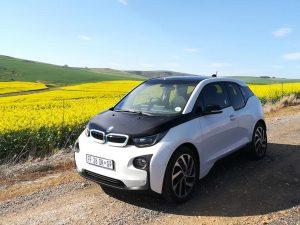
But the really important growth will happen in the field of alternative propulsion. In fact, BMW was the first premium brand to offer both a hybrid sports car (the i8) and a fully-electric city car (the i3). While these are rather specialised offerings at the moment, they do serve as technological test beds for BMW’s future plans, which are sure to include an ever-increasing focus on hybrid technology and fully-electric cars. Autonomous functions have also been under development for a while now, and the new-generation BMWs are almost all capable of remote parking and other self-driving tricks.
One thing cannot be in any doubt: this German maker certainly knows how to pull itself up by the bootstraps. They may have started off small, but they’ve grown into a true giant. And all this because of Herr Quandt’s faith in the brand, all those years ago... because it could so easily have been so different. We’re really happy it wasn’t, though.