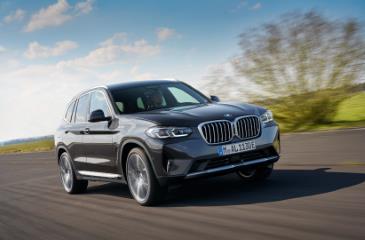
BMW X3 (2021) Driving Impression: Fine-tuning a winning recipe
After building more than 200 000 third-generation X3s in Rosslyn since local production commenced in 2018, BMW has now released their latest interpretation of the premium mid-sized SUV theme. With a simplified model range, a mild re-style, and more standard equipment, the 2021 BMW X3 should enjoy sustained sales success.



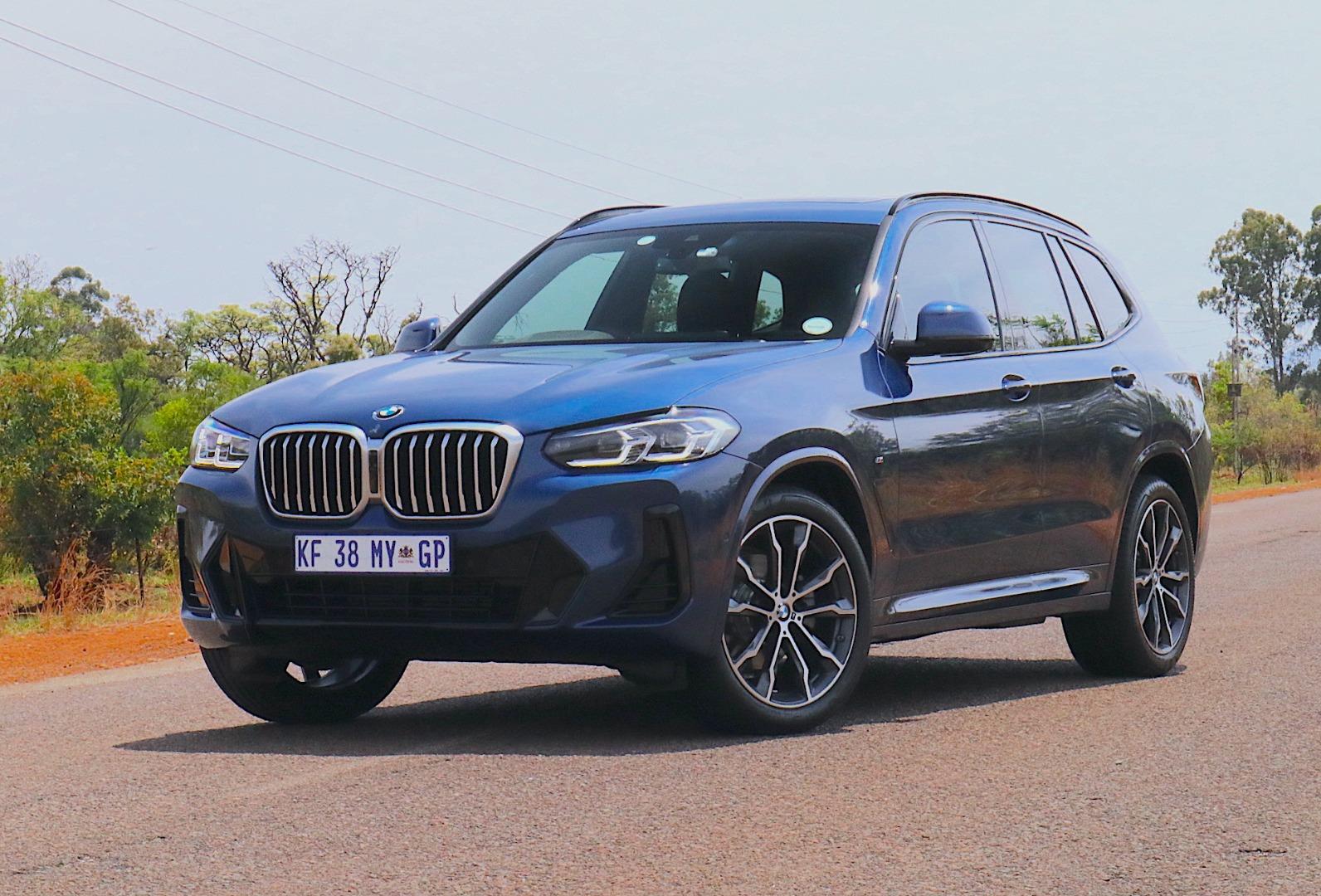
Now halfway through its life cycle, the BMW X3 has come in for some minor cosmetic surgery, and received an equipment boost at the same time. While it doesn’t look very different to its predecessor, there are many subtle changes to improve the X3’s value proposition and keep its technology up-to-date. We attended to local launch event, and sampled a mid-level diesel and the very rapid petrol range-topper in their natural habitats: on the freeway, in heavy traffic, and on the open road.

New model line-up
Comprising a selection of five engines, two drivetrains and three trim levels, the 2021 BMW X3 range offers something to suit most tastes, from a frugal entry-level diesel to a high-powered speed freak. But, instead of the outgoing model’s proliferation of trim levels, the new range has been slimmed down to eight derivatives.
There are three 4-cylinder engines on offer, all available either with or without the M Sport package, to make up the bulk of the range. Things get spicier (and quite a lot more expensive) at the upper end, where BMW’s creamy and very torquey 3.0-litre turbodiesel comes dressed exclusively in M Sport guise, while the X3 M40i caps off the new mainstream range with a lovely single-turbo petrol 3.0-litre engine. The X3M Competition continues as-is for now.

A styling update to match its siblings...
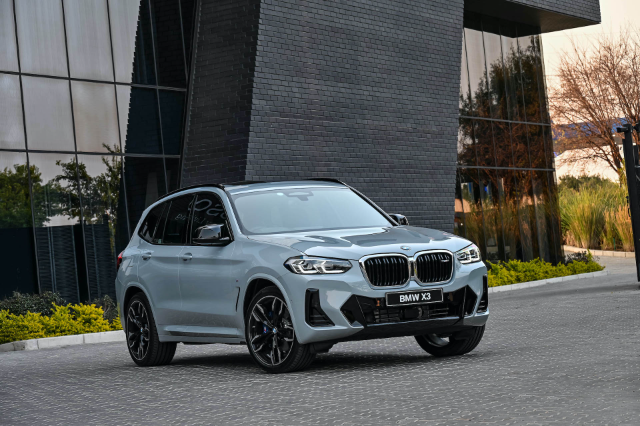
As is BMW’s custom these days, the X3’s kidney grille is bigger than before and of a new single-frame design, although it fortunately misses out on the 4 Series’ (and M3/M4’s) gigantic schnozz. It also looks a bit more blunt than before, an effect that’s emphasised by a multi-surfaced front bumper that consists mostly of air intakes. All of this is framed by slimmer (LED) headlights at the upper end, and contrasting lower bumper cladding that’s styled to look like a skid plate.
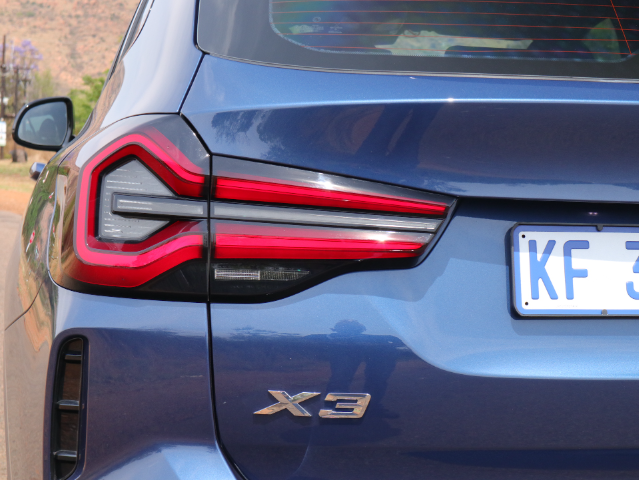
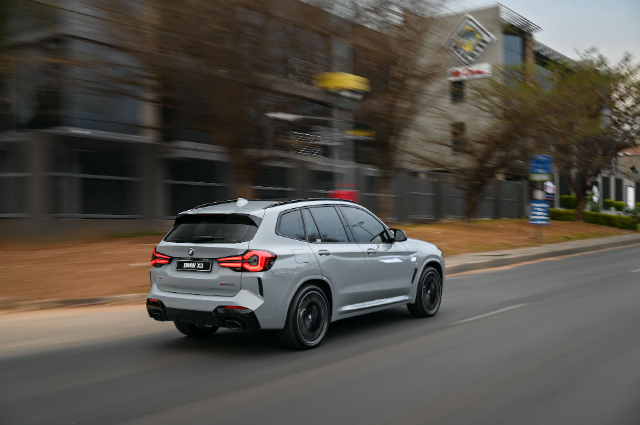
The side view is very similar to the outgoing model’s, with the main distinguishing feature being an emphasised lower side skirt. At the rear, there’s a new bumper (again with a contrasting skid plate-like insert), new exhaust outlets, and slimmer all-LED tail lights with a distinctive 3-D design motif. All this is neatly in keeping with the X3’s inherited styling cues and BMW’s latest design language alike, but doesn’t go to quite the same extremes as its sportier siblings.
No mechanical changes
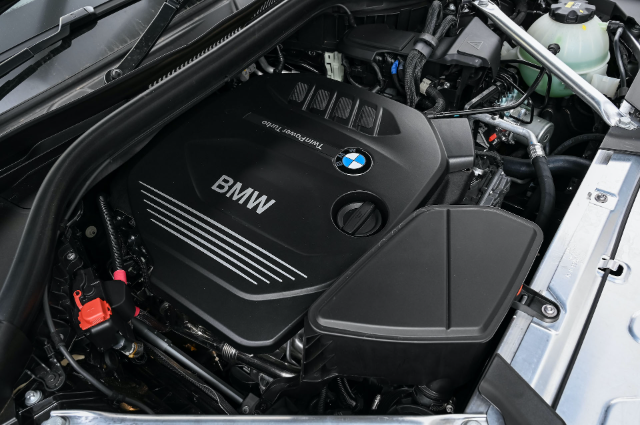
This round of updates sees the X3’s mechanical elements remain unchanged, with power outputs ranging between 110 kW and 285 kW and an 8-speed automatic gearbox standard across the board. The baseline is formed by three 4-cylinder variants – two diesels and one petrol. Inline-6-cylinder power is again represented by the xDrive30d and M40i derivatives, with the latter having benefitted from a 20-kW power hike about a year ago.
The 6-cylinder variants and the higher-spec 4-pot diesel (xDrive20d) are equipped with AWD, while the sDrive18d and sDrive20i power the rear wheels only. That probably won’t matter too much to buyers, though, as these cars are mostly aimed at on-road use anyway.

The trim levels, explained
The base specification includes some notable upgrades, with a high-res colour touchscreen infotainment/control screen and a configurable digital instrument cluster (both 12.3-inch items) being standard on all new X3s, along with adaptive LED headlights with high-beam assist, 19-inch alloy wheels, 3-zone climate control, a powered tailgate, ambient cabin lighting, wireless smartphone mirroring and -charging, and parking assist with rear-view camera and parking sensors on both ends. ConnectedDrive and telematic functions are enhanced, and Connected Package Professional rounds out the spec sheet – the latter including concierge service and real-time traffic information.
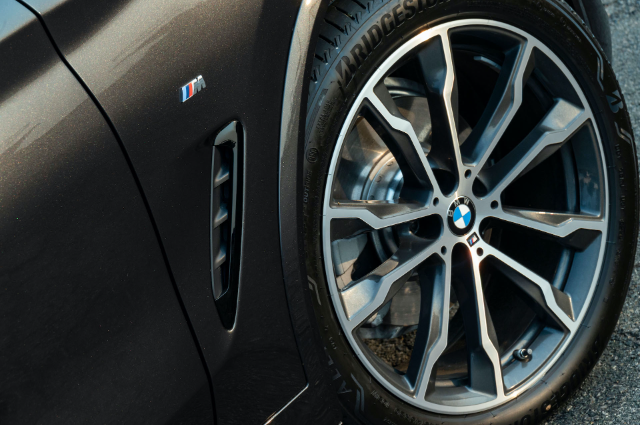
Opting for the M Sport package for any of the 4-cylinders adds a premium of exactly R 40 000 to the base price, and is mostly related to cosmetic enhancements. The wheels grow to a 20-inch diameter, and various exterior styling add-ons, body-colour wheel arch trims, and a liberal sprinkling of M badges are applied. The cabin also receives a mild enhancement, with aluminium trim accents (instead of gloss-black plastic), an M leather steering wheel, and a dark grey (instead of white) roof lining.
Topping off the range is the M Performance package, exclusively available with the M40i. This is quite a comprehensive upgrade, starting with the M Sport’s styling kit but upping the wheel size to 21-inchers and adding gloss-black M-style side mirrors. Unique tailpipe finishes and “Shadowline” blacked-out trim complete the exterior transformation.
The M40i also receives a head-up display as standard, along with electric adjustment for its heated sports seats, an electric panoramic roof, leather upholstery, artificial-leather dashboard top and door card trimmings, keyless access, a 16-speaker Harman Kardon surround-sound system, adaptive M suspension, upgraded brakes with blue calipers, and an M Sport differential. Driving Assist Professional adds adaptive cruise control and lane-keeping assist to the X3 M40i’s arsenal of safety features.
Many of the enhancements found in the M Performance trim level can be ordered as optional extras for lower-level variants, while laser headlights, gesture control, a heated steering wheel, and surround-view cameras are among the options available for all variants.
What’s it like to drive?
We had opportunity to sample an M40i on the first day of the launch event’s driving route of 240 km, and an xDrive20d M Sport on the return trip. The M40i is an absolute rocketship, with the engine’s rich seam of torque and an appetite for high revs making for very rapid progress under all conditions. It even sounds good as it winds out to the red line, and the sharp-shifting gearbox keeps it in the chunkiest part of its power band when pushing on.
It is however quite thirsty (although reasonable for the performance on offer), and the combination of sports suspension and 21-inch wheels makes for an unfortunately stiff-legged ride quality off the freeway. Our route guide booklet had us drive a short distance on a dirt road, but we definitely would not recommend doing so with an M40i on a regular basis – those ultra-low-profile tyres are extremely vulnerable to sidewall damage, and the suspension feels unsettled at times.

Between these two, the 20d made the most sense, with useful overtaking acceleration and super-frugal consumption even when driven quite enthusiastically. Our car ran on the M Sport trim’s standard 20-inch wheels and suspension, so the ride quality was markedly more forgiving than the M40i’s. The standard seats, found on all derivatives except the M40i, were rather more comfortable as well, but can exchanged for M Sport items (or fitted with electric adjustment and ventilation) by ticking some option boxes.
Sure, the 20d didn’t quite handle with the flair of the M40i, but the ride refinement improvement made this a fair trade-off. We suspect that the xDrive30d M Sport will provide the optimal combination of performance, comfort, and fuel efficiency, but for general use, the xDrive20d (preferably in non-M-Sport form) will be perfectly fit for purpose. Going on recent experience with the sDrive20i’s powertrain, it should also be a solid performer, although the sDrive18d may prove to be a bit on the slow side.

2021 BMW X3 model range and prices
|
BMW X3 Derivative |
Engine Outputs |
Fuel Consumption* |
Price** |
|
sDrive18d |
110 kW/350 Nm |
5.2 ℓ/100 km |
R 895 658 |
|
sDrive18 M Sport |
110 kW/350 Nm |
5.2 ℓ/100 km |
R 935 658 |
|
sDrive20i |
135 kW/300 Nm |
7.3 ℓ/100 km |
R 939 798 |
|
sDrive20i M Sport |
135 kW/300 Nm |
7.3 ℓ/100 km |
R 979 798 |
|
xDrive20d |
140 kW/400 Nm |
5.6 ℓ/100 km |
R 997 176 |
|
xDrive20d M Sport |
140 kW/400 Nm |
5.6 ℓ/100 km |
R 1 037 176 |
|
xDrive30d M Sport |
195 kW/620 Nm |
6.6 ℓ/100 km |
R 1 210 764 |
|
M40i |
285 kW/500 Nm |
8.9 ℓ/100 km |
R 1 415 042 |
* Claimed average fuel consumption
** Base price, before options. Prices were accurate at the time of publication, but are subject to change without prior notice.
What does it have to beat?
Price-wise, the BMW X3 sits about mid-way between the cheaper (and more powerful) Audi Q5 and the more expensive Mercedes-Benz GLC. Other alternatives include the Jaguar E-Pace, Volvo XC60 and Lexus NX, although none of these offer any real high-performance versions in the vein of the xDrive30d or M40i. Alfa Romeo’s Stelvio should also be considered, although it doesn’t offer any diesel options (and a higher-performance base petrol than the X3 currently features).