



Class under the spotlight.
The entry-level models in the German premium car ranges are notable for their very similar levels of specification. In the case of the BMW 1 Series, this car has finally joined the front-wheel-drive bandwagon, the latest 1 Series having said goodbye to its rear-wheel-drive-only era in October 2019. However it’s not the first front-wheel-drive BMW on the market, as the short-lived 2 Series Active Tourer was a toe-in-the-water exercise a couple of years ago.
The competitor models for the latest 1 Series are the Audi A3, which was launched in this generation in 2016 and the Mercedes-Benz A-Class, which arrived here in 2018. Here we list the prices, the basic specifications that affect running costs and we also list the performance figures.
Models we have chosen for this comparison
BMW 118i: R529 620
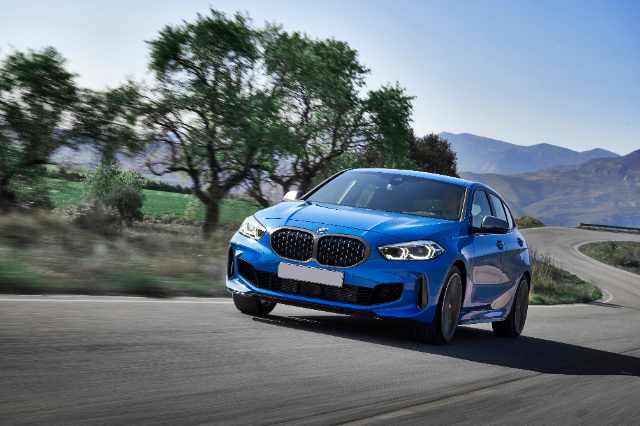
Here we have gone for the entry level model in the 1 Series range. The 118i comes with a 1,5-litre turbocharged petrol engine that develops 103 kW and 220 Nm of torque. It drives power to the front wheels through a 7-speed automatic gearbox. The 0-100 km/h time is rated at 8,5 seconds, top speed is 213 km/h and the claimed average fuel consumption is 5,9 litres/100 km. Tyres sizes are 205/55 R16, and the 118i comes with a 5-year/100 000 km maintenance plan and a 2-year unlimited km warranty.
Audi A3 Sportback 35TFSI: R544 900
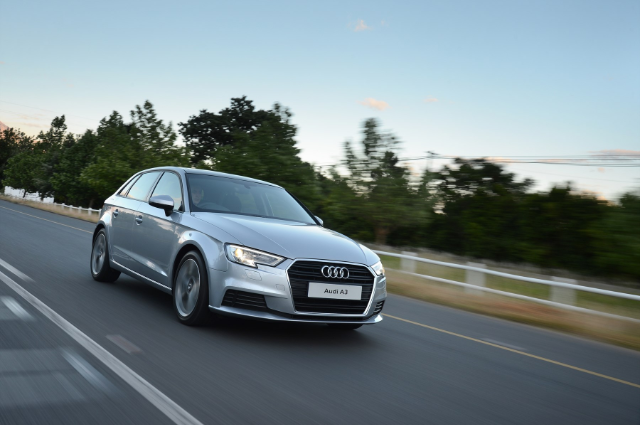
This model is not the least expensive in the A3 range, but in terms of performance it is closest to the 118i. The A3 35TFSI employs a 4-cylinder turbocharged petrol engine displacing 1,4-litres, and power is feed to the front wheels through a 7-speed dual-clutch automatic gearbox. Outputs are 110 kW and 250 Nm of torque. The 0-100 km/h time is a claimed 8,2 seconds, top speed is 220 km/h, and fuel consumption is rated at 4,9 litres/100 km. Tyre sizes are larger than its competitors at 205/45 R17. The maintenance plan is 5 years/100 km, but the warranty is only for one year with unlimited km.
Mercedes-Benz A200 Hatch Style: R563 960
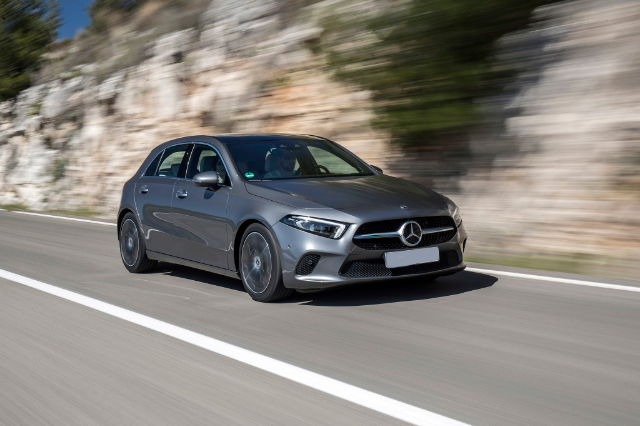
The latest version of the Mercedes-Benz A-Class is far superior to the previous generation A-Class. It won the AutoTrader Car of the Year award in 2019. The A200 model is fitted with a 1,3-litre turbocharged petrol engine that is rated at 120 kW and 250 Nm of torque. The 0-100 km/h time is 8,0 seconds, top speed is 225 km/h and fuel consumption is claimed at 5,6 litres/100 km. The maintenance plan is 5-years/100 000 km and the warranty is 2 years with unlimited km. Tyre sizes are 205/60 R16s.
Which car is the running costs winner?
These cars are all going to be very close in terms of running costs. All are covered by a 5-year/100 km maintenance plan, so spares pricing and servicing costs are not factor here. Insurance cover is also going to be very similar no matter which car you choose from this trio.
In the fuel consumption stakes the Audi is the theoretical winner, but counting against it here is that tyre replacement costs on the A3 will be the most expensive, due to their larger sizing.
The BMW has the least power, and strangely enough the highest fuel consumption (claimed) figure. But with a difference of only half a second in 0-100 km/h time between all three cars, performance is pretty much on par.
As far as equipment goes and perceived quality, all three cars are pretty equal, and here the most important factor is probably going to be which brand you are ailigned to on an emotional level. They all do pretty much the same job!
Taking everything into account, the BMW 118i is the running costs winner, thanks to its lower purchase price, which is some R15 000 cheaper than the Audi and R33 000 less than the A200. Financing costs on these price differences will buy you a heck of a lot of fuel, to make up for the BMW’s marginally heavier thirst.
Recommended next:
Top 5 things you have to know about the BMW 118i