
Bentley Bentayga vs Lamborghini Urus vs Aston Martin DBX: here's our winner!
Those who doubt the growth potential of the SUV market should take notice of the happenings at the top of this segment. Manufacturers who have, up till recently, made their money from super-exclusive sports cars and ultra-luxurious saloons, are now fighting for market share with high-riding luxury wagons of their own. We pitch the Bentley Bentayga against two upper crust opponents, to see which one we’d prefer.



Continent Crushers
It was none other than Ettore Bugatti himself who, prompted by the endurance racing success of the 1921-1929 Bentley 3-Litre, referred to the British company as a maker of “fast lorries”. This quote was most likely uttered with equal measures of derision and admiration, because the hefty Bentleys repeatedly out-performed Bugatti’s purpose-built, lightweight race cars, and dominated the famous Le Mans 24-hour race until 1931.
Subsequent Bentleys followed more or less the same recipe, and maintain this tradition to this day: modern Bentleys are still large, heavy and over-engineered, with monstrous performance courtesy of brutally-potent engines. It’s no wonder that Bentley decided to try their hand at creating a super-SUV, then, because such a beast fits in perfectly with the company’s ethos.
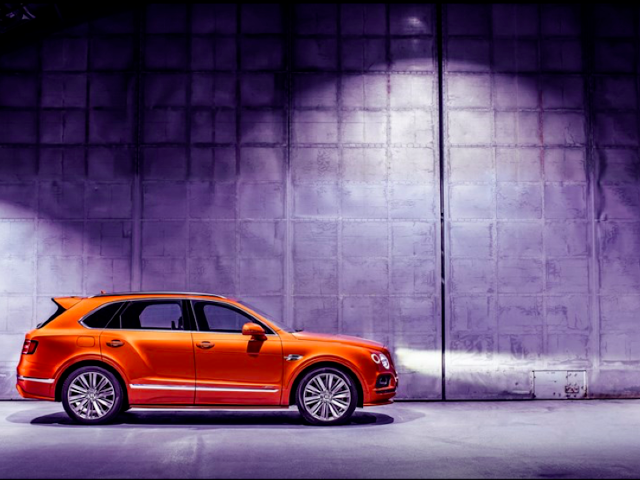
Bentayga: A weird name for some rather familiar hardware
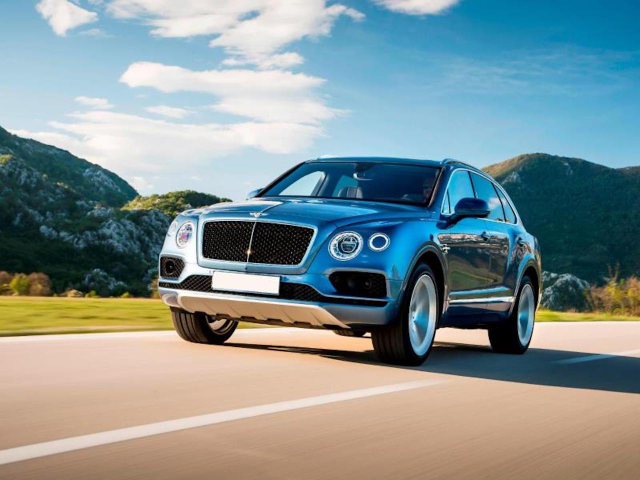
Supposedly (but rather aptly) named after the rocky peak of an extinct volcano in the Canary Islands (that’s how far manufacturers have to look for unused model names, these days), the Bentley Bentayga is quite literally a mountain of a car. It certainly is the tallest Bentley in current production, and it boasts engine options with the appropriate mountains of torque.
But it’s not quite as bespoke or as British as you’d think, in spite of its unique body styling and exotic name. Underneath the Bentayga lurks a version of the Volkswagen Group’s MLBevo platform, which can also be found in a wide variety of rather more-pedestrian cars – it underpins most of the VW Group’s larger cars, from the Audi A4 upwards and all the larger SUVs as well. Don’t dismiss the Bentayga because of its mass-market ancestry, however, because Bentley did a fine job of tuning the corporate hardware to suit their requirements.
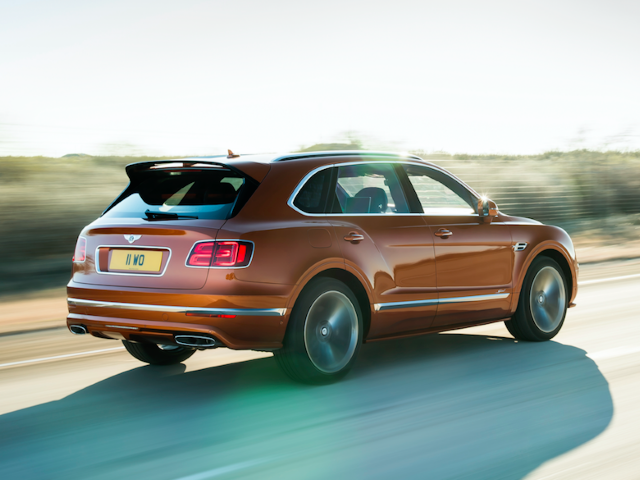
Bentley Bentayga W12
Believe it or not, but the Bentayga W12 is the mid-level variant in its range, even though it carries a staggering pricetag just R 5 000 shy of the R4-million mark. Lesser Bentaygas employ V8 engines in either petrol- or diesel flavours, and cost considerably less – “only” R 3 395 000 will get you one of those. However, individuals who could afford to buy or lease a car of this calibre would most likely steer clear of the “budget” derivatives, and go for a richer experience instead.
Related: Which Bentley Bentayga is better - petrol or diesel?
Capping the range are two even more-expensive variants named the “Speed” (yours for R 600 000 more than the normal W12) and the “Mulliner” (another R 600 000 on top of the Speed’s pricetag). These “high-trim” Bentaygas compete in an even more exclusive league, though, and are more-accurately seen as alternatives to the Rolls-Royce Cullinan. So, for the purposes of this comparison, we selected the “mid-spec” Bentayga, to compare it to two competitors from other well-known luxury brands: Lamborghini and Aston Martin. Prepare yourself for some faintly preposterous statistics, then read on…
Engine, performance and consumption
Behind the Bentayga’s imposing radiator grille resides a 6.0-litre, twin-turbo W12 engine. Imagine two narrow-angle V6 (VR6) engines, themselves arranged in a V-formation, and you’ll get the idea behind it. This makes for a surprisingly compact but very complex engine, but it does have some serious numbers to show for all that effort.
Related: We make the case for the more-sensible Bentley Bentayga diesel.
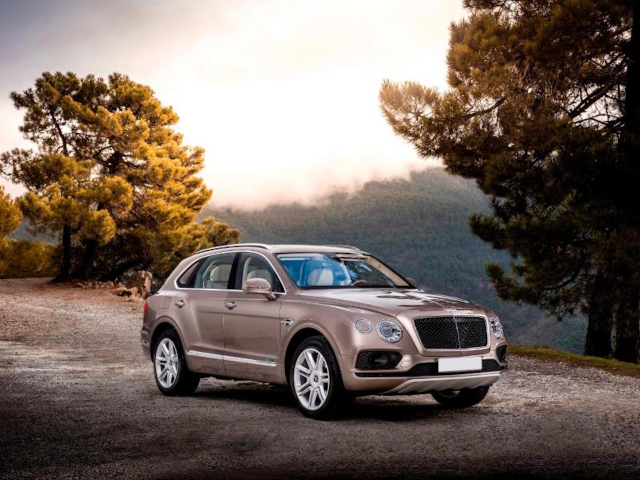
Peak power is quoted at 447 kW, with 900 Nm available in a torque plateau that stretches from 1 250 – 4 500 r/min. This power is sent to all four wheels via a tortured 8-speed automatic transmission and permanent all-wheel drive, to give a claimed 0 – 100 km/h sprint in only 4.1 seconds and a top speed governed at 301 km/h.
If you want to move 5 people and their luggage really, really quickly, this would be an excellent machine for the job. This performance is quite remarkable for car with a kerb weight of 2440 kg, and makes it a very fast lorry indeed!
Just be prepared to feed the beast within, though: Bentley claims an average fuel consumption of 13.1 ℓ/100 km, but mixed-use driving on real roads will most likely see figures around the 20 ℓ/100 km range. But hey, that’s part of the appeal of a car like this: not only can buyers show off by buying it, but driving it also proves that they can afford to fuel it.
Standard equipment
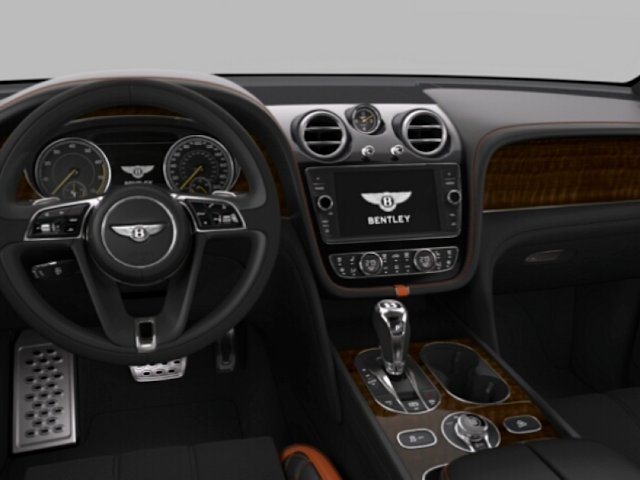
It goes without saying that a car with this pricetag comes loaded with just about every toy one could care to mention. We’re not even talking about the ordinary stuff such as adaptive full-LED headlamps or a high-tech 8-inch colour infotainment with a 60 GB HDD, navigation and an extensive array of input channels, either – those are to be expected at this price point.
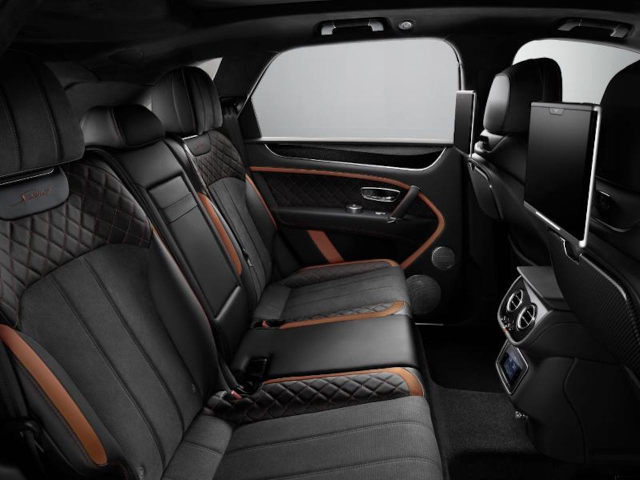
Instead, Bentley offers a massive variety of customisation options, such as 15 different colours for the cabin’s quilted leather lining, and 4 different choices of trim veneer. And, to satisfy the polo-playing elite at which this car is aimed, there’s even an “Event Seat” fitted under the boot floor. This seat is obviously also trimmed in quilted leather, and is lit by hidden lamps in the tailgate. Optional extras include the likes of picnic hampers, picnic tables, bottle coolers, dual-tone paintwork, various alloy wheels (up to 22-inch diameter), and a separate entertainment installation for the rear seats. Ah, the lifestyles of the rich and famous…
Related: Top 5 extras for your new Bentley Bentayga.
Safety
Seeing as the Bentayga is supposed to transport high net worth individuals, it’s obviously kitted to the hilt with safety equipment as well. The usual alphabet soup of safety- and driver assistance systems is present, including ABS with EBD, stability control, hill-start assist, hill descent control, 8 airbags, front- and rear parking sensors, and rear ISOFIX child seat anchors.
But, seeing as Bentley forms part of a German conglomerate, there are also plenty of option boxes to tick if you really want the ultimate in safety equipment. On this list is something called the “Touring Package”, which includes adaptive cruise control, a head-up display, lane-keeping assistance, and night vision. It’s a bit stingy to keep these items from the standard equipment of a car with this kind of pricetag, though – for almost R4-million, buyers are probably entitled to have such features included in the base price.
Practicality
With a total length of 5.14 metres, the Bentayga is a very large car, and its interior dimensions reflect this fact. While a third seating row (to turn it into a 7-seater) and a 4-seater layout are optional, the standard configuration has 5 seats. With 5- or 7 seats, there’s a wide bench seat in the back, but the 4-seater gets two bucket seats and a centre console instead. Whichever arrangement is selected, there’s cabin space aplenty all round, including a raised roofline to allow for larger door openings and add extra headroom under the sliding panoramic roof.
The luggage compartment is, not surprisingly, somewhat less generous. That Event Seat under the boot floor eats into the luggage space, and presents an elevated platform on which to load those designer travel bags. Good thing that air suspension is standard, then – it eases both loading and entry/egress from the Bentayga. Very gentlemanly. That said, the luggage compartment measures only 484 litres in 5-seater mode, which is a bit disappointing for a car this big.
Related: Read more about the Bentley Bentayga in our initial launch report.
Price and value proposition
Come on. We’re talking about a car that costs near as makes no difference 4 million Rands here, before options. Value cannot enter the equation at this price point, because you can get a luxury SUV that’s objectively 98% as good for 50% of the money from any of the premium (as opposed to luxury) brands. The Bentley Bentayga is an extravagance, just like the other two cars in this comparison are extravagances too. That’s their entire reason for existence, really.
That doesn’t detract from the Bentayga’s sheer abilities, though. For all its upper-class affectations, there’s a very capable car underneath. It can be optimised for off-road work, but will handle any demands made on most surfaces with as much aplomb as it will storm down the overtaking lane or out of the blocks. The fact that it’s very nicely made from quality materials and finished with care and attention is really to be expected, and shows through in all three of these cars. It’s even expensive enough for that subsection of the super-rich who wish to flaunt their wealth. If you want to be noticed when you arrive anywhere, this is the car for you…
The competition
Lamborghini Urus
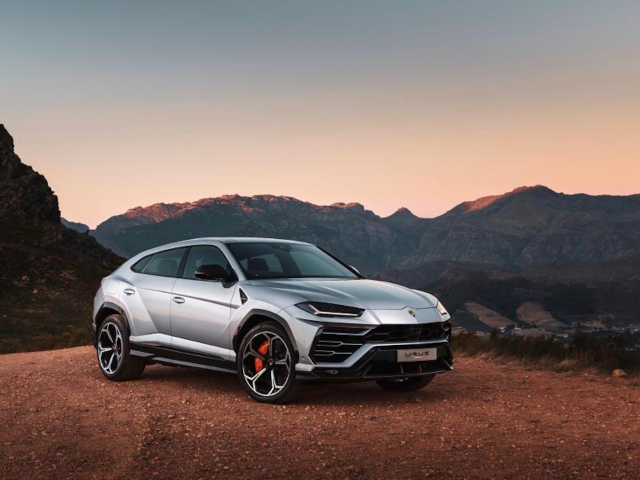
… but if you want to be noticed while you’re on your way as well as when you arrive, you’re cordially invited to a bull-riding festival at Lamborghini. Yes, the renowned maker of V10- and V12-engined supercars also wants a slice of the luxury SUV pie.
To gain entry, they compromised on a number of the company’s traditional attributes: it’s the first production Lamborghini with a V8 engine since the late-1980s, it has more than 4 seats, and it’s the first turbocharged production Lamborghini ever. Forget about high revs and a howling soundtrack, because it’s all about efficiency and torque these days.
That doesn’t make the Urus’s 4.0-litre twin-turbo V8 any less impressive, though: it offers a highly respectable 478 kW and 850 Nm, once again sent to all four wheels via an 8-speed automatic transmission. This is the highest state of tune for the Volkswagen Group’s corporate V8, and has a decent power advantage over the (cheaper) Bentayga V8’s version as well as the related one employed in the Porsche Cayenne Turbo. There’s only one engine on offer in the Urus, and that’s the most-powerful one, as it should be in a Lamborghini.
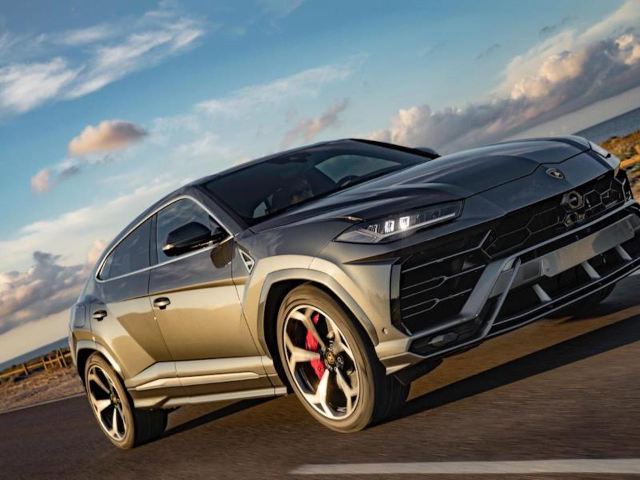
Performance is, as you might suspect, somewhat surplus to requirements. The 0 – 100 km/h dash is dispatched in a claimed 3.6 seconds, and its top speed is governed to 305 km/h. Just that little bit quicker than its Bentley cousin, see?
Related: Ten reasons to love the Lamborghini Urus.
The Urus also employs the VW Group’s MLBevo platform, which also makes it a close relative of not only the Bentayga and Cayenne, but also the rather lowlier Audi Q7, Q8, and Volkswagen Touareg. Volkswagen are certainly getting value for their development money from this platform, but its versatility makes it possible for each brand to tune their products to suit their own requirements.
Fuel economy is again rather irrelevant to the Urus’s target demographic, but for the sake of completeness, we’ll mention that Lamborghini claims an average fuel consumption of 12.6 ℓ/100 km. This is lower than the Bentayga’s claim, and equally unlikely to be achieved in normal driving. Let’s be honest: with so many under-bonnet horses (or are they storming bulls?) yearning for freedom, a Lamborghini Urus is bound to be driven with some verve, with plenty of feed stops for those beasts along the way.
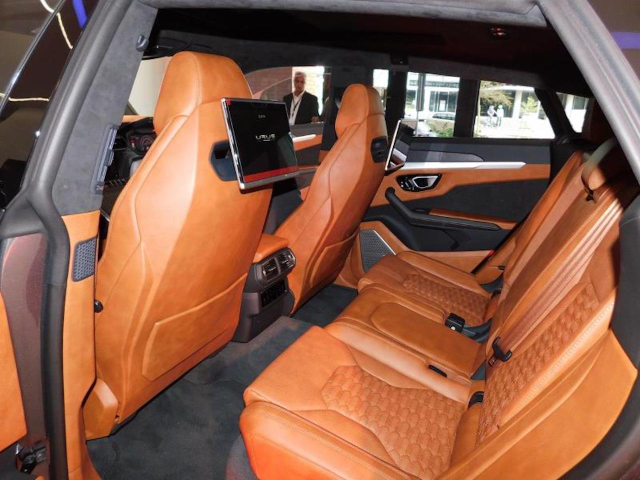
Cabin space is a bit compromised by that low, sloping roofline and flattened glass area, but the Lamborghini has a surprisingly spacious boot, with 616 litres available in 5-seater mode. There is no 7-seater option, but the rear seat can be specified to accommodate either two or three occupants, in similar vein to that of the Bentley.
Standard features are roughly on par with that of the Bentley as well, but the interior’s design approach is very different. Instead of the Bentayga’s olde-worlde approach with soft curves, wood veneers and quilted leather, the Urus is all angular, high-tech and aeroplane cockpit-like. Yes, you can get open-pore wood in an optional trim package, but the standard aluminium or optional carbon fibre are more in keeping with the Lamborghini’s futuristic cabin décor. Safety credentials are sorted by the same suite of acronyms as the Bentley, but the Urus only gets 6 airbags as standard, with an upgrade to 8 available as an option.
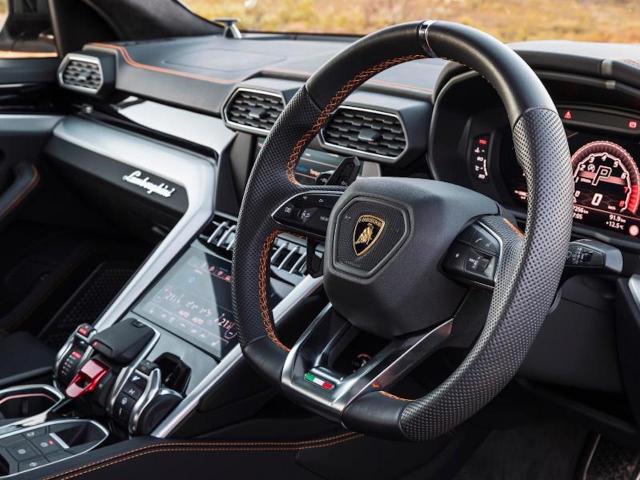
And, as with the Bentayga, the really high-tech things are optional. Driver assistance systems like blind spot monitoring and adaptive cruise control with lane-keeping assistant and traffic jam assistant are all optional, as are the head-up display and night vision.
Related: Our driving impressions of the Urus - Riding Lamborghini's biggest bull!
Given that the Lamborghini Urus carries exactly the same pricetag as the Bentley Bentayga W12, the Lambo’s improved performance makes for a slightly better value proposition, but the same reservations still apply. It’s properly quick, edging into supercar territory with its sprinting abilities, and its angry, angular styling ensures that the Urus will stand out in all settings.
It will certainly attract more admiring attention than the Bentley, because its appearance is just preposterous enough to add some humour to a very serious market segment. In that way, at least, it’s still an old-school Lamborghini: outlandish and proud of it.
Aston Martin DBX
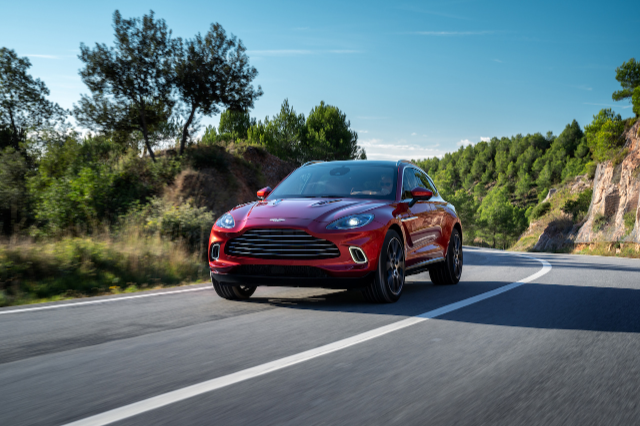
You know you’re talking about big-ticket opponents when the least-expensive car in a comparison is an Aston Martin. Not that the DBX is inexpensive, mind you – its base pricetag of R 3 600 000 still means that it is an exclusive plaything for tycoons. It certainly has the brand cachet to pull off Aston Martin’s entry into the SUV arena, even if its appearance is a little generic this time around.
Its appearance might be a tad ordinary, but the Aston Martin DBX has the frame of a thoroughbred, being built on a development of the latest Vantage’s bonded aluminium platform. As a result of that spaceframe construction, space efficiency is unlikely to be spectacular, but there should be enough room for five average-sized adults. Its luggage space is more than competitive, however, measuring 632 litres.
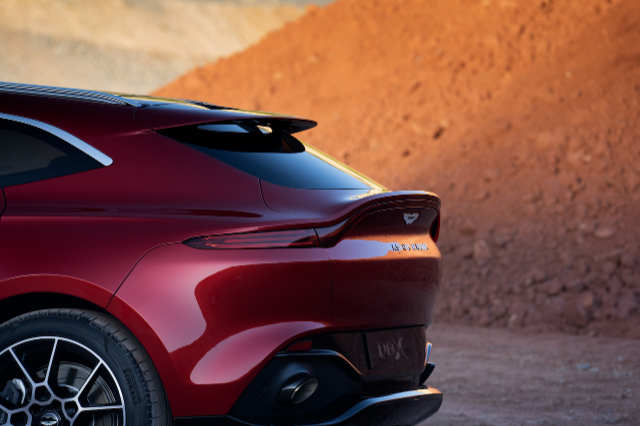
There’s only so much to be done about a 5-door hatchback SUV shape, of course, which is why Aston Martin distinguishes this model with fine detailing. Intricate light clusters and voluptuous curves making for some visual distinction, even though some aspects recall the Porsche Macan as much as they are inspired by other Aston Martins.
Related: Our launch report has more details and images of the Aston Martin DBX.
The outside influence also extends bit further than mere cosmetics, because the oily bits are sourced from Mercedes-AMG. The engine is derived from AMG’s 4.0-litre biturbo V8, and the 9-speed automatic transmission and AWD systems also come from the House of the Fast Three-pointed Star. That’s no bad thing, mind you: the engine is a highly-regarded powerhouse, the gearbox is smooth and slick-shifting, and the advanced AWD makes for unbreakable traction and responsive handling.
However, given the DBX’s ultra-lux positioning, it’s strange that this engine is employed in such a mild state of tune. In some AMG models, it produces up to 470 kW and 900 Nm, but for Aston Martin’s use, it’s tuned to deliver “only” 405 kW and 700 Nm. This is the only available engine at the moment, although it’s likely that more-powerful derivatives will follow in due course.
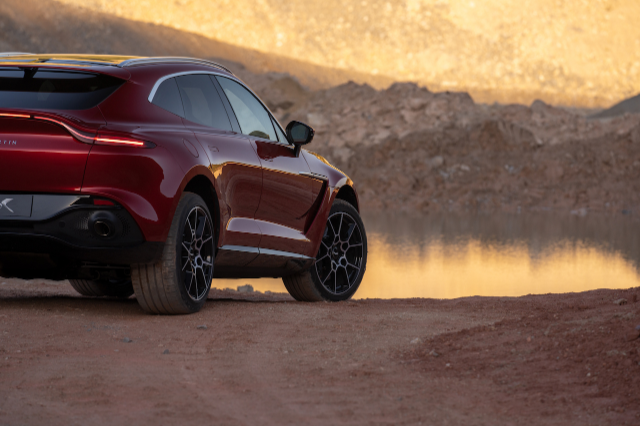
As a result, the DBX is the slowest (!) car in this group, with a claimed 0 – 100 km/h sprint in 4.5 seconds and a top speed of 291 km/h. Strangely, it’s also the least economical, with a claimed average consumption of 14.3 ℓ/100 km. And yes, that claimed consumption is also extremely unlikely to ever be achieved in regular driving.
The DBX does make up a lot of lost ground in the standard equipment stakes, though, with adaptive cruise control, blind-spot monitoring, lane-keeping assistant and surround-view cameras all forming part of the standard features list. Neither of the other contenders have these items as standard, and ticking those option boxes to achieve specification parity with the Aston Martin will result in an even bigger price gap.
Related: Top 5 accessories for an Aston Martin DBX.
In its safety respects, the DBX matches the Lamborghini’s standard trim, but because it has so many more safety aids as standard, the Aston Martin has a definite advantage over the other cars in this trio. This also hands it a victory in the value stakes, such as it is for indulgences like these three cars.
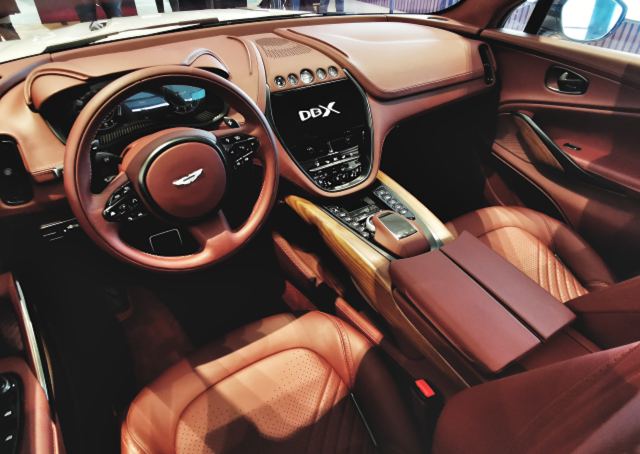
In fact, as far as “first try” SUVs go, the DBX is an even more impressive accomplishment than the other two, because it’s a family vehicle that’s spawned off a sports car platform. For this reason, and in spite of its (relative) lack of power, it’s also likely to have the sportiest driving characteristics among these opponents.
Which one do we like best?
Let’s recap the important numbers first:
|
|
Bentley Bentayga W12 |
Lamborghini Urus |
Aston Martin DBX |
|
Engine (cyl/size) |
6.0-litre twin-turbo W12 |
4.0-litre twin-turbo V8 |
4.0-litre twin-turbo V8 |
|
Power/Torque |
447 kW/900 Nm |
478 kW/850 Nm |
405 kW/700 Nm |
|
Transmission |
8-speed automatic |
8-speed automatic |
9-speed automatic |
|
Kerb Weight |
2 440 kg |
2 200kg |
2 245kg |
|
Length (mm) |
5 140 |
5 112 |
5 039 |
|
Airbag count |
8 |
6 (opt 8) |
6 |
|
Load Volume* |
484 litres |
616 litres |
632 litres |
|
0-100 km/h** |
4.1 seconds |
3.6-seconds |
4.5-seconds |
|
Top Speed** |
301 km/h |
305 km/h |
291 km/h |
|
Ave Consumption** |
13.1 ℓ/100 km |
12.6 ℓ/100 km |
14.3 ℓ/100 km |
|
Warranty |
3 yr/unlimited km |
3 yr/unlimited km |
3 yr/unlimited km |
|
Base Price |
R 3 995 000 |
R 3 995 000 |
R 3 600 000 |
* In 5-seater form, where applicable
** Manufacturer's official claimed figures.
Verdict
Let’s be up front about it: we’re not going to choose a winner between these three cars. It may seem like a cop-out, but the only things they really have in common are their dimensions, body style, and sky-high pricetags. For this reason, they cannot be compared as opponents, but should rather be seen as different interpretations of the luxury SUV theme: they do roughly the same things, but they go about their business in very different ways.
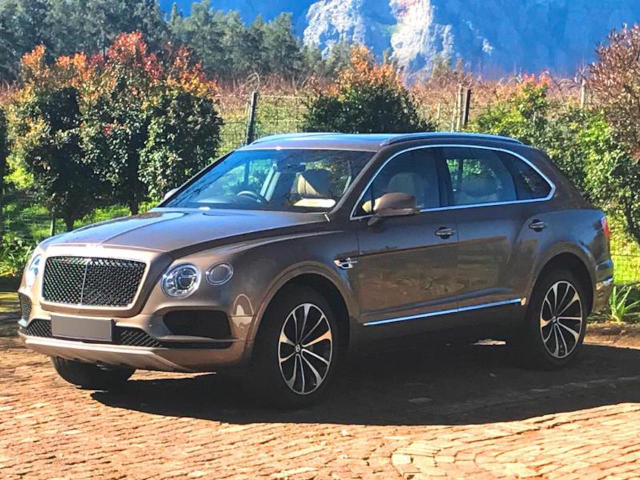
The Bentayga majors in luxury, with lots of cabin space, opulent trimmings and finishes, and a cossetting ride quality. It’s meant to go very fast in absolute silence and with minimal input from the driver, and it’s meant to look very expensive. It succeeds at all these criteria, but falls short on standard equipment for the money they’re asking. In an era when adaptive cruise control is standard in a high-trim Ford Ranger, it should also be standard in a super-luxury car that costs 6 times as much.
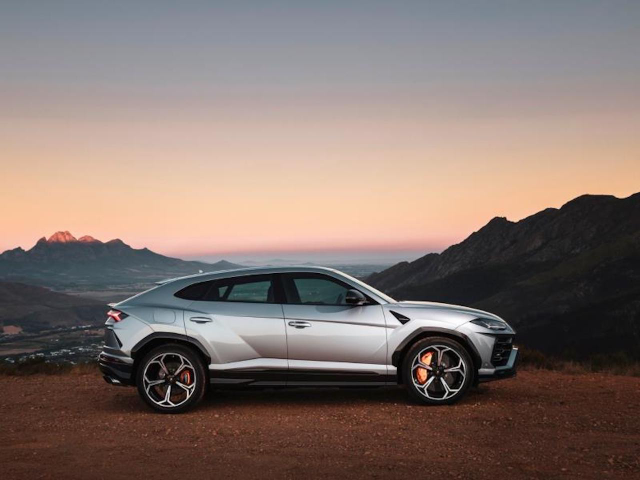
The Lamborghini Urus suffers from the same poor spec-to-price ratio, but still offers the excessive performance you’d expect from the brand. It’s also the most strikingly-styled of this bunch, and delivers the most aural drama when the accelerator pedal meets the carpet. Add that big boot, and it should be a pretty charming companion on a long cross-country trip (and very rapid, too, if you can afford to fuel it). The most-German Italian car you can buy, by far.
But there’s one car here that really grabs the attention, and that’s the Aston Martin DBX. Their link-up with AMG has endowed the first Aston Martin crossover with a thoroughly modern and highly-admired engine, drivetrain, and in-car technology, while its sports car-derived skeleton bears no relation to any family saloon.
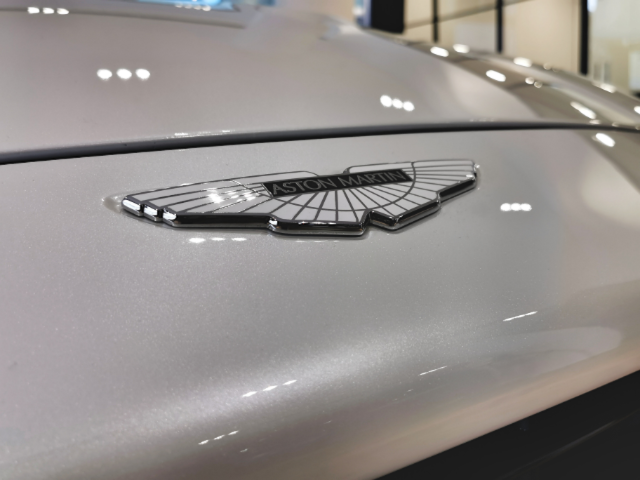
In this price bracket, bespoke qualities matter more than actual abilities, and the Aston Martin is simply a more unique way of expressing the idea behind a super-luxury SUV. And that (roughly) half-a-million in change, left over after buying a DBX instead of a similarly-equipped Lamborghini or Bentley, will be enough to satisfy any remaining need for speed with a track day toy like a pre-owned Porsche Cayman…
*Pricing was accurate at the time of writing, but may change without prior notice.
Recommended Next:
Shop for new and used Bentley Bentayga cars for sale here.
Shop for new and used Lamborghini Urus cars for sale here.
Shop for new and used Aston Martin cars for sale here.