
Audi A5 vs Mercedes C-Class vs BMW 4 Series: here's our winner
Let’s talk about coupés for a moment: traditionally, the term has always referred to low-slung two-door, 4-passenger vehicles, with or without a hatchback rear end. The trend of calling anything with a sloped backside a coupé, even high-riding SUV-things with 5 doors, is a relatively modern phenomenon, brought about by marketers who don’t care about things like definitions and protocol. So, for the sake of this comparison, let’s rather consider a trio of “real" coupés to find our winner.


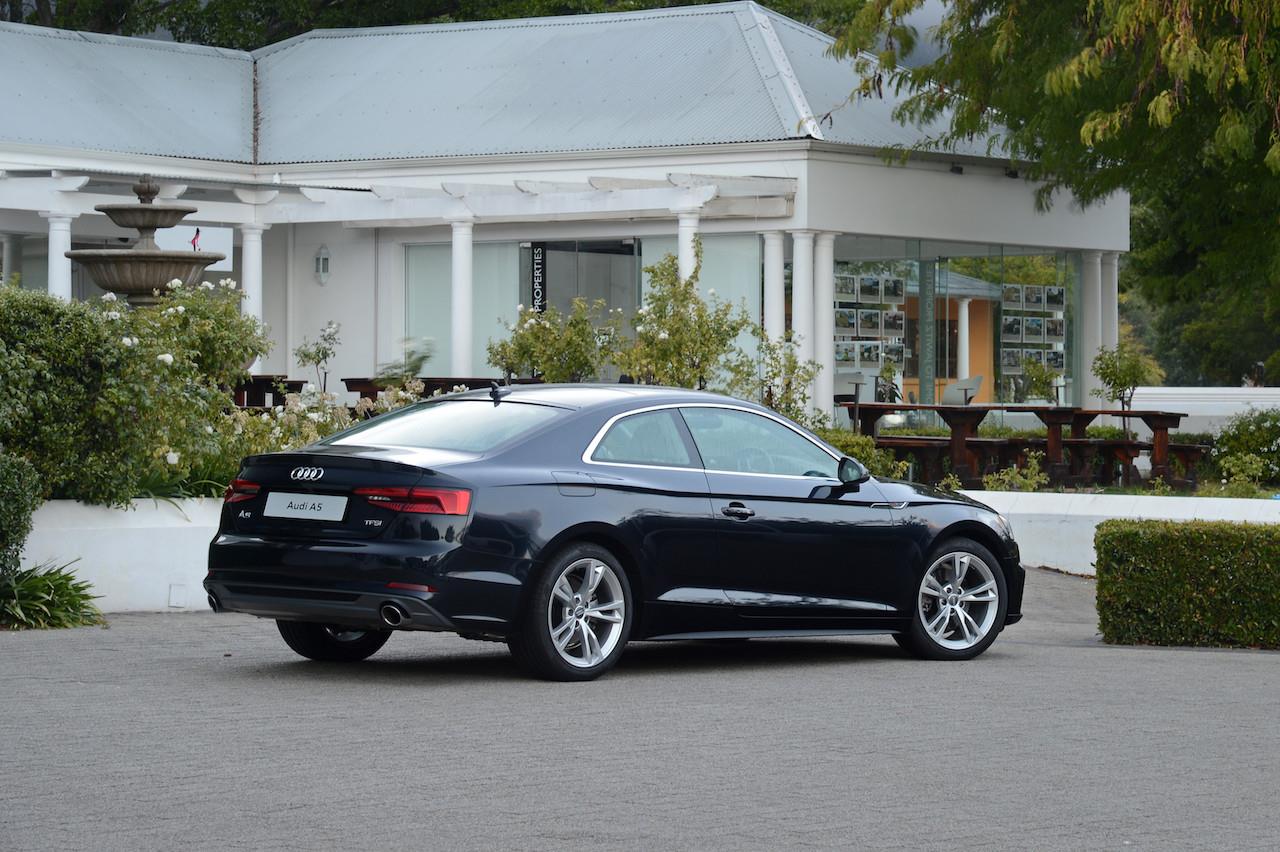
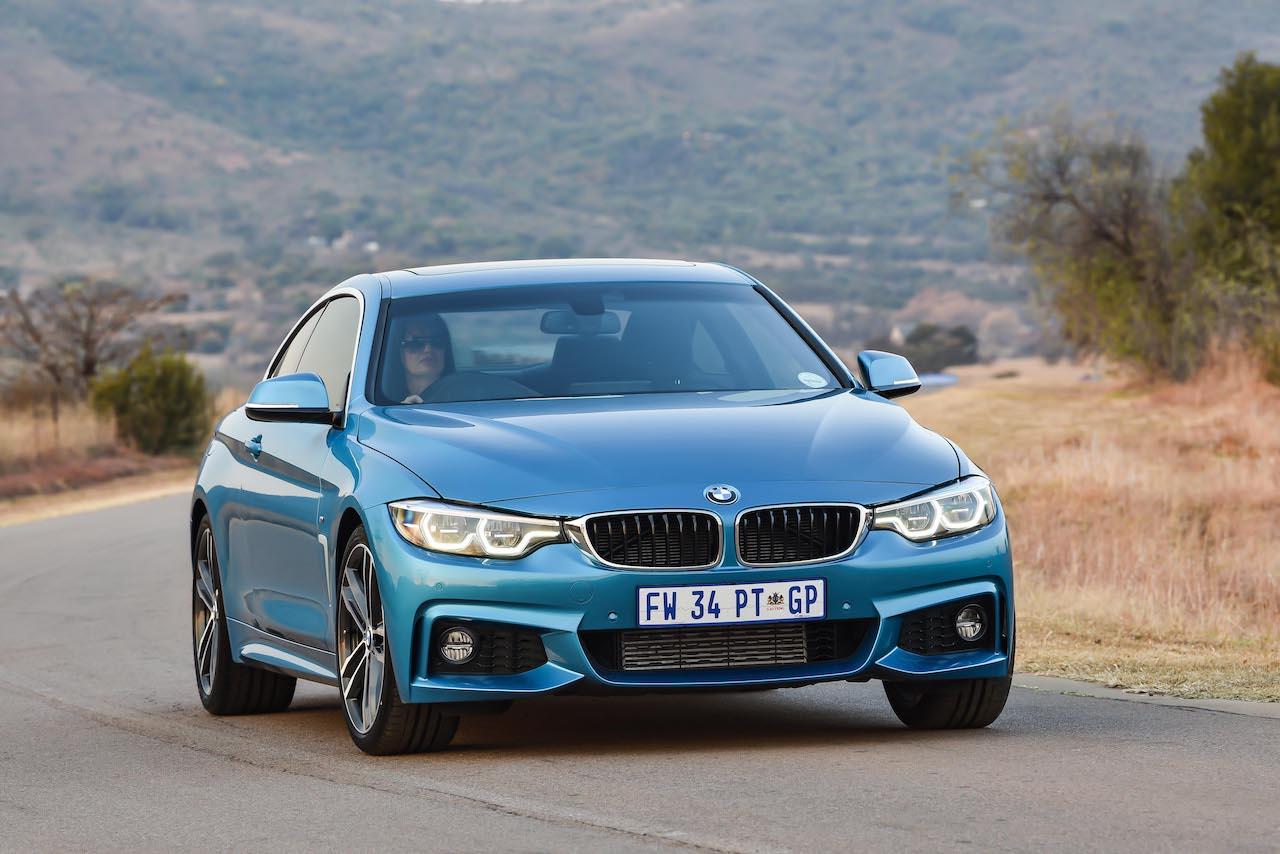
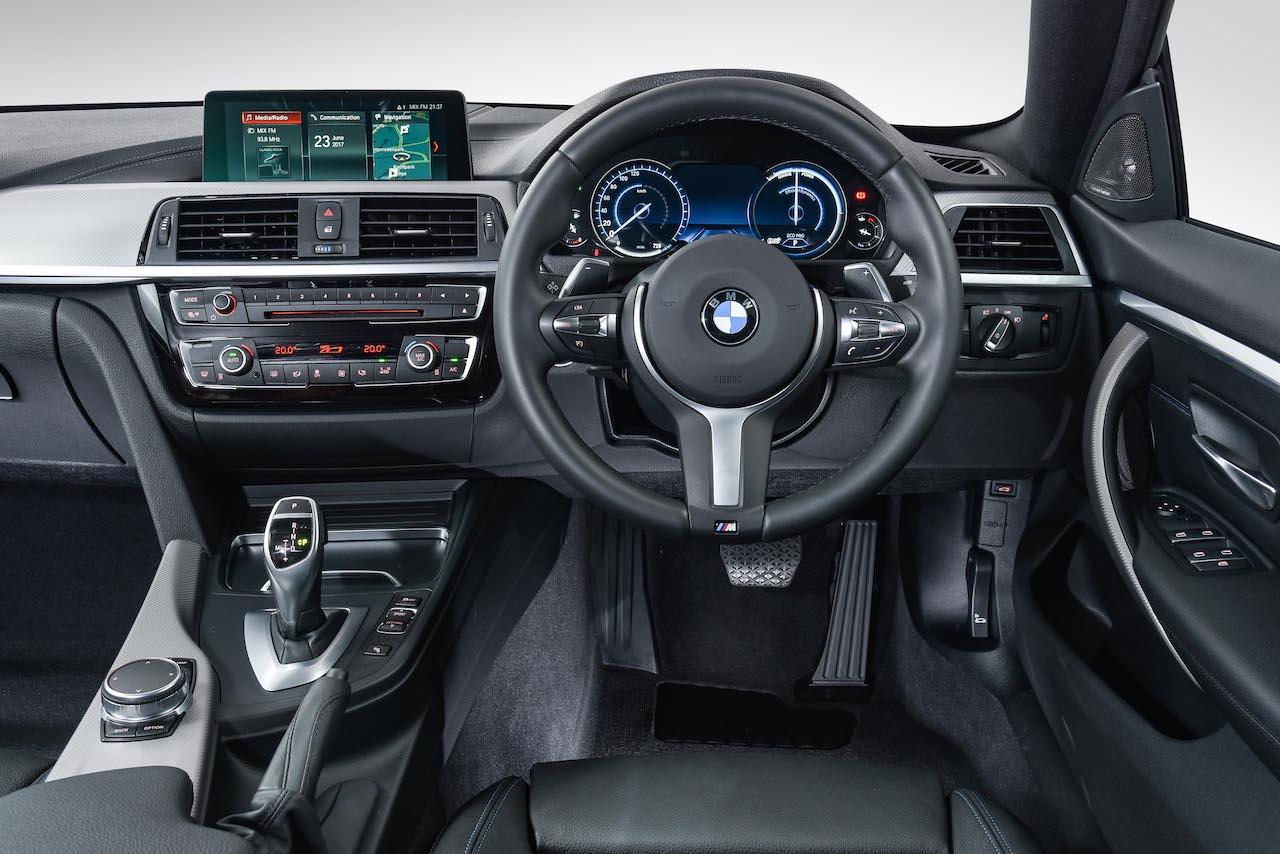
Coupé versions of the German Big Three’s mid-sized sedans have been around for decades: Audi fielded one based on their second-generation 80 series back in the 1980s, and although the two-door 3 Series only officially became a coupé with the 1991’s E36, its essence was present in the E30 as well. The odd one out is Mercedes-Benz, who only started offering a two-door C-Class in the early 2000s – up till then, all of their coupés were derived from the larger E-Class and luxury S-Class models, and carried a commensurately heftier price tag.
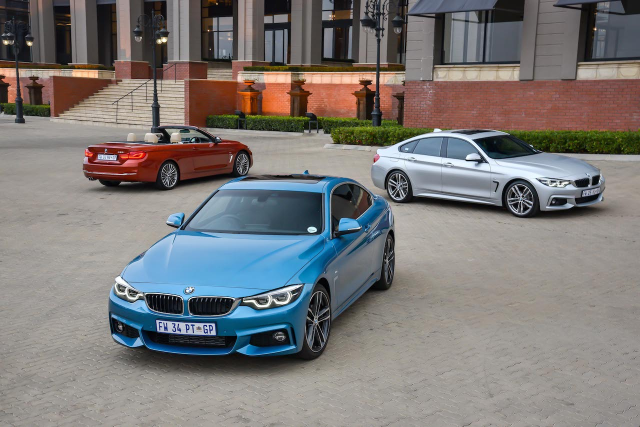
But they’re all on the same page now, and they all offer proper 2-door coupés in their mid-range model series. From Audi, there’s the A4 sedan-based A5 (also available with a drop top or with 5 doors and a fastback), with the BMW 4 Series using 3 Series sedan underpinnings to mirror the Audi A5’s model range. In contrast, the Mercedes-Benz C-Class can only be had in South Africa with 4 doors (sedan), 2 doors and a lower roof (coupé), or with a soft top (cabriolet), but with no 5-door fastback in sight.
While all three of these contenders can be specified in higher-performance trims, we decided to concentrate on comparable 4-cylinder petrol variants in each of their respective ranges, with similar pricing to level the playing field somewhat. In all cases, this means a turbocharged engine mated to an automatic transmission, but with varying power outputs and different drive systems setting them apart.
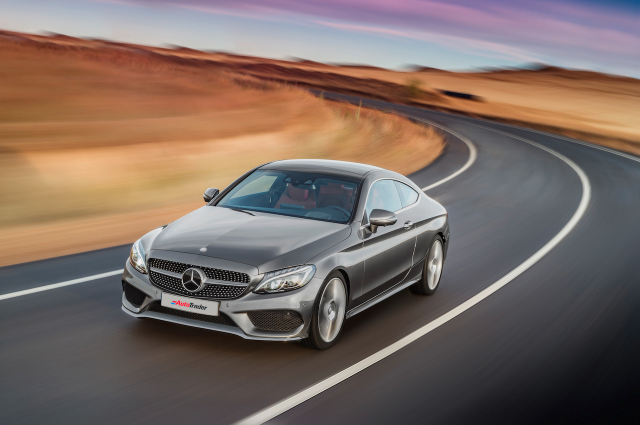
Doing battle with the Audi A5 coupé 40TFSI sport S line sports (yes, that’s its full name) are the Mercedes-Benz C200 coupé AMG Line and the BMW 420i coupé M Sport – all of them a notch or two below the pinnacles of their respective ranges, but all aimed at buyers with similar requirements. Which one hits their target market best? Let’s find out – but first, let’s look at the bare facts and figures.
Facts and Figures
|
Engine size (cyl/size/fuel) |
4-cyl, 2.0-litre turbopetrol |
4-cyl, 1.5-litre turbopetrol mild hybrid |
4-cyl, 2.0-litre turbopetrol |
|
Power/Torque |
140 kW/320 Nm |
145 kW/280 Nm (combined) |
135 kW/270 Nm |
|
Kerb Weight |
1420 kg |
1515 kg |
1495 kg |
|
Length (mm) |
4 673 |
4 686 |
4 638 |
|
Boot volume (litres) |
465 |
400 |
445 |
|
Airbag count |
6 |
7 |
6 |
|
Top Speed (km/h) * |
240 |
239 |
236 |
|
Ave Consumption * |
5.3 ℓ/100 km |
6.3 ℓ/100 km |
5.5 ℓ/100 km |
|
Warranty |
1 yr/unlimited km |
2 yr/unlimited km |
2 yr/unlimited km |
|
Price |
R 683 654 |
R 702 136 |
R 706 686 |
*Manufacturer's official figures.
Analysis
On paper, these three contenders are very close to each other, with roughly equal power outputs and similar sizes. They achieve their similarities through different avenues, however, with big differences in their drivetrains and where they send their power. As we shall soon see, these different approaches have various consequences, with each competitor having its own particular strengths and weaknesses.
Power, performance, and drivetrains
While all three cars use downsized and turbo-boosted engines to produce power which would have put them in the high-performance echelon few decades ago, the march of progress has relegated them all to entry-level status in their respective ranges. They go about their business in different ways, too, with two of these contenders being rear-wheel driven (BMW and Mercedes-Benz) and one (the Audi) using front-wheel drive.
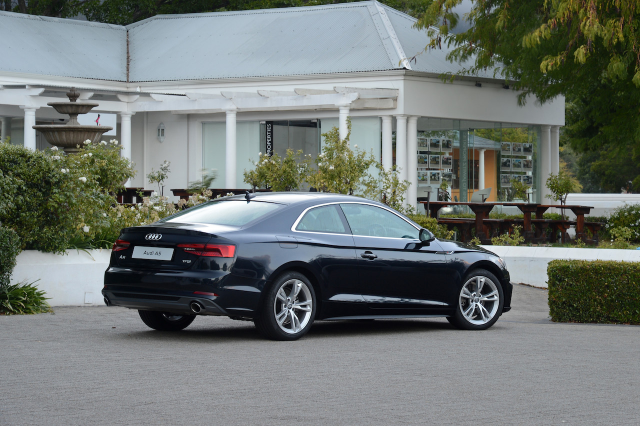
On top of its front-wheel drive, the Audi also uses a 7-speed dual-clutch automatic, in contrast to the BMW’s 8-speed torque converter automatic and the Mercedes’s 9-speed unit. They’re all excellent gearboxes, and in this regard, the C-Class probably shows the greatest improvement over its predecessors: its new 9-speed unit is slick-shifting and unobtrusive in cruising conditions or about town, and responsive when pushing on.
As is the norm for BMW nowadays, the 8-speed ZF “Sport Auto” in the 420i is highly adept in its operation as well, with intuitive programming, very quick shift times, and impeccable smoothness in operation. Seen against such formidable opposition, the Audi’s lower ratio count may seem like a drawback, but it’s more than up to meeting the competition head-on in its operation.
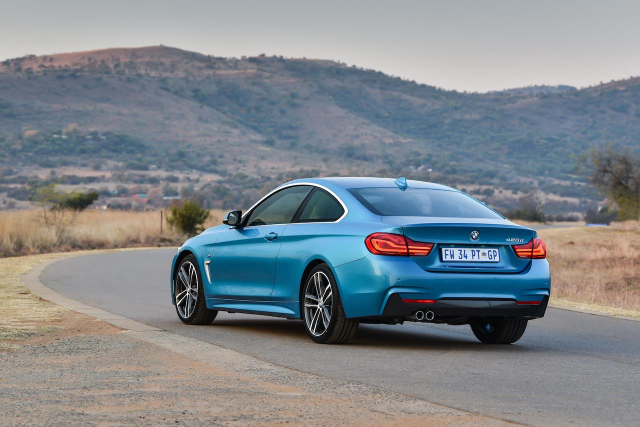
Audi was a pioneer with dual-clutch technology, and this latest 7-speed unit benefits from that expertise to become a paragon of versatility. Almost as smooth in operation as the BMW or the Mercedes, the Audi’s twin-clutch unit has them both beat on shift speed, and compensates for its relative lack of ratios by being more efficient.
As far as motive power goes, the Audi and BMW are the most closely matched, and both employ detuned versions of their corporate 2.0-litre turbo 4-cylinders. In contrast, the Mercedes-Benz uses a new 1.5-litre turbo “four”, but with some electrical assistance to lift its power output slightly above those of both the Audi and the BMW.
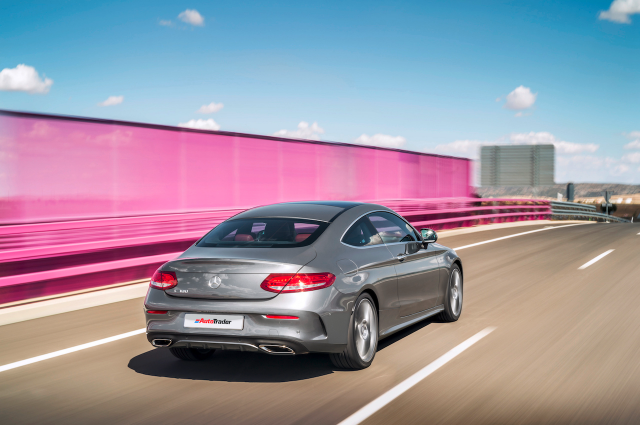
The Audi’s 140 kW sits nicely between the 135 kW of the BMW and the Mercedes’s 145 kW, but it offers a lot more torque than either of the others. The Mercedes’s 280 Nm narrowly trounces the BMW’s 270 Nm, but neither comes close to the Audi’s 320 Nm.
Taking all of these factors into account, it makes sense that the A5 40TFSI has a slight performance advantage over the others: It has a gearbox with less internal losses, quicker shift speeds and snappier take-off, weighs the least of this trio (75 kg less than the 420i and 95 kg less than the C200), and has an extra helping of torque. No wonder the Audi is the performance champion here, with the BMW coming in second place and the rather portly Mercedes-Benz settling for the third position.
Economy
Given its weight advantage and efficient transmission, it’s also logical that the Audi should use the least fuel in this group – a fact borne out by its official average consumption figure of 5.3 ℓ/100 km. The BMW is only slightly thirstier, though, with an official average of 5.5 ℓ/100 km, with the Mercedes again bringing up the rear with its quoted 6.3 ℓ/100 km average consumption.
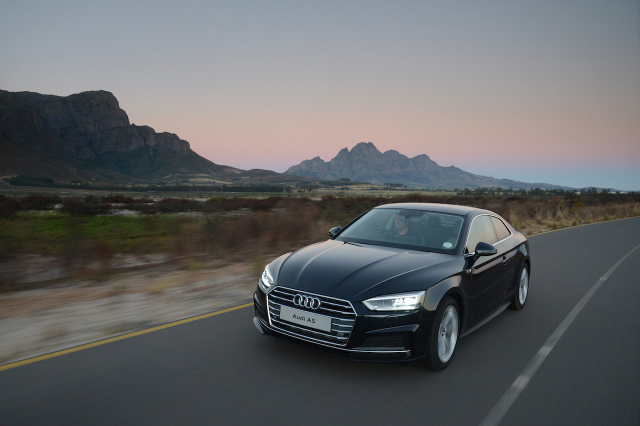
However, none of these cars are exactly lightweights, and their comparatively hefty builds will result in much higher real-world consumption figures. Expect them all to average closer to the 7.0 ℓ/100 km mark in normal driving, with the C200’s mild hybrid tech likely to make a bigger difference on real roads than in official testing. The Audi will still be the economy king, though, because it’s the lightest one here, with the widest torque spread and the most efficient transmission.
Practicality
Proper coupés aren’t bought for their practicality, and these three all prove that a sporty stance and slinky profile comes with significant packaging disadvantages. The Audi A5 has a slight upper hand, however, thanks to its front-wheel drive packaging, which liberates extra cabin space and provides for a larger boot.
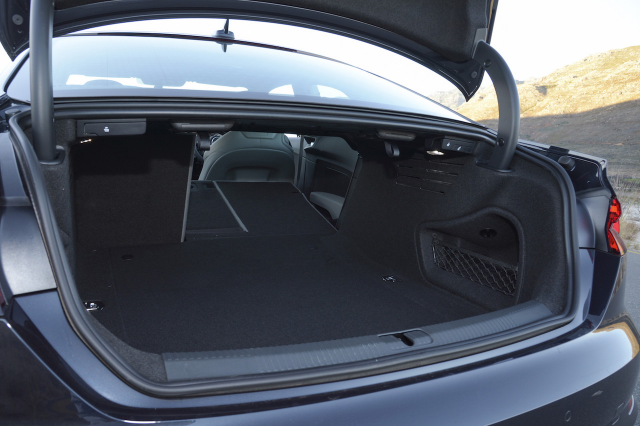
In terms of loading capacity (with all seats in use), the Audi’s luggage compartment is the clear winner, with a decent 465 litres on offer. It beats the BMW’s 445 litres, and comfortably eclipses the Mercedes’s 400 litres – odd, considering that the C200 is the largest car in this comparison. This hands the Audi yet another victory, albeit in a department which likely doesn’t matter very much to its typical buyers.
Equipment and safety
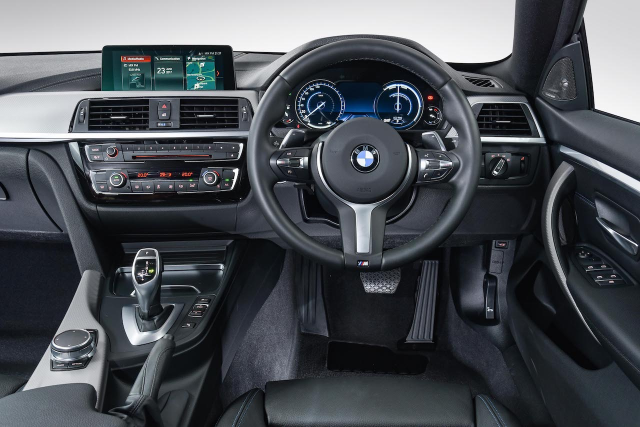
In the typical German manner, standard equipment levels are quite high in all three cars, but the really cool stuff is reserved for their options lists. However, all three cars come standard with niceties such as colour infotainment systems, automatic climate control and LED headlights, although the BMW is the only one to offer navigation as standard. The Audi at least compensates by offering front- and rear parking sensors as standard, both of which are optional on the other two.
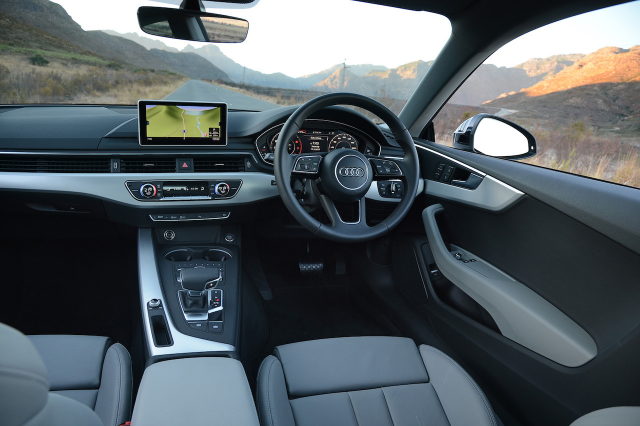
Ticking the navigation system boxes in the other two will also upgrade to fully-digital instrument clusters, which is a standalone option for the BMW. All of them have cruise control, with adaptive cruise available as part of optional driver assistance packages.
The same applies to the various other option packages as well – as we saw earlier, the really nice things cost extra, so these cars’ specification sheets really only depend on the buyer’s willingness to delve into their pockets. All three cars are well-supported in the aftersales department, and have equal maintenance plans for 5 years or 100 000 km in addition to their normal warranties.
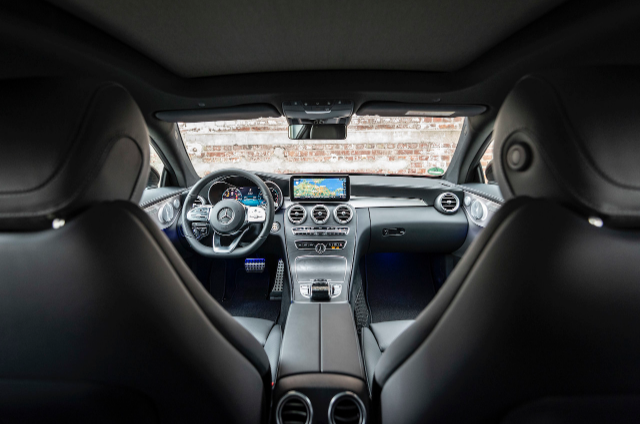
However, by virtue of its standard navigation (and BMW ConnectedDrive), the BMW has the highest level of standard equipment, so it emerges as the victor in this regard. The Audi’s parking sensors takes it to a close second place here, while the comparatively sparsely-equipped Mercedes comes in third.
As far as safety goes, they’re again very evenly matched. The A5 and 420i both feature 6 airbags, with the C200 adding a driver’s knee airbag to that tally. All three cars (or the sedans upon which they are based) scored 5 stars in the Euro-NCAP crash testing programme, and they’re all fitted with stability- and traction control, ABS, and ISOFIX child seat anchors on the outer rear seats. Meanwhile, driver assistance features can be specified as desired. Based purely on its higher airbag count, the C200 takes the safety crown by a very narrow margin.
Verdict
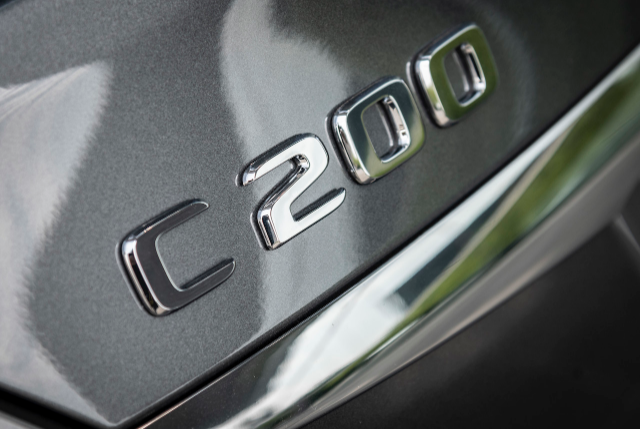
Choosing a winner from three contenders as closely-matched as these will depend to a large degree on the buyer’s personal preference. The Mercedes-Benz C200 is a very attractively-styled car inside and out, and for many customers, that will be enough. However, it’s the slowest and thirstiest car here, and the least practical as well. While that last point will likely not matter much to owners, it does confirm that it’s just that little bit less complete as a product, which relegates it to third place in this group.
Separating the Audi and the BMW is a rather more difficult. They’re almost even on performance and practicality, and the BMW has marginally better standard equipment. However, the BMW is the most expensive car here, and it’s getting on in years (a new one is due to make its international début soon), so while it’s still a competitive effort, it will soon be upstaged by its successor.

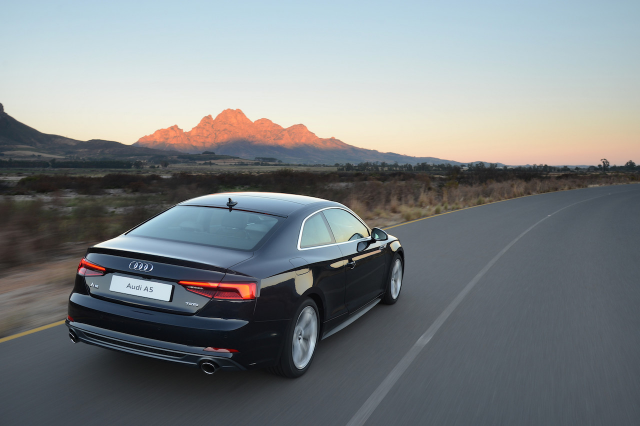
This leaves the Audi as our overall winner here. It has the liveliest performance (always important in a car with the sporting pretences of a coupé), and has competitive attributes in all other areas. Combined with its significant price advantage, this broad spread of abilities hands it the winner's title.
* Pricing was accurate at the time of writing, but may change without prior notice.
Related Reading:
Our road test of the Audi A5 revealed a fun car with many virtues.
Make the most of your Audi A5 by choosing some of these enticing extras.
We made a video review of the (pre-facelift) C-Class, and rather liked it.
Find out more about the infotainment systems in these three cars here.
If you're interested in a C-Class Coupé, have a look at these classy accessories!
To find out more about the BMW 420i Coupé, have a look at our video review.
For more information about Euro-NCAP crash testing, visit their website.