

1. Under both bonnets: 3.0L turbodiesel power for hard work and easy towing
- Power: 140 kW at 3,600 rpm
- Torque: 450 Nm from 1,600 to 2,600 rpm
- Transmission: 6-speed automatic
- Capability: Both feature shift-on-the-fly 4WD, low-range, an electronic rear differential lock, and Rough Terrain Mode (an electronic brake-assisted system that mimics a limited-slip differential across the front axle).
Buying used? Check out our (1.9L) Isuzu X-Rider 4x4 Review here.

*What is Rough Terrain Mode?
- Throttle Mapping: It softens initial throttle response to prevent wheel spin in slippery or loose conditions, helping you maintain momentum rather than digging yourself into a hole.
- Brake-LCS (Limited Slip Differential) Control: If a wheel loses traction and starts spinning freely in the air or on slick surfaces, the system instantly brakes that specific wheel, redirecting engine torque to the wheels that still have grip.
- Transmission Logic: It alters shifting patterns to keep the engine in its optimal power band while crawling or navigating tricky obstacles.

2. Pricing
- Isuzu D-Max 3.0TD double cab X-Rider 4x4: Currently priced at R 844,470.
- Isuzu D-Max 3.0TD double cab V-Cross 4x4: Wears a price tag of R 948,930.
- safety technology,
- steering feel, and
- executive cabin comforts.
3. Safety and Advanced Driver Assistance (ADAS)
- 8 Airbags: Adds a crucial front-centre airbag between the driver and passenger to prevent head crashes in a side impact.
- Adaptive Cruise Control with stop-and-go functionality: Automatically matches the speed of traffic on highways. In heavy congestion, it can bring the bakkie to a complete stop and hold it for up to five minutes before the driver has to touch the accelerator pedal again.
- Autonomous Emergency Braking (AEB): Warns you of potential collisions and brakes automatically if you do not react in time.
- Lane Keeping Assist & Departure Warning: Helps keep you centred in your lane during long highway trips.
- Blind Spot Monitoring & Rear Cross-Traffic Alert: Keeps you safe in busy traffic and crowded parking lots.
- Tyre Pressure Monitoring System (TPMS) & High-Beam Assist.
Please note that the V-Cross offers a rearview camera but no 360-degree bird's-eye view or front camera, same as the X-Rider.

4. Cabin comfort, tech, and steering

- Steering: The X-Rider uses traditional hydraulic power steering. The V-Cross upgrades to Electric Power Steering (EPS), making low-speed parking manoeuvres noticeably lighter and highway steering much more settled. The V-Cross also adds steering wheel gearshift paddles.
- Seats and Climate: The X-Rider features manual driver seat adjustment and standard air conditioning. The V-Cross treats you to dual-zone automatic climate control, heated front seats, and an 8-way electrically adjustable driver seat with electric lumbar support. Both models feature full leather seats.
- Starting Up: The V-Cross gives you keyless entry with push-button start. The X-Rider requires the good old key in the ignition.
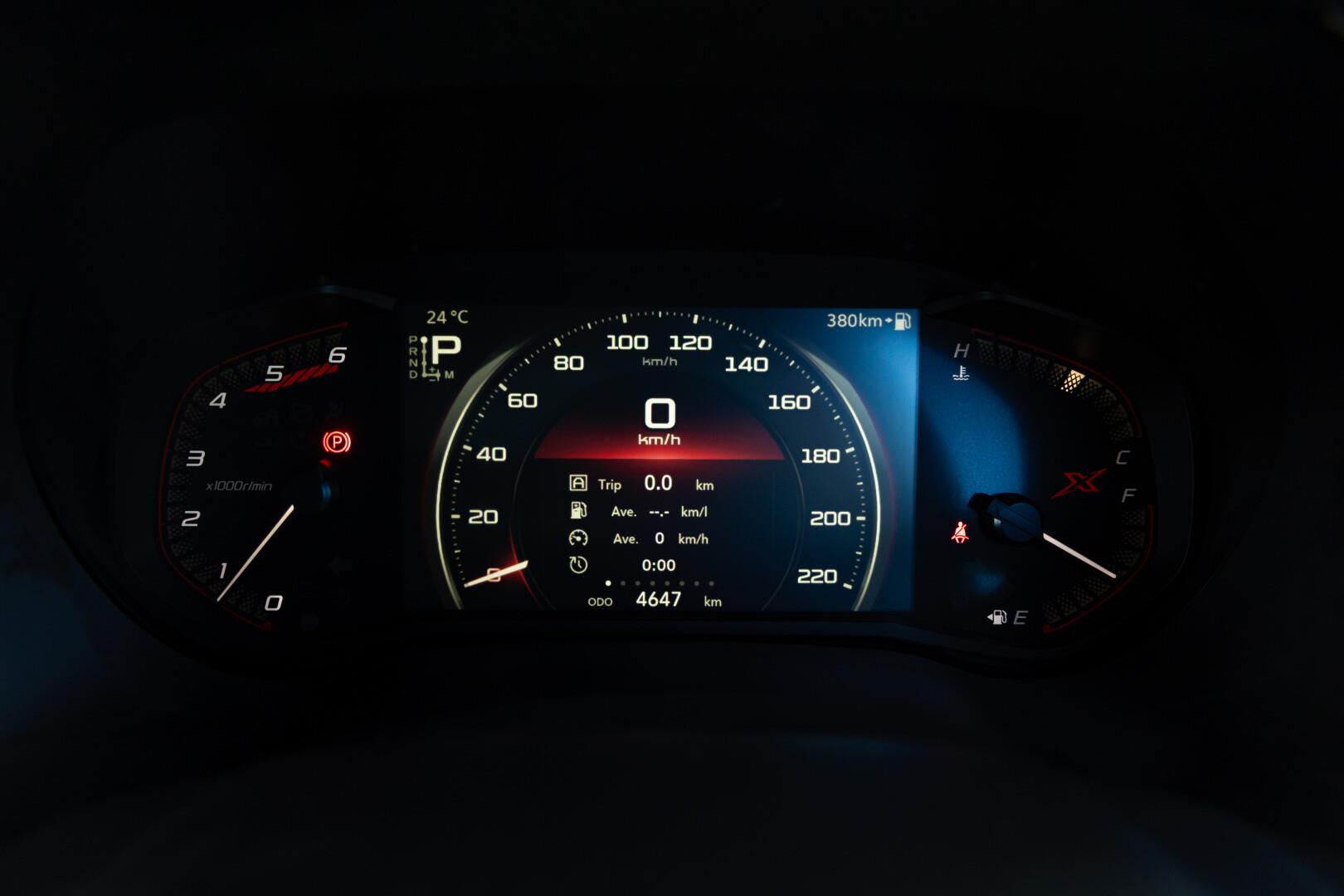
- Instrument cluster: Both bakkies use traditional physical analogue dials for speed and revs, but the V-Cross upgrades the central multi-information display to a larger, higher-resolution screen to handle its complex ADAS graphics. The X-Rider makes do with a simpler, smaller MID screen flanked by those same analogue gauges.
- The X-Rider gets one USB-C port up front and one USB-C in the back. The V-Cross has two up front (USB-C) and one USB-C in the rear.
5. Styling: Rugged vs. executive
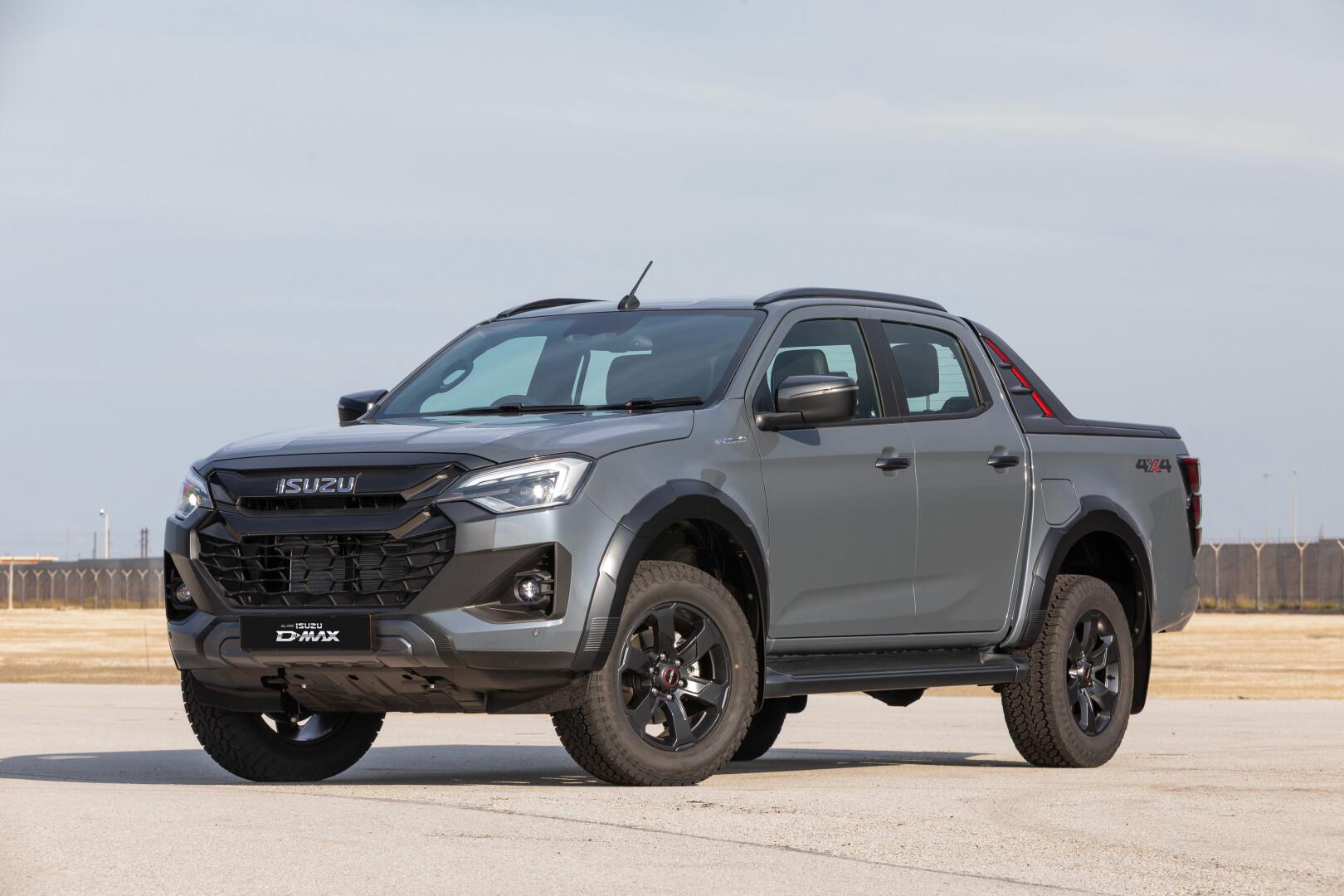
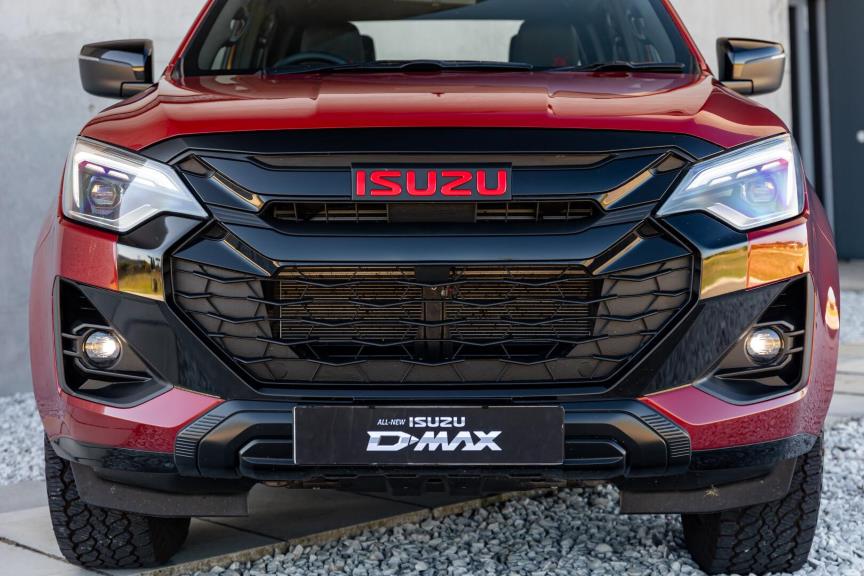
- The X-Rider Look: It leans into youth and attitude. You get a bold black radiator grille with a striking red Isuzu badge, side and tailgate X-Rider decals, a black sports bar, 18-inch diamond-cut black alloy wheels, and red stitching inside the leather cabin. It turns heads everywhere it goes.
- The V-Cross Look: It goes for a more mature, executive aesthetic. You get sophisticated dark grey exterior accents on the roof rails, side steps, mirror housings, and sports bar.

The verdict: Which one is best for whom?
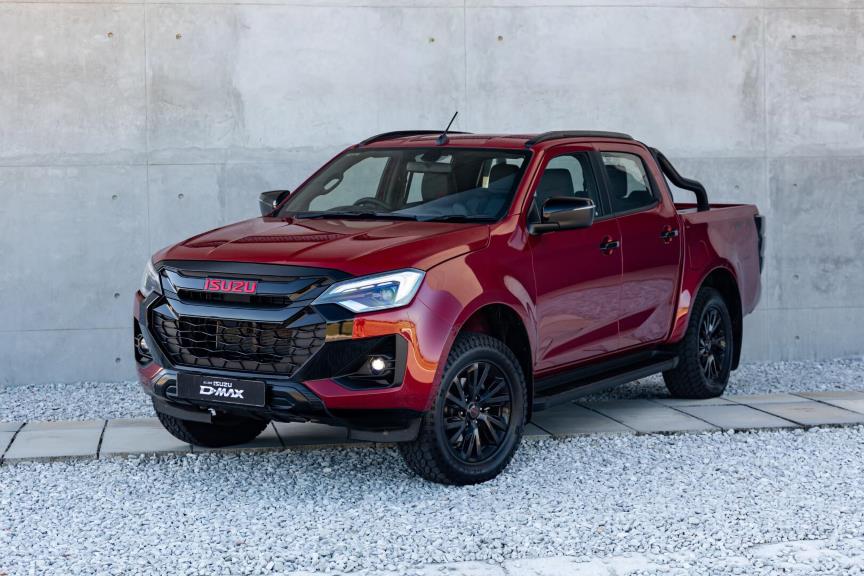
Which one would we choose to live with?
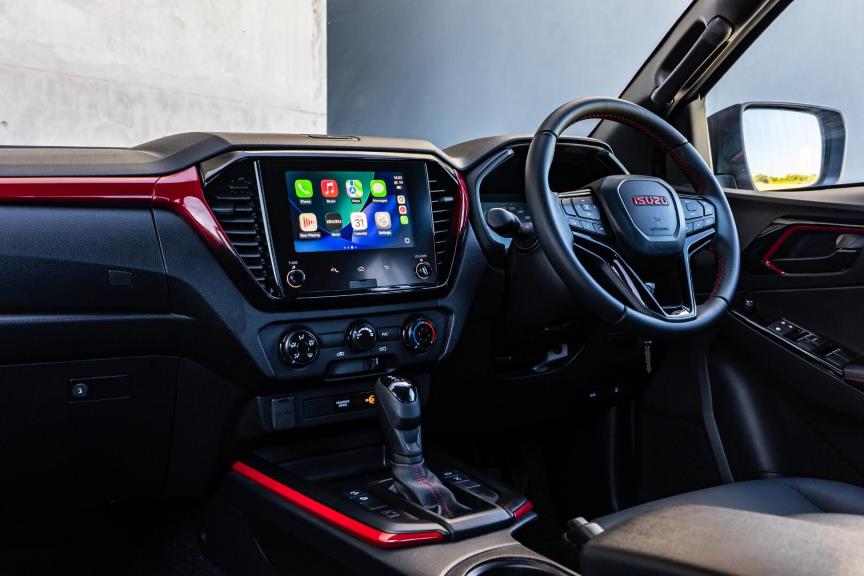
After driving both bakkies back-to-back, the X-Rider gets my vote. It may have a slightly smaller touchscreen and two fewer speakers, but it pairs easily with your phone for seamless Apple CarPlay/Android Auto integration, both of which are wireless. (I also didn't think the sound quality between the two systems sounded markedly different; neither is fantastic.)
I also prefer the air-conditioning controls in the X-Rider: Rotary dials instead of the row of switches below the touchscreen in the V-Cross; it's simple and straightforward to adjust when you're on the move.
Unfortunately, there are no rear air vents for X-Rider passengers, but if you crank the potent air-con up high enough, it will cool the cabin quickly.
The V-Cross's autonomous emergency braking is a little too sensitive for my taste. It sent my groceries flying when someone slowed down in front of me at a speed bump and slammed on the brakes, even though there was no imminent threat. You can reduce its sensitivity, but it defaults every time you switch the car off and back on again.
While I love how easy the EPS (electronic power steering) makes the V-Cross feel in town, I am quite happy to pilot the slightly more industrial-feeling X-Rider through the city streets - especially if it means I'm saving over R100k. But that's just me; go take both for a test drive and then decide.