Why BMW’s South African Homage Editions cannot recapture the magic
The iconic BMW E30 333i and 325iS models were products of industrial necessity and bespoke local engineering for motorsport homologation. The modern Homage Editions are highly exclusive aesthetic packages built on a digitally filtered, globally standardised platform.


The critical disconnect is a fundamental divergence of engineering philosophy—the originals were raw, analogue, and mechanically compromised for performance purity, while modern cars prioritise comfort, technology, and global appeal. Join me as I deconstruct why these new cars haven't quite struck the same chord with local audiences as the originals did.
Related: BMW Honours the 325is and 333i with limited-run Homage Editions
The anatomy of a legend and the challenge of tribute
The iconic BMW E30 333i and 325iS models, unique to South Africa, were not products of corporate marketing but were born of industrial necessity and highly specialised local engineering. These vehicles represented bespoke solutions crafted explicitly for motorsport homologation and to satisfy an enthusiast market starved of the genuine E30 M3. This "skunkworks" ethos necessitated radical, fundamental mechanical changes—engine transplants, use of lightweight aluminium panels, and adoption of specialised racing components.
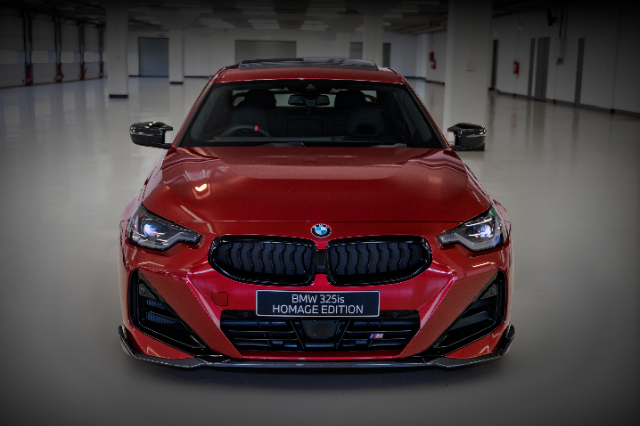
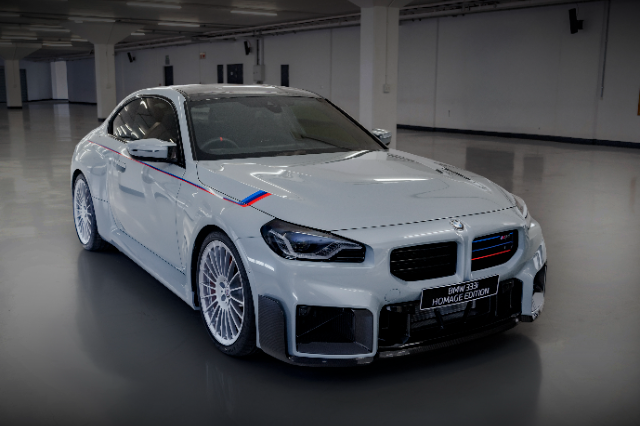
Based on the highly capable G42 2 Series platform (M2 and M240i xDrive, respectively), the recently released Homage Editions are executed as highly exclusive aesthetic packages. These tributes use visual trim—unique wheels, specific body kit accents, and heritage upholstery—to evoke nostalgia. While the modern cars are vastly superior in objective speed and performance metrics, they lack the mechanical soul and bespoke engineering purity that made the E30 a legendary cultural and visceral icon. It is important to note that modern cars are not recreations, but tributes, an essential factor.

South Africa's motorsport imperative and local engineering
The genesis of BMW South Africa's autonomy
BMW Group South Africa (BMW SA) established its Rosslyn plant's first manufacturing division outside Germany. This local manufacturing capability was essential, allowing BMW SA to develop a unique culture of industrial autonomy and local engineering expertise, which was particularly crucial during periods of economic isolation. This legacy was built upon performance projects like the E12 530MLE, which demonstrated the capability to execute deep mechanical modifications.
The M3 exclusion and local racing regulations
The primary catalysts were not importing the E30 M3, the challenge of local Group 1 Series racing, and the fact that it was primarily a left-hand drive model, in addition to the economic sanctions placed on South Africa during the period.
Group 1 regulations mandated that competitors utilise engines with displacements greater than 3.0 litres.
This immediately rendered the E30 M3’s 2.3-litre S14 four-cylinder engine ineligible.
BMW SA needed a 3 Series with a large-displacement, straight-six engine to challenge rivals.
The mandate for homologation specials
Both the 333i and the later 325iS were developed explicitly as homologation specials. A specific number of road-going units had to be produced and sold to qualify the car for competitive motorsport classes. The resulting vehicles were mechanically radical, their character dictated by a mandatory engineering requirement driven by local necessity and racing rules. The modern Homologation models bypass this foundational mandate.
Technical dive into the BMW 333i (E30)
Radical engineering and mechanical compromise
The 333i resulted from a unique collaboration between BMW M Division and Alpina.
Defining Feature: Shoehorning the massive 3.2-litre M30 straight-six engine (typically found in the larger E23 7 Series) into the compact E30 chassis.
Output: Around 145kW and 285Nm of torque.

The purist’s trade-off
The sheer size of the M30 engine necessitated a critical engineering compromise:
The Infamous Trade-Off: The engine installation dramatically restricts available space, forcing buyers to choose between two essential modern conveniences: air conditioning (A/C) and power-assisted steering (PAS).
This compromise demonstrates an engineering philosophy focused relentlessly on performance. Modern Homage models, built on fully equipped, technologically integrated platforms, contain no compromises. Only a highly restricted batch of 204 to 210 units of the 333i were produced.
The reign of the Gusheshe: The 325iS engineering evolution (Evo I & Evo II)
The Group N mandate and iterative development
The 325iS was conceived to meet Group N Racing regulations and dominate local touring car competitions. Its progression through two homologation stages reveals the depth of local engineering effort.
Evo I: The Focus on Lightweight Purity (March 1990)
Engine: Alpina C2-derived 2.7-litre M20 straight-six engine, producing 147 kW.
Drivetrain: Dog-leg close-ratio gearbox and a 3.7 Limited Slip Differential (LSD).
Weight Reduction: The bonnet, door skins, front wings, and boot lid are made of aluminium.
Curb Weight: Approximately 1 147 kg.

Evo II: The pursuit of power (1991)
Power Optimisation: The engine output increased to 155 kW using larger Air Flow Meters (AFM) and throttle body components from the E28 535i.
Drivetrain: LSD ratio further shortened to 3.91, prioritising off-the-line performance.
Legacy: The 325iS achieved iconic status by winning 20 of 24 races in 1993, cementing its racing pedigree.
The cultural heartbeat: The Gusheshe in South African society
The subjective feeling of the original extends far beyond its engineering specifications, residing deep within South African cultural history.
Etymology and folklore
The 325iS earned the widespread nickname, "Gusheshe". The moniker reflects the car's speed and aspirational status.
The Paradox of street credibility
The E30 chassis gained an authentic "street soul" through a complex, dualistic role:
Celebration: Featured prominently in local motorsport, drag racing, and contemporary culture as a symbol of aspiration.
Notoriety: Gained association with "tsotsi" (gangster) culture due to its use in high-speed getaways and the unique local sport of Spinning.
This raw, authentic connection to community, and racing passion—forged in the streets —is unique to the E30 and cannot be manufactured.
The loss of local lineage
The original’s legitimacy was tied to local production at the Rosslyn plant. The modern Homage Editions, however, are sourced from the BMW plant in Mexico (where the 2 Series Coupe is manufactured) and merely customised locally. This shift fundamentally undermines the narrative of local ingenuity.
The Homage models: Aesthetics, modernity, and limitation (G42/G87)
The Homage Editions are symbolic tributes, utilising the modern 2 Series Coupe platform.
Platform Foundation and Aesthetic Focus
Variants: 33 units of the 325iS Homage (M240i xDrive, AWD) and 33 units of the 333i Homage (M2 G87, RWD).
Aesthetics: Focuses on nostalgia: vintage Überkaro tartan upholstery, bespoke M Performance parts, and heritage-style wheels.
Exclusivity: Production is strictly limited to 66 units globally.
The absence of mechanical redefinition
The central limitation is the complete lack of bespoke mechanical tuning.
The Homage Editions retain the stock mechanical specifications of their donor vehicles.
The 325iS Homage (M240i) delivers 285kW and 500Nm through an All-Wheel Drive (AWD) system.
The 333i Homage (M2) delivers 353kW and 600 Nm.
The tribute is therefore limited to celebrating the legend rather than resurrecting the engineering spirit that birthed it.
The subjective chasm: Why the Homage models "Don’t feel the same"
The disparity in subjective driving feel is rooted in fundamental engineering and regulatory shifts:
Analogue mechanical control vs. digital filtration
Steering feedback and communication:
E30: Hydraulic steering provided copious, unfiltered road communication—an "analogue drive."
Modern: Electric Power Steering (EPS) introduces a layer of electronic filtration, muting the high-frequency communication critical to the subjective experience of "feel."
The weight and size constraint:
E30 325iS Evo I: Weighed a slight 1147 kg. This minimal mass yielded a highly agile chassis.
Modern M2 (G87): Curb weight exceeds 1730 kg. This "car bloat" is due to mandated crash structures, safety systems, and luxury sound-deadening, fundamentally compromising the nimble nature that defined the E30.
Power Delivery: Natural aspiration vs. turbocharging
Drivetrain and Driver Engagement
The 325iS Homage is based on the M240i xDrive, utilising an AWD system that inherently dilutes the pure RWD dynamics central to the E30’s cultural status. Furthermore, the reliance on automatic transmissions softens the intimate mechanical connection provided by the dog-leg manual original.
Concluding insights and legacy preservation
The BMW 333i and 325iS achieved legendary status through a perfect confluence of local necessity, competitive motorsport mandate, and deep, bespoke mechanical engineering.
The Homage Editions are successful as highly exclusive, visually appealing collector's pieces that pay due respect to the heritage. However, they retain standard global platforms, sacrificing the core mechanical compromises (A/C or PAS trade-off) and the iterative, aggressive engineering (aluminium panels, dog-leg gearbox) that made the E30s instruments of competitive performance.
The ultimate loss of "feel" is a casualty of modernity. The raw sensation of the E30 is an artefact of an era with minimal safety regulation and technological filtration. The E30 legends were defined by authenticity forged in necessity and motorsport. At the same time, fast and exclusive, the Homage Editions remain highly capable luxury vehicles that evoke a sense of nostalgia.