



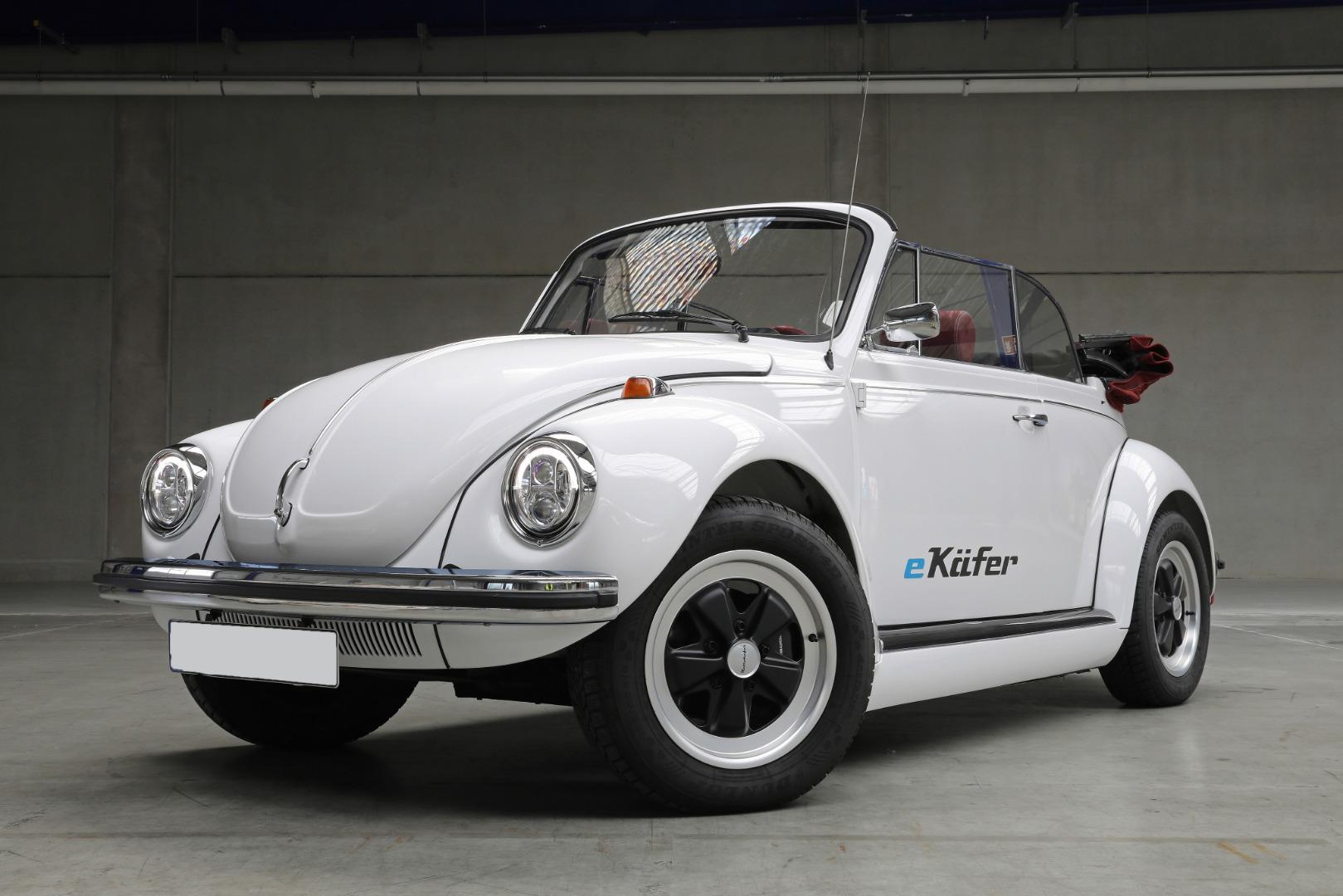
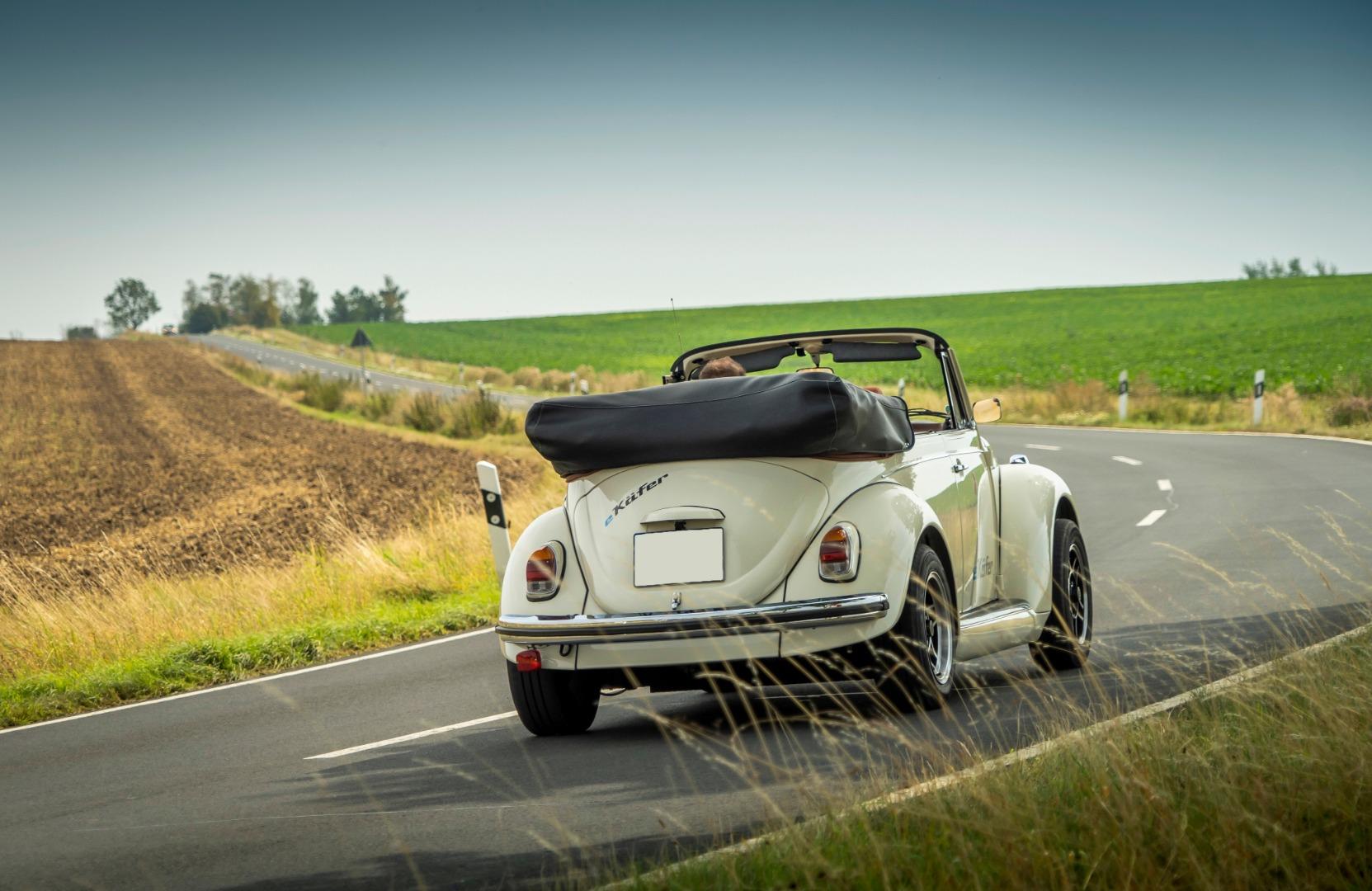
Vintage Beetle owners rejoice! Breathe new life into your classic, air-cooled Beetle with a modern electric drivetrain. Volkswagen is partnering with a German EV conversion company called eClassics to do a conversion to battery electric power.
VW is providing eClassics with the batteries and a new single-speed powertrain which the automaker is taking from the E-Up! electric city car. The first conversion has been done on what appears to be a 1973 Super Beetle convertible.

And since the new engine package is so compact, the original engine compartment can now be used as a second boot. So, where do you access the engine? We aren’t quite sure but it’s been said maybe from under the rear seats.

Battery Power
Better than the original Beetle, here’s VW’s rundown on the new system:
The electric engine and the 1-speed gearbox are produced in Kassel, while the battery system components are supplied from Brunswick. The components from Kassel and Brunswick work together in the e-Beetle as an electric drive that reaches performance peaks of 60°kW /82°PS. The battery system is built into the underbody and consists of up to 14 modules, each with a capacity of 2.6 kWh. The lithium-ion battery modules cumulatively deliver energy of up to 36.8 kWh.

The higher performance and the increased weight due to the extent of electrification require the adaptation and reinforcement of the chassis and the brakes. Despite the new total weight of 1280 kg, with this new power, the Beetle will put out about 80 horsepower and can accelerate from 0-50 km/h in under 4 seconds and 0-80 km/h in just over 8 seconds. The weight distribution of the modern electric drivetrain is will also improve handling.
The range of the e-Beetle is 200 km – a comfortable distance for a relaxing day out in an electrified classic car, and it reaches top speeds of up to 150 km/h. In the event that the e-Beetle runs out of electricity during the trip, the built-in series-produced components allow for fast charging via a combined charging system. As a result, the e-Beetle can store enough energy for a journey of over 150 km after charging for around an hour.

Taking the concept to other historic vehicles
Based on this concept, the subsequent electrification of other historic vehicles will also be possible. Thomas Schmall, Member of the Board of Management of Volkswagen Group Components says, “We are already working together to prepare the platform for the Bus. An e-Porsche 356 could also be pursued in the future.” The use of the modular electric drive matrix (MEB) is also being considered. This creates additional opportunities regarding performance and range.
Cost
VW hasn’t released any pricing, availability information or suitable models yet for this conversion service, but it’s unlikely to come cheap considering the associated restoration and the chassis changes required. Although, if you have the money this would be a fantastic conversion. We await more details that VW promised to release at the Frankfurt Motor Show next week.

Classics going Electric
VW is not the first automaker to offer vintage car owners an option to go electric. Back in 2018, Aston Martin announced a “Heritage EV” program for classic car owners to convert their Astons to electric power. Following suit, Jaguar then announced a similar conversion kit which leveraged the technology from its first EV, the I-Pace. Take a look at the .
These particular conversions aren’t cheap, but are said to be an “interesting option in Europe, where a number of major cities are restricting or outright banning diesel engines from their downtown areas.”


For more articles on classics, read:
Production of cult Volkswagen 'Bulli' vehicle began 65 years ago