



The Volvo EX90 has arrived in South Africa, marking the brand's ambitious foray into the all-electric luxury SUV market. Positioned as the successor to the XC90, this seven-seater aims to blend Volvo's hallmark safety and design with modern electric performance. A brief 15 km drive through Cape Town offered an initial glimpse into its capabilities. The model will go on sale locally in April 2025 and will open the floodgates for four other models to join the line-up throughout 2025.
Related: All-electric Volvo EX90 headed to South Africa!
Design
True to Volvo's Scandinavian roots, the EX90 presents a minimalist aesthetic. Its clean lines and signature 'Thor's Hammer' LED headlights are a continued design trope. However, integrating a prominent LiDAR sensor atop the windshield disrupts the otherwise sleek profile, drawing mixed reactions. While this technology enhances safety by detecting hazards up to 250 meters away, its conspicuous placement has been a point of contention among those at the launch event. Besides the aforementioned sensor, the design is relatively safe and probably for the best, considering the brand's importance in this model.

Interior
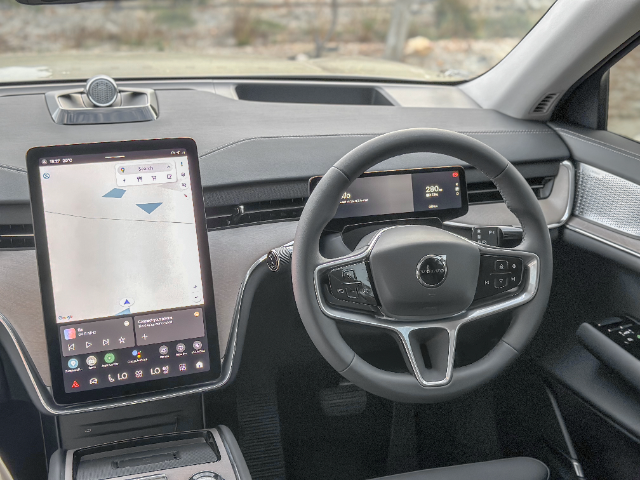
Stepping inside, the EX90's cabin is impressive, with soft-touch materials, impressive perceived build quality, modern design, and an expansive glasshouse, thanks in no small part to a large panoramic sunroof. The seven-seat configuration offers ample space, particularly in the middle row, where adults can sit comfortably with generous head and legroom. However, the third row may feel cramped for taller passengers or, if treated as a 5-seater, offers a massive 655-litre boot.

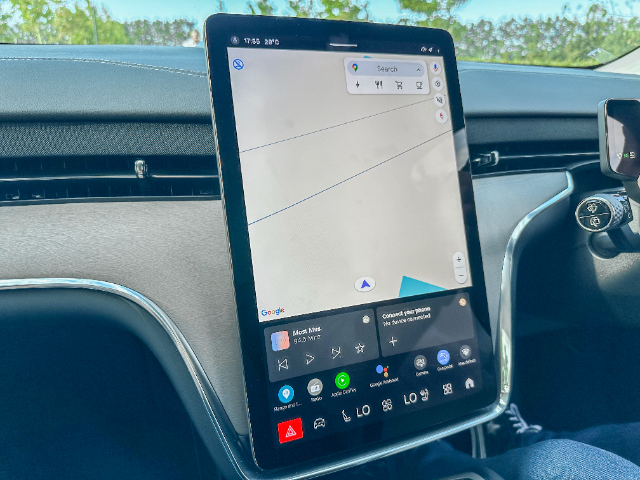
The centrepiece is a 14.5-inch touchscreen running an Android-powered interface, providing access to Google Maps, Google Assistant, and other apps. While feature-rich, some drivers may find the reliance on touchscreen controls for functions like climate adjustment, opening the glovebox, activating the hazards, and pretty much everything else distracting.
I find the return of physical buttons to most cars a welcome relief, and I hope that Volvo will revert to using them in future updates. There's also a massively impressive 25-speaker 1610-watt Bowers & Wilkins audio system with Dolby Atmos, which I tested briefly and found to be a big improvement over the system in the current XC90.
Performance & Driving Experience
Equipped with dual electric motors producing 380kW and 910Nm of torque, the brand claims the twin motor EX90 accelerates from 0 to 100 km/h in 4.9 seconds, an entirely believable figure based on our brief encounter with the car. Settings housed within the infotainment screen allow for quick alteration of both the regenerative braking and the activation of "Performance," which provides a punchier response when you apply throttle.
Despite its substantial weight of approximately 2 787kg, the SUV delivers a serene and composed ride, with the air suspension absorbing road imperfections. However, in true significant EV fashion, the steering lacks feedback, and the car's sheer size makes one feel disconnected as a driver despite the impressive acceleration and handling.

Range & Charging
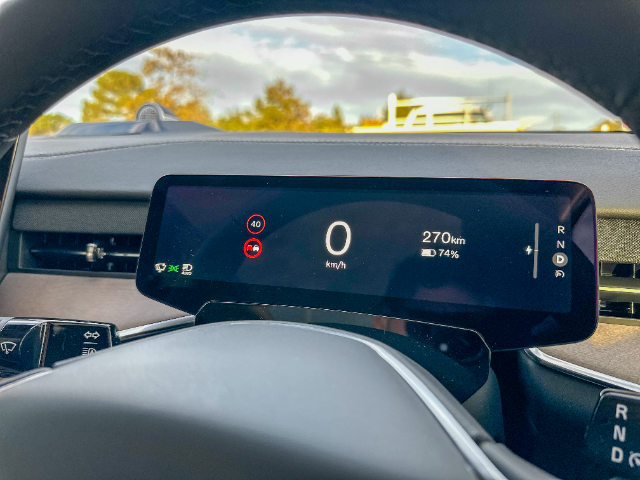
Volvo claims a range of up to 751 km in urban conditions and 604 km on the combined cycle, courtesy of a 111kWh battery. Charging from 10% to 80% is achievable in approximately 30 minutes using a 250kW DC fast charger. While these figures are impressive, real-world performance may vary based on driving conditions and habits. The brand has also mentioned that bi-directional charging is a built-in feature, but it isn't available yet, meaning that with a future update, you may be able to power parts of your home with the EX90.
Safety & Technology
Safety remains a cornerstone for Volvo, with the EX90 boasting an array of advanced driver assistance systems. Including LiDAR technology enhances hazard detection, contributing to Volvo's vision of autonomous driving. The brand claims that this is the safest Volvo ever produced, impressive for a brand that has built a reputation based on its safety credentials. We had a limited time during the launch to experience the vehicle, so I cannot comment on the safety systems. Still, from previous international reports, some systems were unavailable but were considered future inclusions.
Conclusion
The Swedish EX90 is an excellent premium EV with solid quality, a reasonable range, and clever packaging. However, there are evident quirks, such as the overreliance on the large central screen to control most vehicle functions, while some key features have yet to be released. Then we get to the price, and finding a broad audience willing to part with R2.6 million plus for an all-electric SUV in South Africa will prove to be Volvo's biggest challenge.
Pricing*
Volvo EX90 Ultra Twin Performance: R2 650 000
*Pricing includes a three-year/60 000 km maintenance plan, a five-year/100 000 km warranty, an eight-year battery warranty, and five-year/unlimited mileage roadside assistance. Volvo will also provide new EX90 owners with two years of free public charging, a GridCars wallbox with installation, and 10 GB of Vodacom data per month for three years.


