
Toyota 86 vs BMW 220i vs Audi TT: which one has the lowest running costs?
It’s a sobering thought that the Toyota 86 is one of the last old-school rear-wheel drive sports cars: it doesn’t have forced induction, and is now only available with a manual gearbox. In fact, its combination of attributes is pretty unique in the current marketplace, so we compared it to two other, similarly-priced but very different rivals. Let’s find out if its traditionalist appeal also translates to lower running costs.




How can you pre-determine your car’s running costs?
When considering a car’s running costs, it’s important to look at it over the full life-cycle. This allows third- or fourth owners of older cars to get a clearer picture of possible future expenses, and it helps first owners to determine at what age their cars may become too expensive to run. Unfortunately, many of the cars available new on our market are still too young to give accurate long-term information.
There are however certain key points which could give an idea of a car’s general upkeep requirements. This includes the length of the service intervals, the cost of replacement tyres, and the prices of service parts. For new-car buyers, the emphasis might perhaps shift more towards resale value, insurance premiums, and fuel consumption.
With these considerations in mind, we decided to pitch the Toyota 86 against the ageing BMW 220i and Audi TT in a running cost comparison. We picked our opponents as close as possible to the sole Toyota 86 derivate on offer’s price point, and then looked at the numbers. Which one has the lowest running costs?
Let’s meet the contenders!
1. Toyota 86 (R 632 200)

From an initial selection of trim levels, special editions, and a choice between manual- and automatic gearboxes, the Toyota 86 model range has since been cut down to a single-spec offering. Only the high trim level is still around, and the only transmission option is a 6-speed manual. In fact, this is the least-expensive new rear-wheel drive coupé with a manual gearbox, and the only one with a naturally-aspirated 4-cylinder engine.
As a result of that naturally-aspirated engine, the Toyota 86 is not really a quick car in modern terms. With 147 kW at 7 000 r/min and only 205 Nm (at a very lofty 6 400 r/min) on tap in a car with a kerb weight of 1 266 kg, it should get to 100 km/h in around 7.6 seconds (at sea level – expect closer to 8.5 at Gauteng altitudes) and run on to a top speed of about 226 km/h.
But, to many buyers, that’s the appeal of the Toyota 86: its driver needs to wring it out to get the best from it, making it one of the most interactive driving experiences still available. Furthermore, the current rumour mill suggests that Toyota is planning a successor to the 86, which should (finally) feature a boosted engine of some description.
Related: Top 3 things that set the Toyota 86 apart from the competition.
2. BMW 220i Coupé Sport Line sports-auto (R 575 259)

This is the least-expensive BMW 2 Series in our market, and undercuts the Toyota 86 by almost R 60 000. On top of that, its rear seats are somewhat more usable than the Toyota’s, it has a larger boot, and it’s quite a lot quicker on real roads, thanks to the miracle of forced induction. The BMW 2 Series range is only available with an 8-speed torque converter automatic, however, with no manual option at all.
Its 2.0-litre turbocharged 4-cylinder engine is 7 kW down on the Toyota at 140 kW, but it has almost double the torque, so acceleration through the gears is considerably stronger. The 220i’s claim of a 0 – 100 km/h sprint in 7.2 seconds is not much quicker than the Toyota’s, but in real-world performance, the BMW will make mincemeat of the 86... unless you throw a set of corners into the mix, that is.
The current 2 Series is due for replacement in the near future, and there’s evidence to suggest that the new one will be front-wheel drive (like the latest 1 Series). So, while it’s still available, we’d urge buyers in search of a small rear-wheel drive 2-door BMW to jump at the opportunity and get one before they all disappear.
Related: Which BMW 2 Series is better – petrol or diesel?
3. Audi TT Coupé 45TFSI (R 670 000)

Audi’s TT range appears set to be discontinued (or at least radically re-imagined) at the end of the current (third) generation’s production run. Like the other two, the TT is a 2-door, 2+2 coupé powered by a 2.0-litre engine, but unlike the others, it’s front-wheel driven. Its power output of 169 kW comfortably out-classes the other two, and its peak torque of 370 Nm isn’t far from the BMW’s 400 Nm. It’s also only available in automatic form, this time featuring a 7-speed dual-clutch gearbox.
This entry-level TT’s starting price of R 670 000 is almost R 40 000 higher than that of the Toyota 86, and almost R 100 000 dearer than the BMW 220i. In compensation, its performance is by far the strongest of this bunch, with a 0 – 100 km/h sprint in only 5.9 seconds and a top speed of 250 km/h. And, as with the BMW, the time to get one of the last “authentic” TTs is running out, as the current model is due to be discontinued soon.
Related: The Top 3 things you need to know about the Audi TT.
Which one has the lowest running costs?
Purchase price and depreciation
As noted earlier, the BMW 220i is the cheapest car here (specifically in Sport Line trim), and it doesn’t suffer huge initial depreciation, either. Almost-new 2019 examples still retail in the R 520 000 range, which indicates that there’s enough demand for these cars to keep the prices shored-up. Longer-term depreciation isn’t bad, either, with 2016 examples still fetching at least R 300 000 in our listings, and often a lot more – not too far off from their prices when new.
The Toyota falls roughly in the middle, price-wise, but they tend to lose value pretty quickly: some 2017 Toyota 86s are also listed for around R 330 000, down significantly from their original pricetag of around half million Rand. Even the initial depreciation is quite steep on the 86, with a 2019-model with moderate mileage already down to around R 360 000-ish. This makes the 86 great value as a used buy, but doesn’t mean good things for those who buy one new.

But the resale value king here has to be the Audi TT. As with the 2019 Toyota 86 we considered just now, there’s only one 2019 Audi TT listed on our site (at the time of writing). Its asking price? R 679 900 – almost ten grand more a new one. It’s not even loaded with options, with a B&O audio system update and an S-line appearance package being the only notable add-ons. 2016-edition TTs still retail for at least R 350 000, indicating strong long-term value retention as well.
Related: Which new cars depreciate the fastest?
Fuel efficiency
This one’s a definite win for the BMW, with the lowest claimed average fuel consumption of this trio. Its official figure of 5.5 ℓ/100 km is unlikely in normal driving, but a mid-to-high 6 ℓ/100 km average should be possible for conservative drivers. The Audi TT is up next, with its claimed average of 6.3 ℓ/100 km, although a high-7 ℓ/100 km average is more likely, even with a careful right foot.
In contrast, the Toyota 86 has a claimed average consumption figure of 7.8 ℓ/100 km. But, while that doesn’t look very impressive on paper, road testing of older 86 press cars have shown high-6 ℓ/100 km averages to be quite feasible, if the driver can resist reaching for that burp of power at the top end of the 86’s rev range. In reality, the fuel consumption of all three cars will depend on the driver’s enthusiasm, and all three will be considerably thirstier than quoted when driven with verve.

Related: Top 5 tips to improve your car’s fuel efficiency.
Warranties, maintenance plans, and service intervals
The Toyota 86 has the best warranty here (3 years or 100 000 km), but the weakest service plan (4 services, i.e. 60 000 km). The BMW 220i’s warranty runs for 2 years with no distance limit, and the Audi TT has a warranty for only 1 years. Both Germans offer standard maintenance plans, though, good for 5 years or 100 000 km in both cases.
As a result, the BMW 220i nets this category – for short-term owners. For second-hand buyers considering long-term ownership, all three cars should cost about the same to run, albeit with some important caveats: both German cars have turbochargers and direct petrol injection systems, which will require pricey attention at some point. In addition, the Audi’s S-Tronic dual-clutch automatic requires regular servicing, and costs a bomb to fix if it ever goes wrong.
Related: Which BMW 2 Series holds its value better?

This is where the Toyota 86 makes a minor comeback, because it’s a little bit more simple, thanks to that manual gearbox, and un-modified engines are generally considered reliable. Very early examples of the 86 can be prone to some cylinder head-related issues, but it appears that these problems have been resolved in production.
Insurance
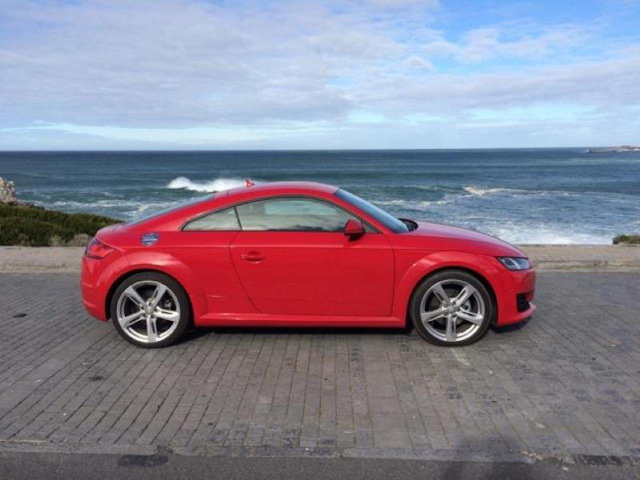
Score one for Toyota here: in spite of its sporty positioning, many insurance underwriters don’t regard the Toyota 86 as a particularly high-risk car as far as theft goes, and neither is the Audi TT. We’d guess that’s probably because these vehicles are so specialised that there’s limited demand for them among car thieves. The Audi’s higher purchase price and much higher performance necessarily means higher insurance premiums, which shifts the balance towards the Toyota 86.
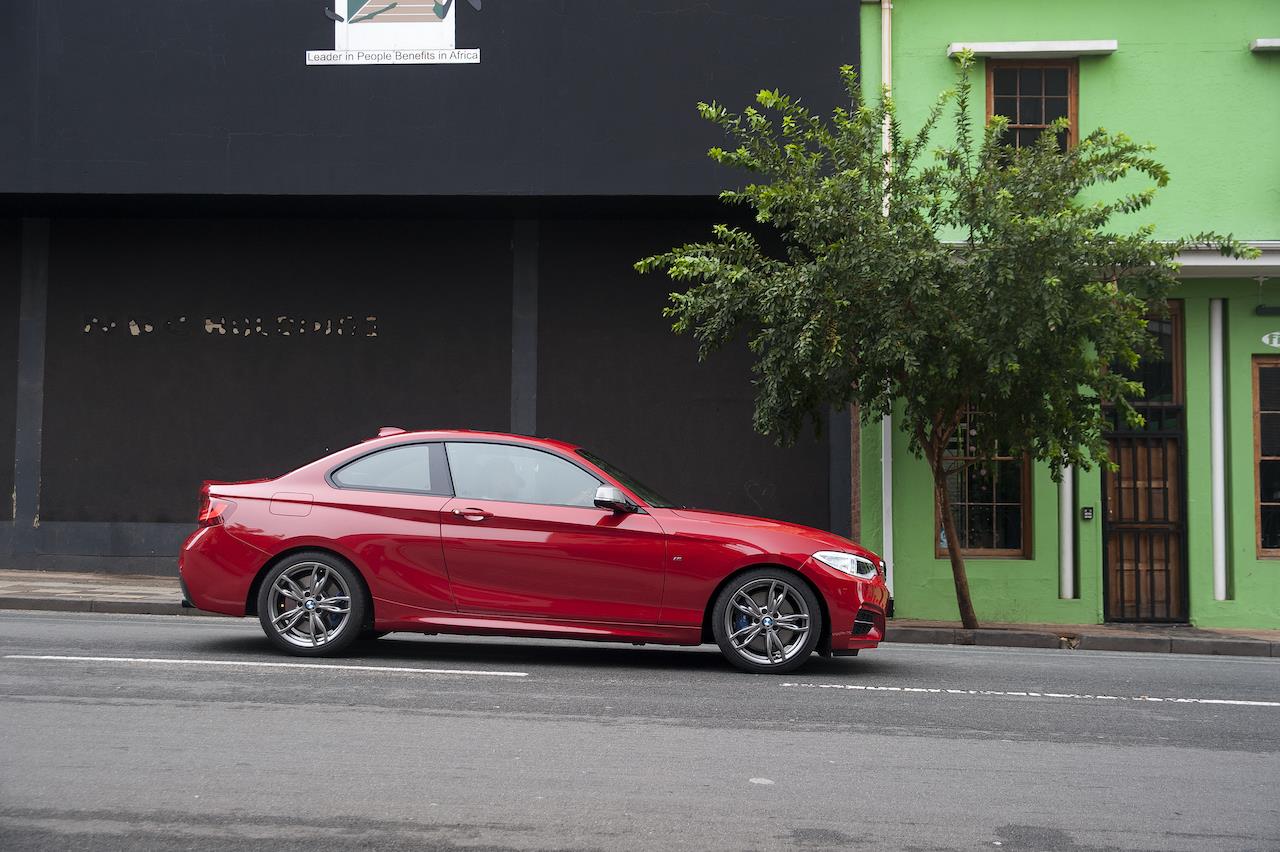
The BMW is a victim of its own success here, being considered a moderately high theft risk car. It is however not considered a high-performance car (unlike the Audi), which could be a positive attribute at some insurers, and its lower purchase price shrinks the insurance premiums by default as well. Insurance costs will however always vary with the car’s usage pattern: the security of its storage location (both at night and during the day), the areas in which it’s used, expected yearly mileage, and the driver’s risk profile.
Related: Is it better to buy insurance from a broker or go direct?
Tyre replacement
Standard tyre prices play a significant part in any running cost evaluation, but it’s not always a given that smaller tyres will be less expensive – if they’re less commonly used, they might be harder to find and more expensive to replace than larger tyres which are in wider use.
With the Toyota 86 being expressly designed around slideways driving, it wears the narrowest tyres here. And, as luck would have it, the 215/45R17 tyres used on the 86 are fairly easy to find. A quick browse through a major tyre retailer’s website found 10 replacement options, with prices ranging between R1000 and R 2000, from house-brand specials to big-name performance tyres.

Related: How long is a tyre supposed to last?
The BMW’s standard 225/45R17 tyres are no more expensive, though, and even easier to replace. The same tyre retailer’s website revealed a selection of 19 replacement tyres for the 220i, with a similar price spread to the 86’s tyre options. That’s quite a contrast to the Audi’s 245/35R19 tyres, for which the retailer showed no alternatives at all. Consequently, it can be deduced that the Audi TT’s gargantuan replacement tyres will be difficult to find and expensive to replace, immediately slotting it into the last place here.
It must however be borne in mind that some options (such as the M-Sport add-on) endows a BMW 220i with 245/40R17 rear tyres (while keeping the base car’s 225s in front). These wider tyres are considerably more expensive than the front tyres (to the tune of double the price or more), so think carefully before opting for that M-Sport package. Call this one a draw between the non-M-Sport BMW 220i and any Toyota 86, then.
Related: Find out more about older Toyota 86s in this comprehensive guide.
Verdict
Casting a verdict regarding running costs for this trio can only really be done effectively if the term of ownership is taken into consideration. In the short term, the BMW will have by far the lowest running costs, thanks to its comprehensive maintenance plan, fuel efficiency, solid resale value, and most-affordable tyres.
The Audi is forced into second place mainly on account of its expensive tyre replacements, while the Toyota 86 ends up in third place, thanks mainly to its service plan. Putting it bluntly, owners of new 86s will have to start spending on maintenance and servicing long before owners of new TTs and 220is will face such worries. The 86’s lower insurance premiums and cheap-ish tyres also aren’t nearly enough to offset its plunging depreciation curve.

Consequently, it makes more sense to buy a pre-owned Toyota 86 than it does to buy a new one. Someone else will have taken up that depreciation knock already, and the resulting price difference between a new- and a lightly-used 86 would more than compensate for servicing expenses in the short term.

But, once the Germans’ maintenance plans have expired, the tables will turn somewhat. All cars need preventative maintenance as they age, but, due to their aforementioned mechanical complexities, the BMW and Audi may cost more to run over a long period than the comparatively simple Toyota would. All the more reason why a Toyota 86 is a great used buy, then!
* Prices were accurate at the time of writing, but may change without prior notice.
Recommended Next:
Shop for new and used Toyota 86 cars for sale here.