
Top 3 things you need to know about the BMW 7 Series
They may look much like their BMW sedan siblings, but under those (usually) sober but somewhat nondescript business suits, the 7 Series has always been the technology trailblazer in BMW’s model range. This has been its role since this model appeared in 1977, and the current car still sticks to this script. We decided to take a closer look at this range-topping sedan, and highlight three things you probably didn’t know... until now.



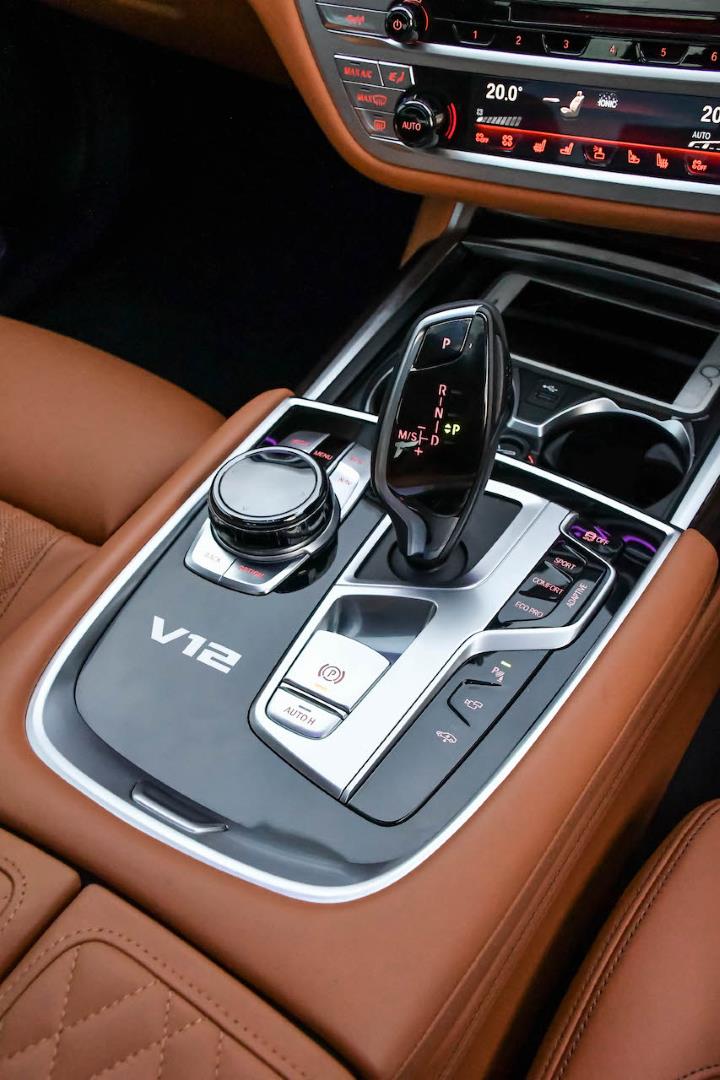
If you’ve ever appreciated some gadget in a modern-day BMW, the chances are that it first appeared in a 7 Series. Night vision, satellite navigation, Xenon headlamps count amongst its many first-for-BMW (and sometimes first in any car) features, many of which have since become available across the BMW range.
It’s only with the new era of electrification that the i3 and i8 hijacked some of the 7 Series’ trailblazing glory – but then the 7 Series became the first mainstream recipient of the technology first deployed in those models. So what sets the latest 7 Series apart from its lesser siblings? Let's find out.

1. Its styling certainly gets people talking...
When the current (sixth-generation) 7 Series first appeared bearing the code name G11/G12, some commentators were surprised at its rather understated styling. Remember, there have been some... unusual-looking BMW 7 Series models in the past, with the fourth-generation (E65) and its weird Bangled-up styling being perhaps the most memorable (if not the most visually appealing). Well, BMW certainly listened to those critics, and showed the next evolution of their sedan range’s design language with the G11/G12’s facelift at the beginning of 2019.

If nothing else, the new “BMW face” certainly is imposing. Its stand-out feature is that massive new grille, which is 40% larger than the one that came before. Got to love the Germans for being so specific about such details, right? Either way, the new face seems sure to spill over to lesser BMW models in due course, with the first recipient of the gaping new snout likely to be the next-generation 4 Series (as shown in concept form at the 2019 Frankfurt motor show).

2. The first BMW sedan to use carbon fibre in its body structure.
This is a piece of technology pilfered from the i3 and i8. However, unlike those two models, the 7 Series body is still largely made of steel, aluminium, and magnesium, with the carbon fibre only used in structural areas where its light weight and high strength outweighed its much higher cost.

BMW calls this application “Carbon Core”, and it essentially means that some metal pressings are replaced by relatively simple carbon fibre pieces in areas where metal would take up too much space or add too much weight to achieve the required structural strength. BMW is no newcomer to carbon fibre in production cars, however: some older M-cars have featured carbon fibre roof panels (and other parts) for more than a decade now.
3. The available power is limited only by the size of your bank balance.
It feels strange to mention the words “sensible” and “economical” when talking about a grand saloon’s motive power, but such engine options are actually available in the 7 Series. The least-powerful variant is called the 730Ld (“L” denoting “long wheelbase”, as all 7 Series cars are these days), and it packs a handy 195 kW and 620 Nm, courtesy of its 3.0-litre inline 6-cylinder turbodiesel.

There are two petrol-fuelled turbo 6-cylinder derivatives on offer, with the 740Li bringing 250 kW and 450 Nm to the party, while the 745Le xDrive uses an economy-tuned version of the same 3.0-litre turbopetrol engine along with a staunch electric motor for total system outputs of 290 kW and 600 Nm and xDrive all-wheel drive (the only 6-cylinder 7 Series thus equipped).
But the real fun begins when the engine’s cylinder count gets to eight, because the 750Li’s 4.4-litre twin-turbo V8 produces 390 kW and 750 Nm. Once again, AWD is employed to get all those ponies safely to the ground, and helps the 750Li to a 0 – 100 km/h sprint in only 4.1 seconds. That’s remarkable for any production sedan, let alone a long-wheelbase luxury sedan with every conceivable gadget on board.

Capping the range is the M760iLi, which employs a 6.6-litre twin-turbo V12 to send 430 Nm and 850 Nm into its 8-speed ZF automatic gearbox, before ripping the tarmac to shreds through all 4 wheels. It’s genuinely, preposterously quick, posting a 0 – 100 km/h sprint in only 3.8 seconds: one of the very few luxury living rooms with supercar-chasing performance.

Related: Read more about the BMW M760Li and its crushingly potent engine here.
The Range: Explained
Of course, the more power you want, the more it’s going to cost. The least expensive 7 Series (the 740Li) has a sticker price of R 1 645 990 before adding options, and the most expensive (the M760Li) starts at R 2 828 791. You can also add all manner of styling- and equipment packages to the base, such as the “M Sport” and “Individual” for the 6- and 8-cylinder variants, or upgrade the V12 to “Excellence” or “Individual” spec.

To be honest, though, the basic 7 Series is pretty loaded with toys as standard, and you wouldn’t need to spend more than R 150 000 on options to get a car with everything you really want. Here’s the current model range, listed according to base trim prices only, and excluding options:
BMW 7 Series Pricing:
| BMW 740Li | R 1 645 990 |
| BMW 730Ld | R 1 673 222 |
| BMW 745Le xDrive | R 1 755 300 |
| BMW 750Li xDrive | R 2 170 995 |
| BMW M760Li xDrive | R 2 828 791 |
Included in these base prices:
- 5 year/100 000 km Maintenance Plan
- 2 year/Unlimited km Manufacturer Warranty
*Prices and product availability were at the time of publishing and are subject to change without notification.
What to read next:
Even in its fifth generation, the BMW 760Li was a tyre-shredding monster.
Looking for a new or used BMW 7 Series? Browse through our listings here.