
The Volvo Amazon – named after a female warrior – turns 60
The Volvo Amazon was introduced to the world 60 years ago. Named after the female warriors in Greek mythology, it is still one of the most iconic models in Volvo’s history.


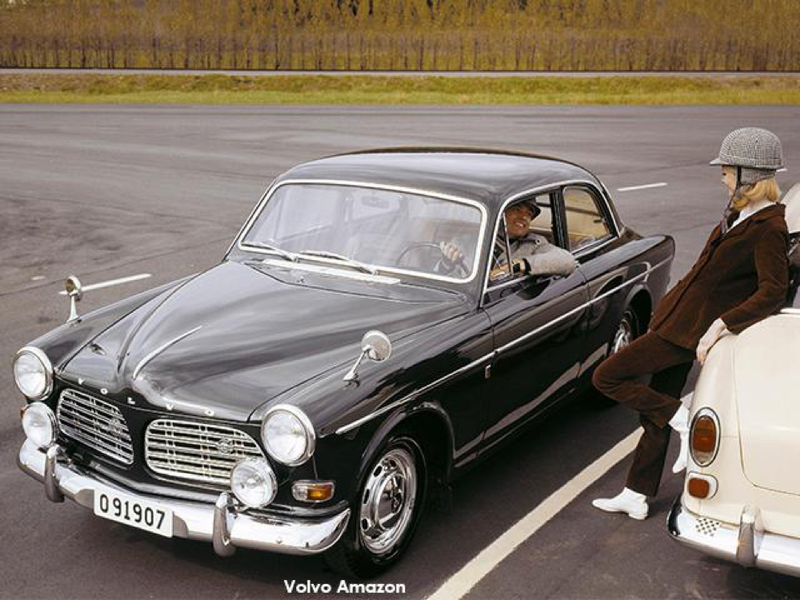
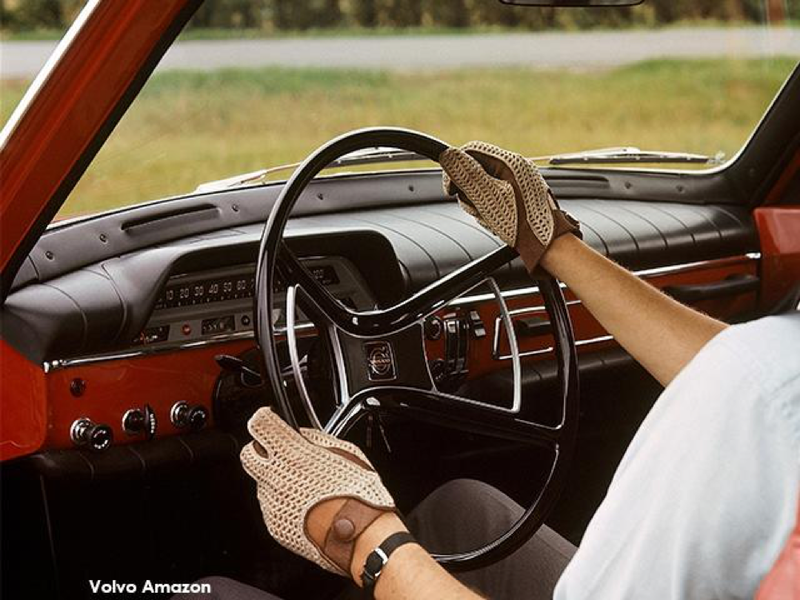
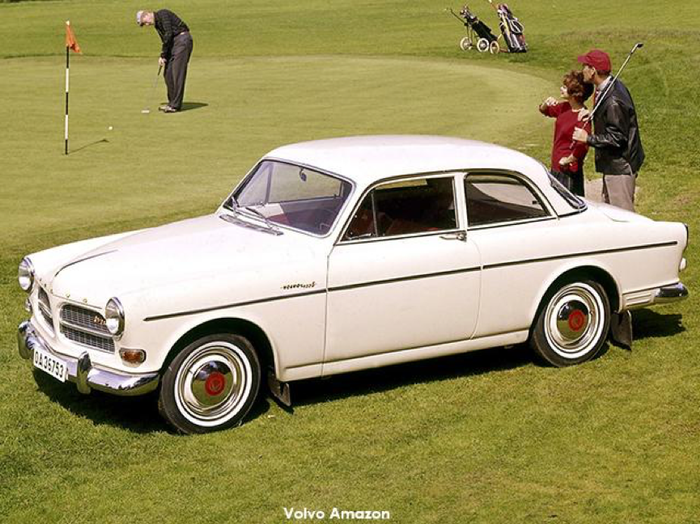
The Volvo Amazon was introduced to the world 60 years ago. Named after the female warriors in Greek mythology, it is still one of the most iconic models in Volvo’s history.
Volvo’s then-new model was revealed at the first weekend of September in 1956. It had its premiere in the Swedish town of Örebro, with the elegant car differing greatly from the common perception of what a Volvo should look like.
The shape was challenging, with features drawn from Italian, British and American design. The man responsible for the design was 26-year-old Jan Wilsgaard, who went on to become Volvo’s head of design for many years, designing the 140, 240 and 700 series, as well as parts of the 800 series.
Amason Amazon
The new car was the company’s second post-war model, following the PV444, and had been named Amason, spelled with an s. The name came from Greek mythology wherein the Amazons were female warriors, rather than after the rain forest by the same name in South America’s across Brazil, Peru and Colombia. The spelling was changed to the more internationally-viable Amazon (with a z) prior to the launch of production in 1957.
The German moped and motorcycle manufacturer Kreidler also happened to launch a moped called Amazone at the same time, which meant the name Amazon was unavailable in a number of key markets.
Volvo 121, 122, 123 GT… 221 and 222
A deal was reached to allow the Volvo model to be known as Amazon in the Nordic markets. In the rest of the world, the standard model was known as the 121, while the 122 was used for the sportier model.
The car is now known as the Volvo Amazon around the world.
The 1958 Amazon Sport was developed for customers who wanted more power. With twin SU carburettors and a sharper camshaft, the engine generated 63 kW.
February 1962 marked the introduction of the estate version of the Amazon. The Amazon estate was an elegant car with an American-inspired tailgate which was split horizontally. The estate model with a standard engine was called 221, while 222 was used for estates with the sports engine.
The sportiest version of the Amazon was the 123 GT, which borrowed its engine from the 1800S sports car. The 123 GT was launched as a 1967 model, offering 86 kW and overdrive. The wing mirrors were attached to the front fenders, extra lights came as standard, and a tachometer was mounted above the dashboard.
Two-tone
The first few model years of Amazon models were elegant. Between 1957 and 1959, all cars were painted two-tone. The combinations on offer were black, midnight blue or ruby red bodies with a light grey roof, or a light grey body with a black roof. From 1959 it became possible to buy a single-tone Amazon, with 1961 the final year of production of two-tone cars.
Volvo’s patented 3-point seatbelt a real life-saver
In 1959 Volvo’s patented 3-point seatbelt became a standard feature in the Amazon – it was a world first.
No single other safety feature has been anywhere near as significant in saving lives as the safety belt. It is estimated that at least 1 000 000 lives have been saved by the 3-point seatbelt over the course of its lifetime.
Production
Product development on the Amazon continued despite the introduction of the Volvo 140 series in 1966. Both the Amazon and the 140 series received the new B20 engine for their respective 1969 iterations. The larger volume provided better torque and a slight increase in power.
A total of 667 791 Amazons were built between 1956 and 1970, making it Volvo’s most manufactured model at that point in time.
The Amazon switched Volvo’s focus from the domestic market to the export market – a total of 60 per cent of manufactured Amazons were sold outside of Sweden. It was also the first Volvo to be assembled outside of Sweden. In 1963, Volvo’s plant in the Canadian city of Halifax opened its doors, where cars were built for the North American market.
The biggest investment was in the Belgian city of Ghent. As Sweden was outside of what was then the EEC, it was important to get a foot inside the European customs union. In 1965 the factory opened with an initial capacity of 14 000 cars per year.
An assembly plant was also opened in Durban, South Africa.
On 3 July 1970, the last Amazon was built at Volvo’s Torslanda plant. It was dark blue and was driven straight into the collection of cars that later became the Volvo Museum.
Swedish police cars started disc brakes and radial tyres
The Swedish police co-operated with Volvo, and they jointly developed equipment that was later included on ordinary production cars. The police cars featured disc brakes and radial tyres several years before they became common in production cars.