
Stelvio – The essence of Alfa
Stelvio – The essence of Alfa


By Stuart Johnston
The essence of Alfa Romeo has always been its ability to involve the driver in every nuance of the relationship between man and machine. This Alfa-essence has been a factor since the Italian company first began exporting its cars to South Africa in the late 1950s (although enthusiasts privately imported some very special Alfas here even before World War II).
The Giulietta T1 sold here until the early 1960s and later the Giulia boxed-shaped sedan, were considered very special cars amongst motor enthusiasts, as were the sportier Giulietta Sprint models and later the GT Juniors of the 1970s and the GTVs of the 1980s.
What “connectivity” means for Alfa fans
Alfas have always been fast cars, but more than mere speed and acceleration, what delighted the Alfisti was that feeling of connectivity between the steering wheel and the road, that fluidity that telegraphed every nuance of what the front wheels were doing in relation to input on the helm, and the throttle-foot.
That same intense communication applied to the gearbox, the brakes, and of course the engine, both in the way it responded to a jab on the accelerator pedal, and the sound!
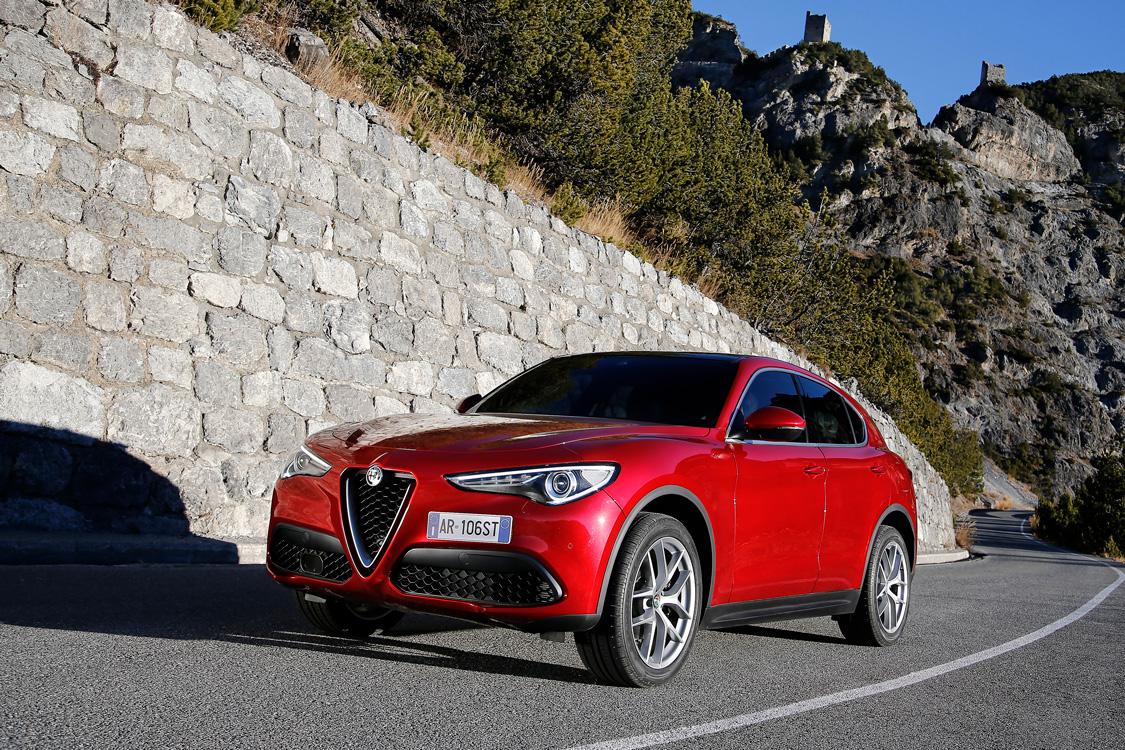
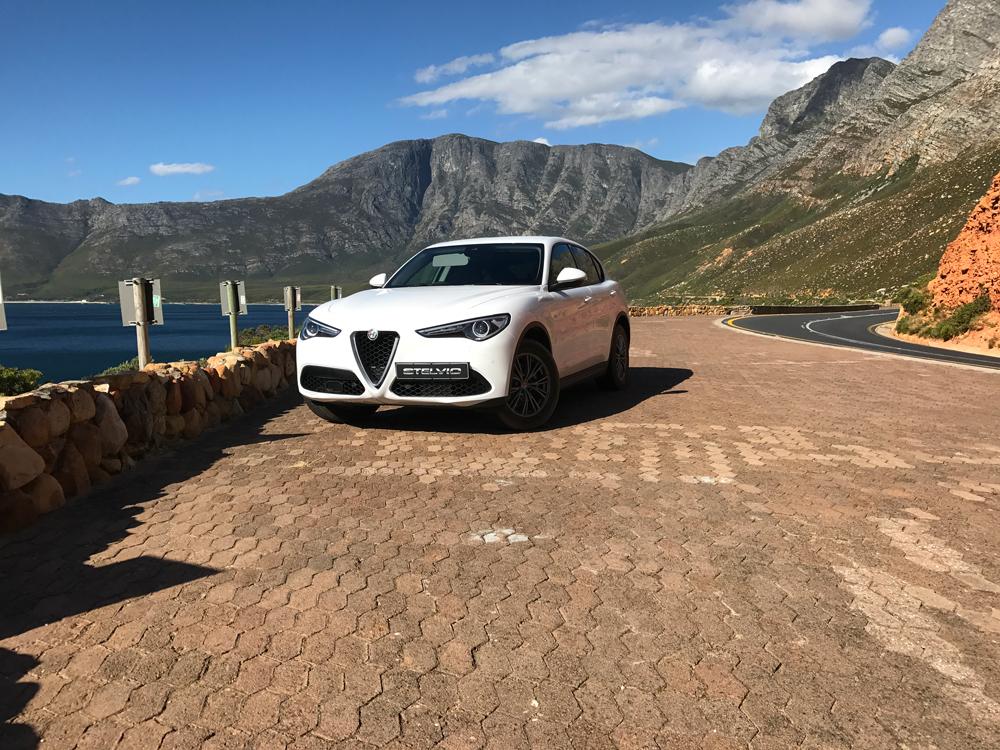
The very first SUV that Alfa Romeo has produced, the Stelvio, happily communicates all these traits in a way that will delight fans of the marque, those in the know. And hopefully for Alfa Romeo, win new converts.
The engine is a delight
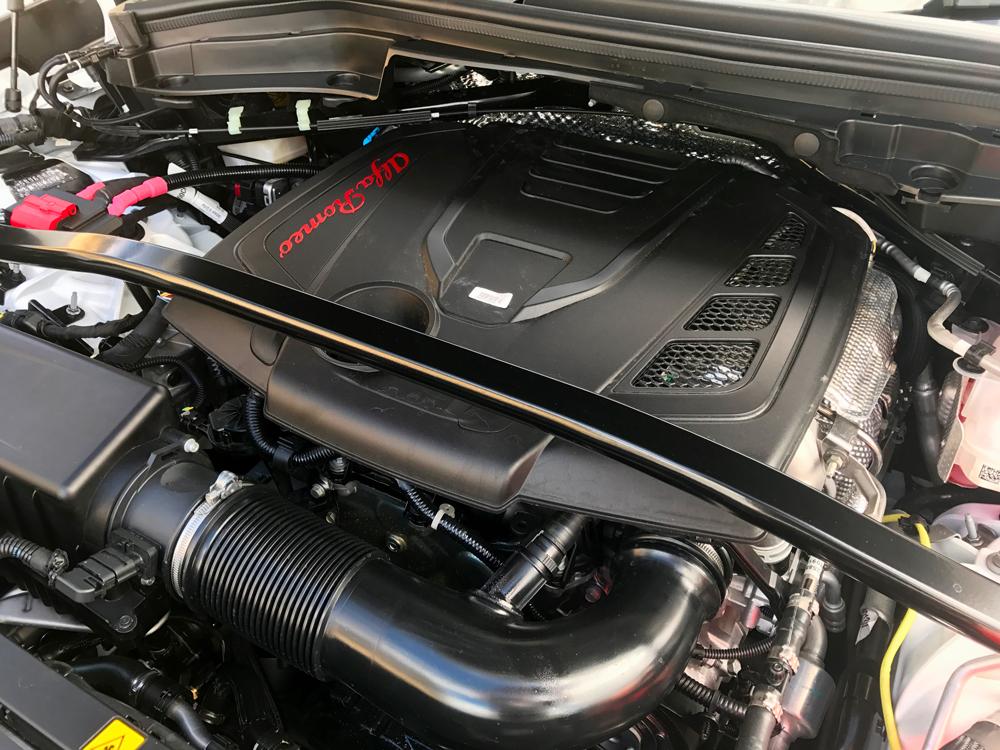
The engine fitted to Stelvio is a delight. It is extremely powerful for a two-litre four-cylinder engine. Thanks to turbo-charging and its ingenious MulitAir induction system, it pumps out 206 kW and 400 Nm of torque. But even more importantly, the engine has a traditional Alfa Romeo four-cylinder rasp that is audible in the cabin, a constant presence.
The connectivity to the road surface is most apparent when selecting the Dynamic mode on the Alfa DNA selector switch on the Stelvio’s console. The steering stiffens up, as does the suspension damping, the engine note hardens, and the throttle response is crisper. The brakes are good, perhaps a bit too sharp at stop-start traffic speeds, but at higher speeds they impart that sensitivity to pedal pressure that enables you to drive like the master of the mountain roads that you always wanted to be.
Sadly, in this modern traffic-clogged world, the art of fluid, precise manual gear-changing is becoming a lost art, and the Stelvio is available only with an eight-speed automatic transmission. The bright side of this is that it is a very reactive gearbox, and you can shift it manually with excellent precision and quick results on up and down-shifts.
A Return to Rear-Wheel-Drive principals
I believe that, in returning to a rear-wheel-drive layout with its Giulia sedan, with the engine mounted longitudinally and a carbon-fibre drive shaft, Alfa Romeo has once again achieved that essence that so delighted drivers of past-generation Alfas, before the big switch to front-wheel-drive in the late 1990s. The Stelvio shares its platform with the Giulia, and although the two Stelvio models now on sale come standard with the Q4 all-wheel-drive system, essentially this SUV operates as a rear-wheel-drive car until wheel-rotation sensors indicate that up to 50 per cent of power need to be directed to the front wheels.
The Stelvio is not perfect as a pure driver’s car, as it is big and weighs close to 1 700 kg. When the “normal” and economy modes are selected on the DNA selector it can even feel just a tad wallowy on roads with a succession of dips and bumps and camber changes. In fact, even from a comfort perspective, on the launch drive we felt happiest in the Dynamic mode, as the damping was more controlled. It was only on dirt roads that the “comfort” settings proved more effective.
An Upmarket Family Car That Never Stops Communicating
As an upmarket family conveyance this Italian SUV comes very well equipped (see the main launch report) with plenty of space for kids and dogs and things, with 550 litres of luggage space. Plus, and is a big plus, it is good-looking, as the car attracted shouts of encouragement as we traversed the Western Cape on the launch drive. Yes, it is expensive, at between R810 000 and R946 000, but it has many standard features that are added-cost options on rival models
The response from dealers and customers has been excellent at launch, and we believe that, like the Giulia sedan, this car has once again defined what an Alfa Romeo is supposed to be: A car that never stops communicating.