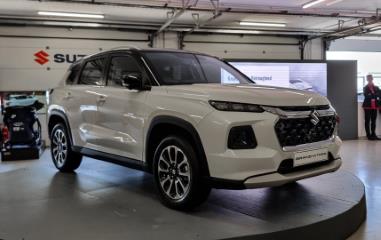
With the movement towards clean energy and alternative forms of propulsion, events such as the Smarter Mobility Africa Summit have become more relevant than ever. The 2022 iteration of the event took place at the CSIR in Tswane recently and saw many new energy movement companies and various stakeholders take part.

The AutoTrader EV Car Buyer Survey
The 2022 AutoTrader EV Car Buyer Survey is now available to download, showcasing some fascinating insight into what South Africans think of new energy vehicles.
An excerpt from the survey states "Smarter Mobility Africa strongly believe that a crucial step in the adoption of electric mobility is to understand what the current knowledge and perceptions of consumers are for the transition to electric vehicles to happen."
Some of the key takeaways from the survey include that there was a 3 percentage points increase in the number of people having driven an EV, taking the total among those surveyed to 15%. It was also encouraging to see that younger people have more interest in EVs versus the same period last year. At the same time, the general sentiment surrounding the ownership of EVs is still largely environmental, and not economical.
Among those surveyed who own an EV, the responses as to why they have chosen the alternative mobility route comes down to the fact that they believe EVs are simply better and more efficient than ICE vehicles. The 2022 survey also revealed that the initial purchase cost is still one of the biggest challenges electric vehicles face locally, which means that the long-term ownership proposition of the average EV needs to be communicated to buyers.

Potential EV buyers have also commented that safety and technology are high on their list of pre-purchase considerations, while the brand is of less importance, giving emerging brands a chance to secure some market share. Consumers have also stated that they would pay more for a more efficient EV.
The heavy investment into local charging infrastructure has also meant that consumers now see the infrastructure as far less of a hurdle than before, however, with the increased load shedding during 2022, this has become a far more pertinent concern. Another positive is the fact that respondents have identified range and battery life as far less of a concern than before, but there needs to be further education on how one's lifestyle must adapt when owning an EV.
When it comes to charging, some education is still required, as only a third of those interviewed were correct when asked about home charging times. Consumers also think that the cost of charging an EV is more expensive than it really is, while there seems to be a general perception that newer EVs can travel further on a single charge than is possible in the real world, with 55% of consumers thinking that over 500km on a single charge is realistically possible.
Conversely, the survey revealed that the early adoption of EVs decreases as consumers become more educated, implying that the average buyer would like to see where the industry is going before committing to buying. The increased number of hybrid vehicles locally could also be a reason for this, as consumers appear to prefer to transition slowly between forms of propulsion.
The so-called 'magic number' for local EV pricing is still around the R500 000 mark, with survey participants appearing willing to spend this amount. Tesla was once the most highly regarded EV producer in terms of brand equity locally, however, with the increased number of EV introductions, this sentiment is beginning to change, with brands that produce locally now finding favour.