Nissan Magnite (2021) First Drive Impression: More than merely inexpensive
The Nissan Magnite certainly has what it takes to make a big splash in the local marketplace: this compact crossover is well-specified, good-looking, equipped with a punchy turbo engine, and carries a winning price. Yes, it goes up against tough competition, but it arrives at the fight with quite a few aces up its sleeve...


The compact crossover market is buzzing with activity these days, and especially so at the budget-focused end of the segment. Over the past year or so, we’ve seen the arrival of the Suzuki Vitara Brezza and its Toyota Urban Cruiser twin, Kia Sonet, Honda WR-V, and Haval Jolion – and that’s in addition to established favourites like the Renault Duster, Captur, and the Mahindra XUV300.
Into this fray steps the all-new Nissan Magnite: a compact SUV that was conceived and developed as an upmarket Datsun model, before being re-directed to Nissan following the 2019 announcement that all new Datsun-branded cars shall henceforth return to Nissan branding.
Had the Magnite appeared as a Datsun, it certainly would have represented a massive leap forward for the brand, but there’s a nagging suspicion that the up-and-coming buyers Nissan wants to target would not have given it a second thought with the wrong badge. That would have been a tragedy, because the Magnite deserves a classier nameplate and sales success on its own merit, rather than just being “the best Datsun”.
Dressed to stand out
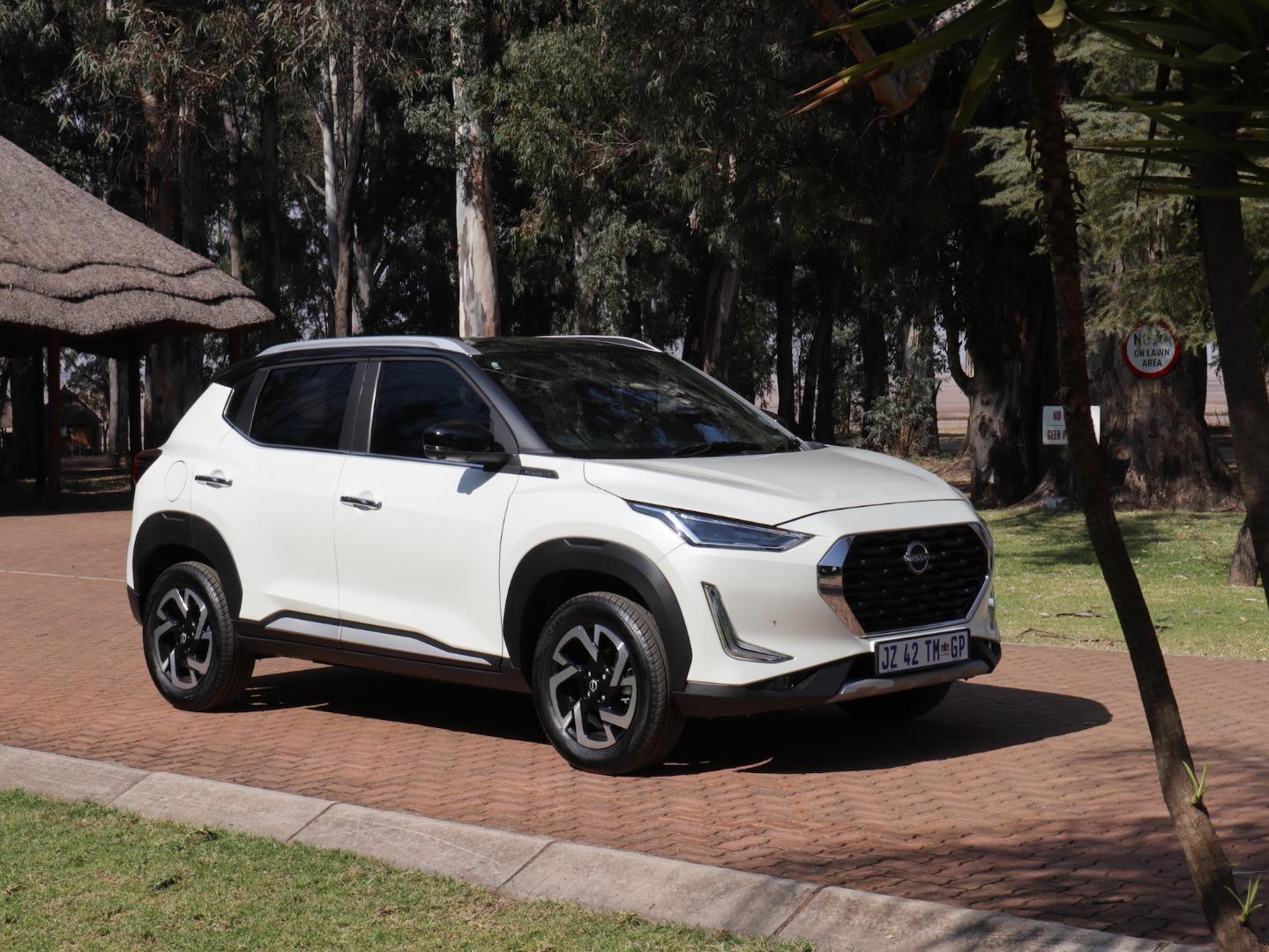
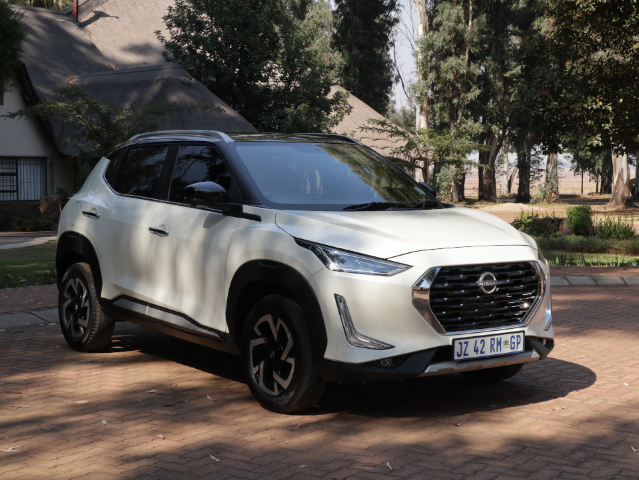
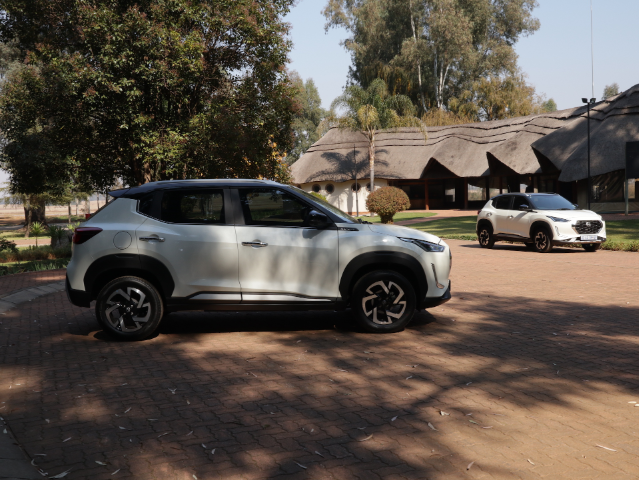
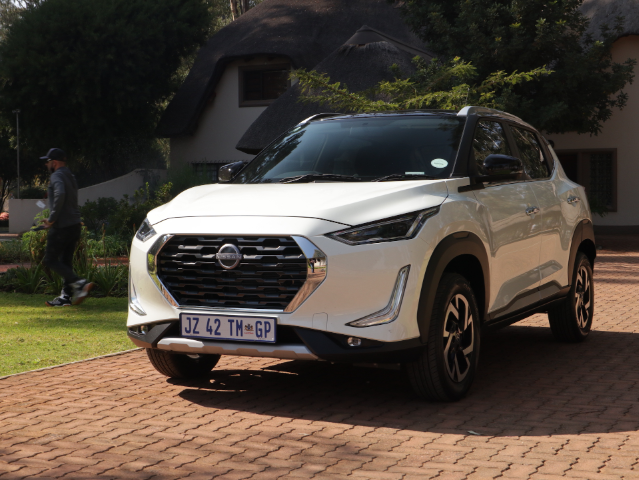
There’s only so much any designer could do with the compact crossover form factor, but the Magnite manages to look both grown-up and distinctive. There are no outlandish styling flourishes to the exterior, but the creases, curves and details combine to make the Magnite look a lot more expensive than it is.
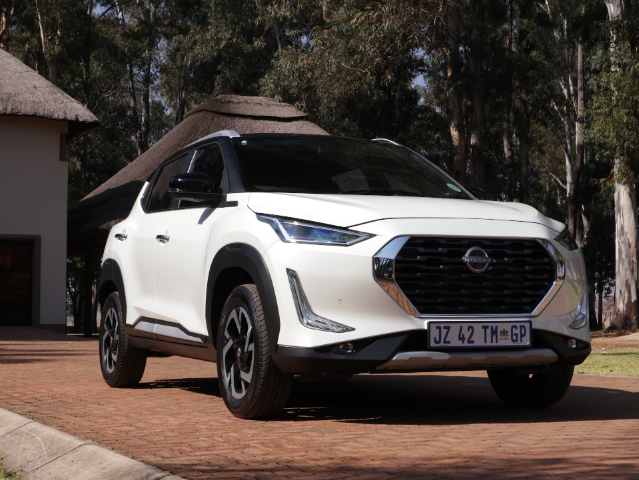
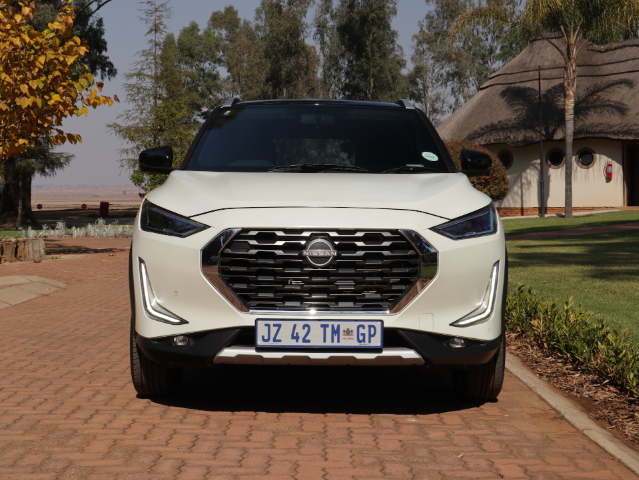
Up front, there’s the obligatory (plastic) under-bumper skid plate, finished in silver to contrast with its black surround. Moving up, the grille shows the only Datsun-like aspect of the Magnite’s styling, but tasteful chrome edges and L-shaped daylight running lamps in the lower bumper corners nonetheless give it a distinct and modern identity. In its turn, the grille is flanked by sliver-like headlights, which wrap around the front fenders to form a starting point for gently-swollen wheel arches.
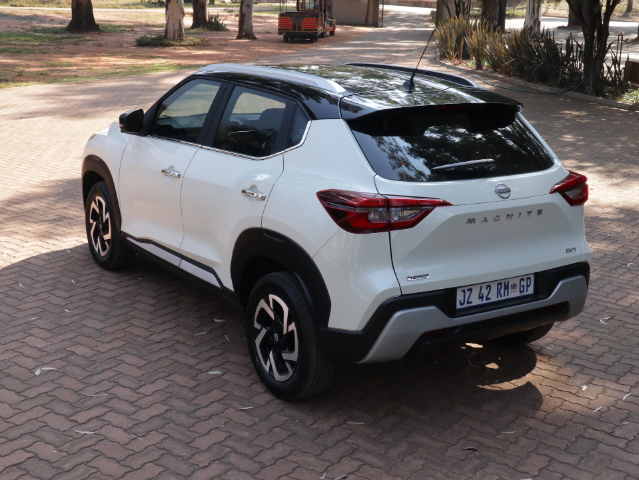
Down the sides, there are matching bulges over the wheels, connected by a subtle crease below the window line, and black-and-silver cladding on the doors’ lower edge. The window line itself kicks up behind the rear door, and terminates in a graceful, chrome-framed little quarter window in the C-pillar.
The rear end uses large, horizontal tail lights as a focal point, with a small spoiler atop the tailgate and some more black-and-silver cladding in the bumper. It’s all rounded off by those diamond-cut alloy wheels, a blacked-out roof, and functional roof rails to create a premium appearance from all angles.

There’s some Renault DNA in there...
The Magnite employs the Renault-Nissan “CMA-A+” platform, which means it’s related to the high-value and super-practical (but very slow and dynamically questionable) Renault Triber, which is itself distantly related to the Kwid. Another soon-to-arrive derivate from this platform is the Renault Kiger, due locally very soon.
You’d never guess that the Magnite is related to the Triber, though, so different are they to drive. Nissan’s engineers tuned the available hardware completely differently, and injected enough of their own signatures to turn it into a much more-appealing offering. (This also gives hope that the upcoming Kiger will address the Triber’s dynamic shortcomings.)

... but it has a Nissan heart
This transformation is, to a large degree, due to an engine upgrade: under the bonnet lives a detuned version of the Micra 1.0T’s turbocharged 3-cylinder engine, driving the front wheels through a 5-speed manual gearbox or a CVT. It delivers 74 kW and 160 Nm here (152 Nm with the CVT), giving outputs roughly in line with the opposition’s turbo triples.
As a result, the available performance is quite peppy, especially with the manual gearbox. Nissan claims that the Magnite will sprint to 100 km/h in 11.7 seconds (CVT: 13.4 seconds) and run on to a top speed of 173 km/h (CVT: 168 km/h). Getting to that top speed will take a long stretch of road, though, because acceleration tapers off quite sharply after an indicated 140 km/h in both variants.
This doesn't really matter, because the manual gets to that point quickly enough, and has sufficient grunt to overtake with reasonable confidence – provided the driver is prepared to stir the little engine into action with the gear lever. The CVT is considerably lazier, but it’s well-programmed to keep the engine in its torque band and progress fuss-free, without setting the revs soaring too often.
All in all, the Magnite is about on par with its market opponents in the performance stakes, and quicker than most similar cars in this price bracket. It’s also good to know that the engine is refined enough (and insulated well enough) to give a low-stress drive, and the gearbox has long legs to keep the revs (and engine noise) down on the freeway – hence the need for some cog-swapping when accelerating with verve.
Refinement is a priority
We’re not talking about luxury-car levels of ride comfort and refinement here, but, given the context of its segment, the laminated front windscreen and fairly generous sound insulation makes for a surprisingly quiet ride. Wind- and engine noise are both moderate, and leave tyre roar to generate most of the intruding decibels. Drop down a gear or two, and the rorty 3-cylinder will still make its presence known, but even that noise is comparatively muted under most conditions.
The ride-handling balance is biased towards comfort rather than sporty handling, and the tyres are quite modestly-sized (195/60R16), so fast cornering shows considerable body lean and a bias towards understeer. There is however enough road grip to meet the demands of the moderate performance on offer, and the Magnite showed no instability or dynamic quirks during our launch drive over a wide variety of road surfaces.
Of greater importance for a car of this type is the ride comfort. The Magnite, in typical Indian-car fashion, has a long-travel suspension, so it soaks up most road imperfections with ease. Speed bumps are equally effortlessly dealt with, thanks to generous ground clearance of 205 mm. Overall, the balance between comfort and control is well-suited to the Magnite’s market positioning and intended use.
Modern safety- and convenience equipment
Given the fact that the Magnite will likely be used as a compact family transporter, it’s reassuring to know that the entire local Magnite range performs well in this respect as well. Standard safety equipment includes stability- and traction control, ABS with EBD, hill-start assist, tyre pressure monitoring, and two airbags. Add onto this a 4-star rating in ASEAN NCAP crash test rating, and the Magnite ends up with a safety package that ranks as very good in its segment.
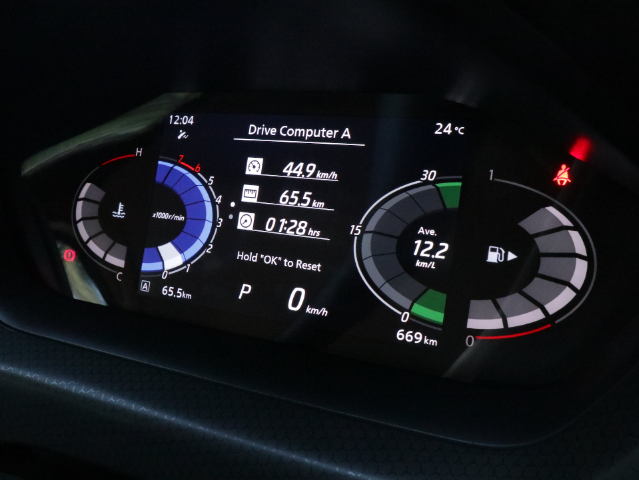
The standard interior features list is no less impressive, with all Magnite variants featuring electric windows all round (with one-touch operation for the driver); retracting electric door mirrors; alloy wheels; automatic climate control; cruise control; an 8-inch colour touchscreen infotainment system with 6 speakers, wireless smartphone mirroring and wireless charging; a full-sized and configurable digital colour instrument cluster; multi-function steering wheel with leather rim; keyless central locking with push-button start; LED indicators, fog lamps and DRLs; height adjustment for both front seats; rear parking sensors; and a rear-view camera.
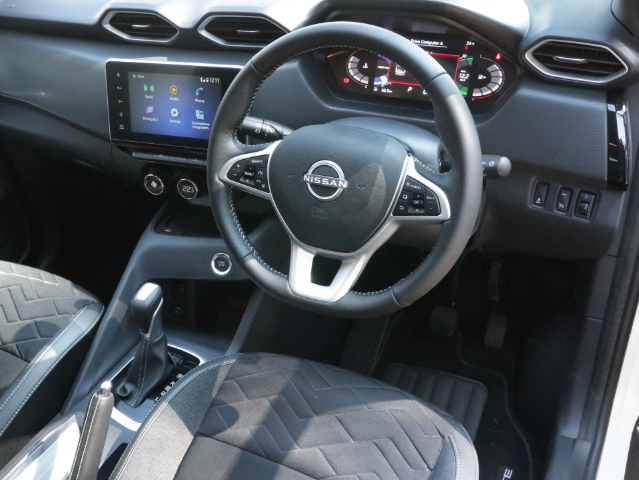
Many of the items on this lengthy features list can only be found on the option lists of cars that cost three times as much, yet they form the baseline for the new Nissan Magnite in entry-level “Acenta” trim. Upgrading to the “Acenta Plus” boosts the rear-view camera to a surround-view system, adds LED headlamps, and enhances the seat upholstery from cloth to a rather attractive cloth/artificial leather combination.
On the subject of the interior: there's a pleasing ambience inside, with easy-to-understand ergonomics and an attractive design. Forget about soft-touch plastics, though - the only soft items are the seats and arm rests, but it's screwed-together nicely, and didn't exhibit any rattles or squeaks on our launch drive. Cabin space and seating comfort is sufficient for 4 average-sized adults, and there's a generous 336 litres of boot space available under a neat cover. Practicality is further boosted by the neat cell phone tray (which also houses the wireless charger), a large glove compartment, plenty of cup holders, and sizeable door bins.
Nissan Magnite Range and Prices
Given this long list of virtues and features, one could reasonably expect to pay a pretty hefty pricetag for the Nissan Magnite, but the pleasant surprises just keep on coming. The range starts out inexpensive at its Acenta manual entry level, and then stays inexpensive all the way to the top-spec Acenta Plus CVT...
Nissan Magnite Acenta MT: R 256 999
Nissan Magnite Acenta CVT: R 280 100
Nissan Magnite Acenta Plus MT: R 282 600
Nissan Magnite Acenta Plus CVT: R 305 700
Included in these list prices is an excellent warranty for 6 years or 150 000 km, along with a service plan for 3 years or 60 000 km. Prices include all taxes and were accurate at the time launch, but may change without prior notice.
Verdict
With a massive list of standard features, very handsome looks, decent driving experience, practical cabin, solid safety credentials, and a fantastic value proposition, the Nissan Magnite has all the necessary ingredients to become a runaway sales success in South Africa. If its prices remain as competitive as they currently are, the Magnite should be able to turn its market segment upside down, and perhaps even persuade some shoppers from a higher segment to buy down and save a ton of money. Few new arrivals in its class can lay the same claim.