
New vs used Mazda3: what are the top 6 differences?
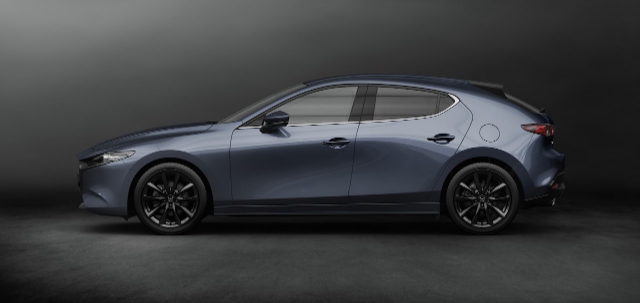
The Mazda3 has always been a bit of a fringe player in the local market, and the rise in popularity of SUVs and Crossovers haven’t done its market penetration any favours, either. That said, there’s still a lot to commend about the Mazda3, and with the arrival of an all-new generation, its positive attributes have only grown more prominent. We highlight the major differences between the old Mazda3 and the latest one.



1. New-car warranty and a fresh service plan
Apart from the host of visible and invisible improvements on the latest Mazda3, there’s one major thing you’ll get with a new Mazda3 but not with an older one: a full manufacturer’s warranty and service plan. However, because the new model is still very new to the market, late-model examples of the previous range will still have some life left in their warranties and service plans – especially because Mazda offers one of the strongest warranties on the market.
The reason Mazda’s warranty and service plan are rated so highly is because the company decided to remove mileage limits on their aftersales backup packages. This means that, regardless of the car’s mileage, the warranty and service plan will be active for 3 years, bringing a definite bonus for long-distance travellers.
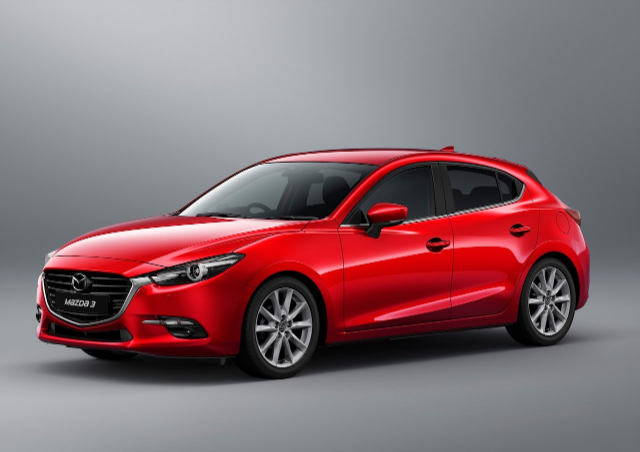
In the case of older cars with active warranties and service plans, the remainders could be transferred to a new owner, provided the appropriate procedures are followed. Enquire at your nearest dealership about this possibility, if you’re considering a pre-owned Mazda3 with an active service plan.
2. Evolved platform
The changes applied to the new Mazda3 is quite significant, however, and advances its predecessor’s virtues. Although the latest model uses a platform which is derived from the (very capable) old car’s, it’s really all new under the skin. The new body is stiffer and safer than ever, and it’s lighter, more efficient and more spacious as well.

As a result, the new Mazda3 further builds on Mazda’s reputation for creating great-handling cars, with incisive steering, well-controlled body motions, smooth ride, and an engaging driving experience. If you were impressed by the outgoing Mazda3’s dynamics, the new model will make you fall in love: as far ahead of its class as the old car was in this respect, the new one moves the goalposts along even further.
3. New entry-level engine
At the top of the new Mazda3’s line-up, the 2.0-litre 4-cylinder “SkyActiv-G” engine is carried over largely unchanged from the old model. Even though it’s still naturally-aspirated (without a turbo or supercharger), it’s a very modern engine, with ultra-high compression, variable camshaft timing and direct injection. It’s still quite competitive in its market segment, with outputs of 121 kW and 213 Nm putting it about on par with its downsized, turbocharged opponents.
The big news happens at the entry level, where a smaller version of the 2.0-litre with the same technology finally joins the range. This 1.5-litre 4-cylinder engine has been available in overseas markets since the previous model’s arrival, but the South African market had to make do with the older-tech “MZR” 1.6-litre engine as entry point– a lump which first saw service in the very first generation of Mazda3. Yes, the old one got the job done just fine in the past, but the new, smaller engine produces a fair bit more power while using quite a lot less fuel. It’s still not a scorching performer, though...
4. Revised rear suspension
In a market segment where more and more manufacturers are moving over to fancy fully-independent rear suspension (something which the old Mazda3 and its predecessors featured already), the new-generation Mazda3 takes a seemingly retrograde step. The previous model’s multi-link rear suspension makes way for a simpler torsion-beam design, but this doesn’t appear to have affected the car’s dynamics much, if at all.

There are many reasons why the engineers made this decision, and many of those reasons are equally applicable to other cars which have used this layout in the past: it takes up less space than a multi-link arrangement (liberating more boot- and cabin space and improving overall packaging efficiency), and it’s a lot simpler (and thus cheaper) to manufacture.
Mazda adds another reason, because they say that the simpler rear suspension is easier to tune consistently, because it involves fewer variables (moving bits). Whatever their reasoning, it certainly works well enough to give the new Mazda3 top-notch handling and a nicely compliant ride quality.
5. New infotainment system
Mazda’s cabin quality made a major leap ahead when the previous-generation model arrived, and could already bear comparison to the design and layout of many more-expensive opponents. However, their old infotainment system still lagged a little behind the best German offerings, and it was somewhat limited in its operation.

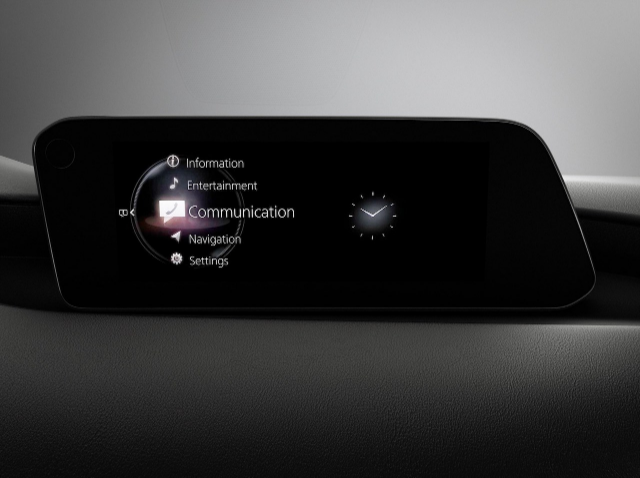
All that had changed now, however. While the cabin is even lovelier than before, the new MZD Connect infotainment system finally matches the rest of the interior’s upmarket ambience. Apple CarPlay and Android Auto smartphone mirroring is standard across all models, and the top-spec 2.0-litre variant adds standard navigation to its abilities. With a bright and clear 8.8-inch central display, the Mazda3’s infotainment system is now fully on par with the best offerings you’ll find in its opponents.
6. i-Activesense
This strange name is applied to Mazda’s driver assistance suite, and is only available in the 2.0-litre variants. Included in i-Activesense are adaptive LED headlights, rear cross-traffic alert, a reversing camera and blind-spot monitoring, but adaptive cruise control and lane-keeping assistance are both still absent.
Depending on your point of view, the slightly limited operation of i-Activesense is either a bonus or a downside: many drivers prefer to have as little interference with their driving as possible, and this is also the route that Mazda’s engineers chose. For those with a gadget fixation, there are still some tricks missing from the new Mazda3’s repertoire, but it’s still preferable to the “almost nothing” assistance levels of the old car.

As we demonstrated here, the new Mazda3 is more than just a pretty re-skin of the old car. There are some fundamental changes all round, and combined with its larger dimensions, marks the latest model as a further step forward from its predecessor. They might look vaguely similar, but they’re actually not very alike at all...
Related Reading:
Find out everything about the latest Mazda3 in our detailed First Drive Impression.
Here's a list of features that helps the new Mazda3 stand out among its competition.
For more information about Mazda's clever chassis technology, have a look at this article.