New vs used Audi A3: What are the top 3 differences?
As a mainstay of the local Audi model range, it’s very important for the A3 to remain a class-leader in its market segment. At first glance, it would appear that the latest A3 sticks to the proven recipe, with its enhancements aimed at sharpening an already-popular package. Here are the top 3 differences between the latest (2021) Audi A3 and a previous-generation (used) one.



After three successful generations, the Audi A3 and S3 have come in for their next revamp. While the old car’s core skeleton still lurks underneath, the new model receives a new interior design and body panels, mechanical improvements, and updated technology.
Related: Shop for new and used Audi A3 cars for sale here.

1. Sharper edges
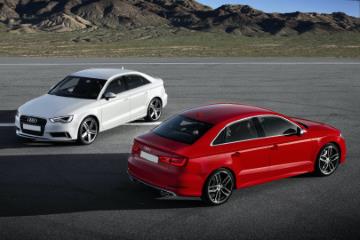
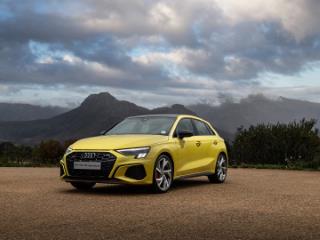
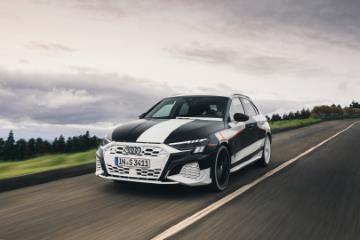
The third-generation Audi A3 was a very pretty car, with pert proportions, smooth lines, and subtle, classy detailing. In contrast, while the new model’s proportions are still spot-on, it looks considerably angrier and more assertive.
Thank the angular new headlamps and “Singleframe” grille design for that, along with more-pronounced wheel arch blisters and sharper creases in the metalwork. The end result is still instantly recognisable as an A3, but modernised to show off Audi’s current styling language.

2. Revised powertrains
In principle, the new A3 mostly continues down the same path as its predecessor, with a selection of turbocharged petrol units doing duty in the engine room. There are some key differences in the details, however. The previous entry-level 1.0-litre 3-cylinder unit has disappeared from the new line-up, leaving the 1.4-litre “35TFSI” as the base engine, good for 110 kW and 250 Nm. The initial range is capped by the hot S3 (also available in either Sportback or Sedan forms), with 213 kW and 400 Nm.
The lower end of the range also received a transmission shake-up. As with the outgoing car, Audi’s S-Tronic (dual-clutch automatic with 7 speeds) remains in use in the higher-powered “40TFSI” specification (140 kW/320 Nm) and S3 quattro (AWD) variants, but the 1.4-litre engine is now exclusively mated to an 8-speed torque converter automatic.

3. Modernised in-car electronics
The old A3 received running changes to its cabin electronics throughout its long (8-year) production life, with the introduction of Audi’s virtual cockpit as an option, and infotainment updates happening along the way. The new model takes the same approach, but incorporates the digital dashboard as standard across the board.
Infotainment moves to a new 10.2-inch colour touchscreen interface, which is now integrated into the centre console instead of being perched atop the dashboard. This also means that the cool fold-away action of the old screen is now eliminated, but that’s probably not a bad thing in terms of long-term durability.
In line with Audi’s latest connectivity systems, the new A3 features an LTE connection and in-car wi-fi, along with advanced navigation including real-time traffic updates and adaptive route guidance. Further enhancements include Audi Connect, which allows certain remote operations from a linked smartphone app, and the option of “Audi Phone Box”, which relays your phone through the car’s antenna to boost signal strength, and adds wireless operation for both charging and smartphone mirroring.