
New vs old Land Rover Range Rover: what are the top 5 differences?
Striking on the outside and refined within, the new Land Rover Range Rover's performance and capability are peerless. It boasts exemplary levels of comfort and technology with the aim of giving you a truly first-class travel experience. Let's take a look at features that make the new Land Rover Range Rover stand out.


Whether you’re deciding between purchasing and old or new vehicle, you’ll be happy to know that Land Rover makes incredible vehicles and each of them offers the same luxury and style that comes with the brand.
The 2018 model received some changes over its 2017 model, and deciding which is better depends on your style, how you drive and what you require from a vehicle.
1. Power
For the most part, the performance features in both the 2017 and 2018 Land Rover Range Rover models have largely remained the same; however, some adjustments have enabled the new 2018 model to deliver a little more power than its older 2017 version:
|
2018 Range Rover |
2017 Range Rover |
|
| SE and HSE models |
3.0L supercharged V6 engine with 340 hp or 380 hp |
3.0L supercharged V6 engine with 340 hp or 380 hp |
| SE and HSE models |
3.0L Td6 diesel with 254 hp |
3.0L Td6 diesel with 254 hp |
| Supercharged, Autobiography, or SVAutobiography Dynamic |
5.0L supercharged V8 with 518 hp or 557 hp |
5.0L supercharged V8 with 510 hp or 550 hp |

2. Technology
Land Rover is notorious for its enriching technology, and the latest model is no exception. Each technology feature is meant to provide the right amount of information and entertainment for your off-road adventures.
- The touchscreen in the 2018 Land Rover has a different look and offers drivers more touchscreen buttons and less traditional knobs like in the 2017 model.
- You can now use Gesture Control to close the shade on the sunroof by a simple wave of your hand near the sunroof.
- The Touch Pro™ Duo entertainment system now features two screens to fully optimize your tech experience while on the go.
Related review: Range Rover Velar P380 HSE R Dynamic – Almost perfect

3. Four-wheel drive
The Range Rover’s four-wheel-drive capability is managed by a transfer case design, which has a smart actuator rather than a separate motor and ECU. This results in a 1.5kg reduction in weight and is controlled via a multi-plate clutch. Together with the bevel gear centre differential it provides a 50:50 torque split.
Using wheel slip information from a range of sensors, the clutch distributes torque evenly between all four wheels, while a ‘shift on the move’ system allows selectable high and low gears at up to 60km/h. The Active Rear Locking Differential can also be optimised for cornering stability and traction.
4. Ride height versatility
When cruising at a sustained speed of 105km/h and above, the suspension lowers the vehicle by 15mm to reduce drag and improve fuel efficiency.
Access Height lowers the vehicle by up to 50mm to help passengers enter and exit the vehicle. This feature can also lock the suspension at a low level, enabling the Range Rover to travel up to 40km/h in locations with restricted height, such as multi-storey car parks.
Conversely, the ride height can be increased to cater for demanding off-road scenarios, with two bespoke options:
Off-Road Ride Height 1 lifts the vehicle by as much as 40mm at speeds of up to 80km/h and is ideal for faster driving in less extreme off-road conditions, such as deeply rutted dirt roads.
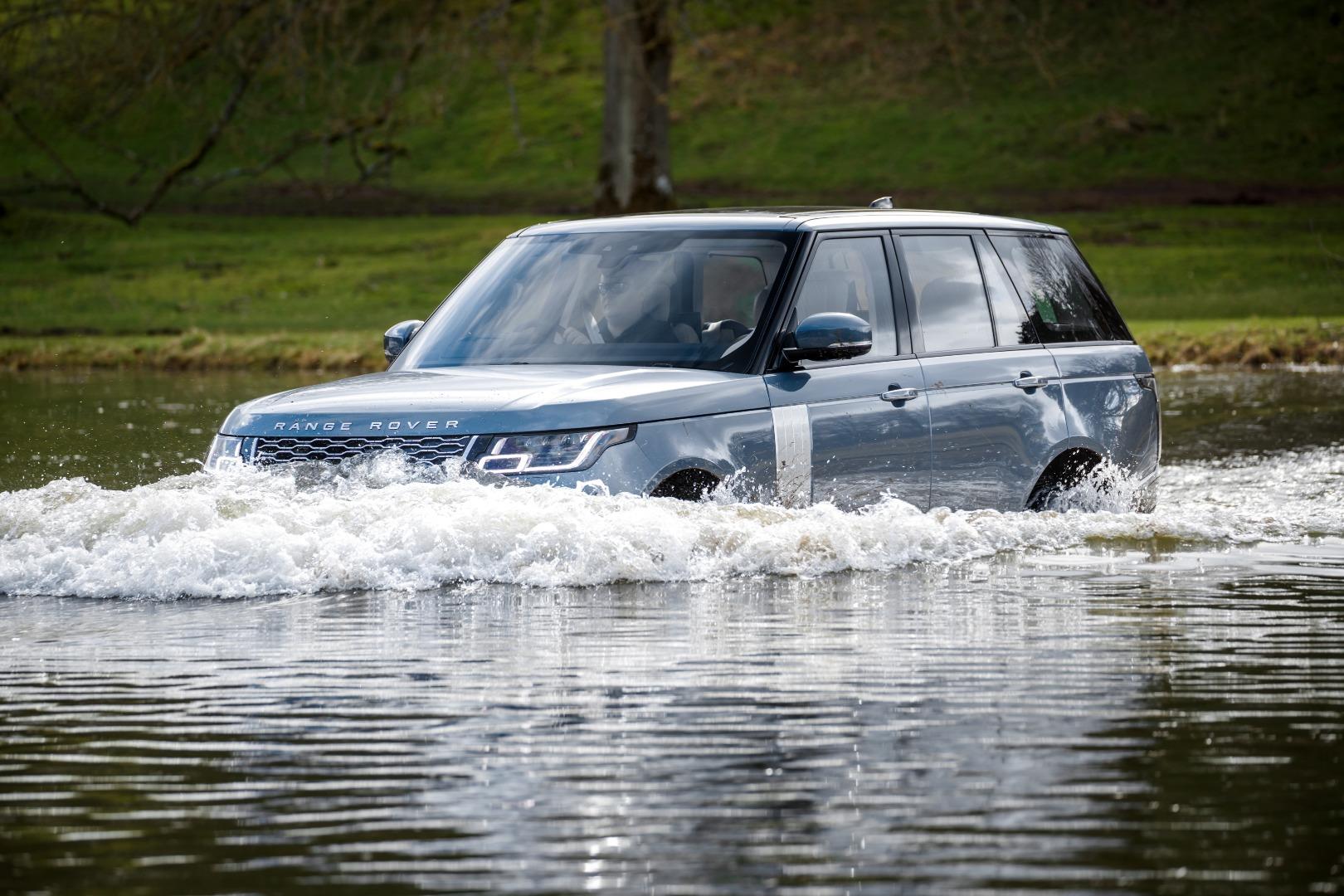
For more extreme landscapes or wading through water, Off-Road Ride Height 2 takes the car up to 75mm above its usual height at speeds of up to 50km/h.
Using switches in the rear load space it is possible to reduce front and rear ride height to help with loading. Conversely, the rear can also be raised to assist in the hitching of trailers and the adjustment of trailer inclination while stationary. The suspension can be levelled by holding the up and down buttons simultaneously until the vehicle returns to normal.
This user-friendly set-up can also be managed using the key fob, which is particularly effective when the load space is in use and the switches are inaccessible.

Related: Shop through our listings for your own Range Rover
5. Advanced towing options
The Range Rover also benefits from Advanced Tow Assist – one of the industry’s most advanced trailer reversing aids – which allows the driver to plot their trajectory when guiding trailers or caravans into position. This is managed via the central touchscreen and uses the rotary Terrain Response selector to steer the vehicle.
When in use, the driver will not be required to counter-steer at any stage because the rotary dial is always turned in the direction the driver wants the trailer to go. The system automatically performs any counter-steering to articulate both the vehicle and trailer along the path projected by the reversing camera on the central touchscreen.