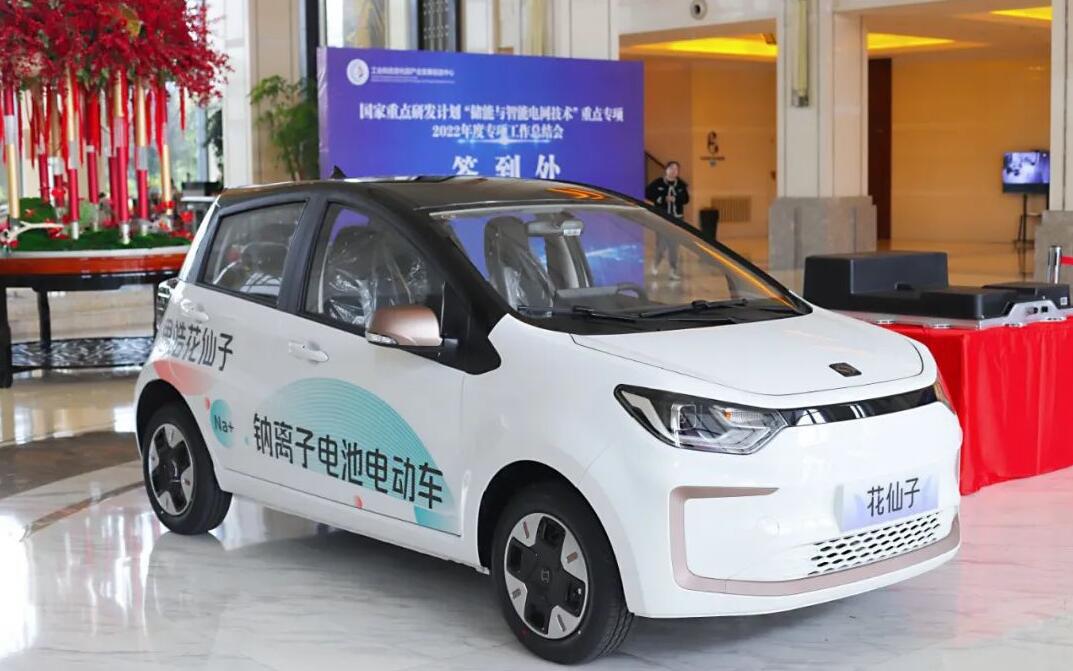

The world has seen an increase in electric vehicle adoption, however, one of the barriers for consumers is affordability. The JAC Group and Volkswagen in China embarked on a joint venture to find solutions to some of the biggest challenges for EV vehicles and one of the results is brand-new battery technology.
The two automotive giants have officially introduced the first EV to utilize a sodium-ion battery instead of the traditional lithium-ion units. The sodium-ion battery not only provides excellent cycle performance but is a more affordable solution which could result in more affordable EV vehicles for the masses. Before we find out about the new model unveiled, remember you can get an Instant Offer on your car before you start your search for a new or used electric vehicle on AutoTrader.
Related: Which electric cars have the longest range?
The new model
While the many details about the Hua Xianzi (flower fairy) are still unknown, we do know that the five-seater gets its power from a 25 kWh NA-ion (sodium-ion) battery. The model has a claimed range of up to 250 km from a single charge. The battery comes from the Beijing-based HiNa Battery Technologies, which works with the Institute of Physics of the Chinese Academy of Sciences to develop sodium-ion batteries as well as new technologies that would see this battery type incorporated into trucks, buses and other popular vehicles such as scooters.
Sodium-ion (NA-ion) batteries
The current industry standard for electric vehicle batteries is lithium-ion, and although this configuration has a better energy density, sodium-ion batteries provide better low-temperature performance, charging speed, a longer lifespan, and can be recharged more times without degradation.
Another advantage is that sodium-ion batteries are less likely to overheat, which makes them ideal for large-scale energy storage. However, one of the biggest advantages is that sodium-ion batteries use cheaper raw materials in the manufacturing procedure and, as a result, could reduce the production costs of electric vehicles by up to 10%.
"The future of electric vehicles looks promising with the introduction of more affordable and sustainable battery technology. With the development of new battery technology, EV pricing will become more competitive, giving more car buyers access to new-energy vehicles", Karl-Heinz Göbel, Chief Executive Officer of JAC Motors South Africa.