


In the next couple of months I will probably be teaching a family member the basics of driving, before the youngster enrols in a formal driving school. This caused me to think about how I should approach the very first lesson, because first impressions are the ones that tend to take the deepest root in the human psyche.
The youngster in question is not a petrol-head by inclination. His father is more interested in sports like cricket and football. So I will be working with a “bare canvass” to a large extent.
Those first few days, weeks and months when you take the controls of a motor vehicle can be life-changing. Obviously the biggest factor of all is safety and so my plan is to spend the first lesson on the theory of safe driving.
The following are the points I will be making, even before we tackle the basics of car operation:
1. Attitude
The most important aspect of this is courtesy to other road users. This applies whether they are acting courteously or not.
2. Make allowances for other drivers to make mistakes.
In the case of a collision, it doesn’t matter who was in the wrong. What does matter is if you could have avoided the collision by being more aware .
3. Awareness
This means being focussed on the present, and in the case of good driving, this means being aware of how you conduct your car in a given motoring environment.
4. Drive appropriately for the conditions.
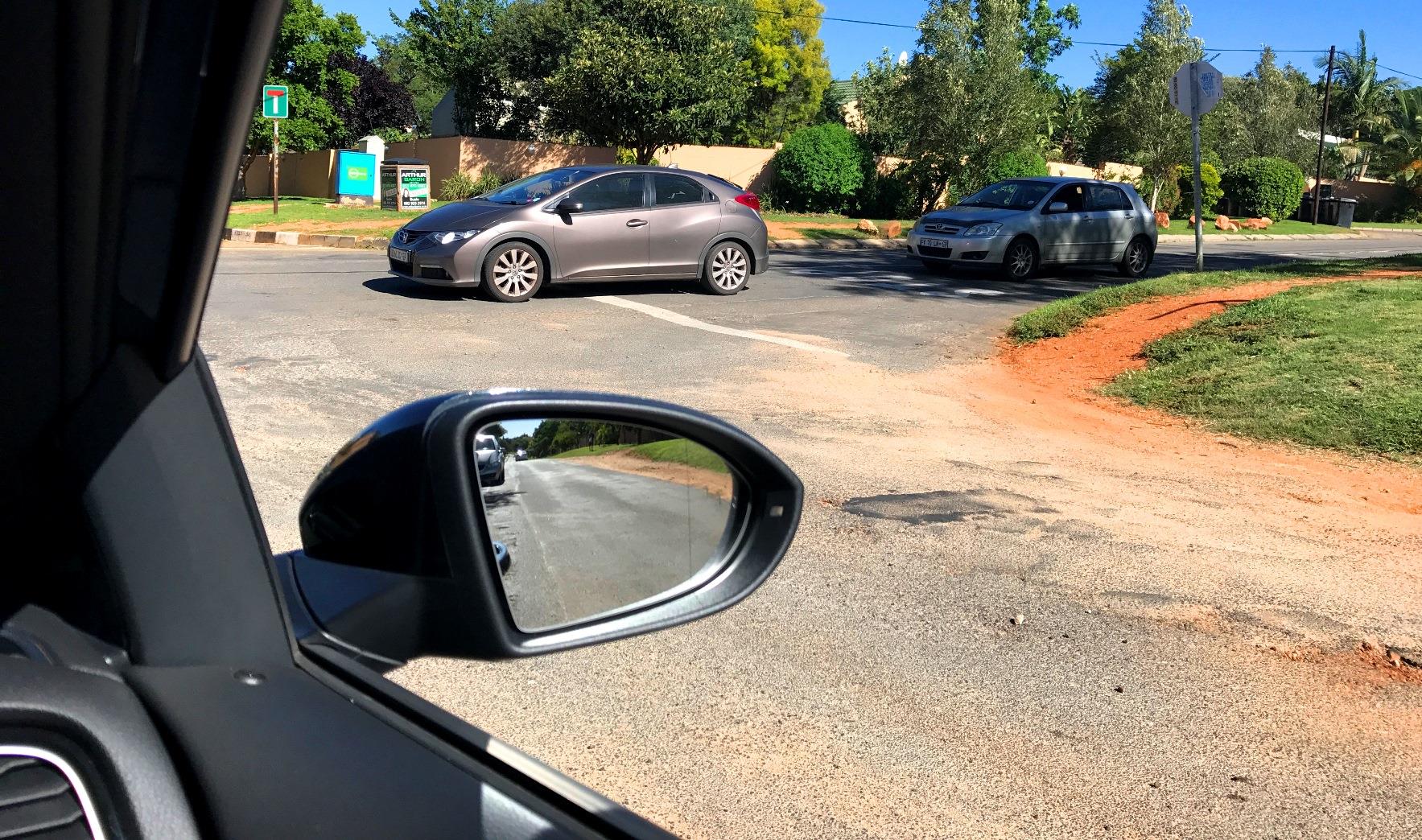
The most obvious of these is speed. The speed of your car should be neither too fast or too slow for the conditions. As an example, when driving in a suburb where there are likely to be cars pulling out into the street ahead of you, and children and dogs that may suddenly dart out into the road in front of you. Drive at a speed that would give you a safety margin to react to unforeseen factors.
5. Predict the future
This doesn’t mean gazing into a crystal ball. What it means is looking for signs up ahead of what the road is likely to do, and what other road users are likely to do.
6. Adjust your driving according to your predictions.
For instance, if you have noticed that there is a side street up ahead leading into your street or road, predict that a vehicle just may suddenly dart out in front of you. So be aware that you may have to brake or taking avoiding action in the near future.
7. Drive consistently
Being aware of what may happen doesn’t mean that you must drive neurotically, and thus become a mobile hazard for drivers who may be following you. It merely means that you may ease up on speed slightly when approaching a potentially hazardous situation, with the awareness that you might need to react quickly if a hazard suddenly manifests itself.
8. Never follow closely behind another vehicle
Always leave a margin to stop safely if that driver ahead suddenly has to brake. If a car pulls into the gap you have left, ease off the accelerator and establish the same gap behind this new “arrival” in your lane. In wet weather, double that following distance, because cars skid easily on wet roads.
9. Keep left, pass right.
On the highway, follow the keep-left, pass-right principle. In South Africa, many people ignore this. Don’t drive too slowly on the highway, and if you are in a slow car, keep in the left lane. After overtaking, move back into the slower lane as soon as you are well clear of the overtaken vehicle.
10. Always check your mirrors
Obviously, before overtaking, it is vital to check your mirrors to check whether a faster car behind is trying to overtake.
This is part of your being aware of your driving environment. By checking your mirrors often, and these include the interior mirror and both left and right-side wing mirrors, you will be aware if someone is screaming up behind you at high speed.
11. Always indicate your intentions by using the car’s indicators.
There's an art to using your indicators. Don't signal a turn when there are two intersections up ahead of you, wait until you have passed the first intersection (this could be a driveway for a fuel station, for instance) and only then indicate that you are turning. In other words, you have to think for other drivers as well!
12. Never take anything for granted.
If you have been waiting at a red traffic light, and the robot turns to green, take a moment to check whether it is all clear to go. So many South African motorists try and sneak through an intersection after the lights have turned red. You don’t want to be the guy who gets involved in an accident caused by somebody else.
AutoTrader has some useful and enlightening information on driving techniques and driver safety, which you can access here: https://k53.autotrader.co.za/..
Enjoy your driving. Driving is an art form, and you should learn to drive your car as smoothly and accurately as possible. This art form can be practiced by Lewis Hamilton at 320 km/h in his Mercedes F1 racer, or by the bus driver who pulls off smoothly so that he doesn’t cause passengers to be sent spinning towards the ba.ck of the bus.
By remaining locked into your motoring environment, predicting what may or may not happen up ahead, and conducting your vehicle so that you are always one step ahead of the game, you will derive so much pleasure from your driving. And so will others, who share the road with you.