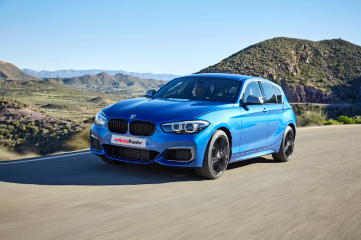
BMW 128ti (2021) First Drive Impression: The wild “1”
Up till now, BMW’s recipe for a hot hatchback has always pretty unique, relying on a 6-cylinder engine and RWD. This resulted in some iconic cars, such as the lovely 130i of the first generation 1 Series, or the M135i/M140i of the second. But nothing they’ve done thus far has ever directly challenged the Golf GTI, so BMW decided address this with a FWD, 2.0-litre turbo hot hatch of their own. Does the new BMW 128ti have what it takes to take on the ever-popular Golf?


To be honest, the current-generation BMW 1 Series (and its related 2 Series Gran Coupé) doesn’t really set our hearts aflutter. In base-line 3-cylinder FWD format, it’s thoroughly unexceptional in every way, and in top-spec, AWD “35i” trim, it’s quick enough but otherwise equally unexceptional.
So what should we make of this new, hot FWD derivative, then? Well, paying attention to it would be a good start, particularly for those keen drivers who bemoan the lack of sensation in the clinically-effective M135i xDrive. Because, even though it doesn’t drive anything like a traditional (rear-drive) BMW, it’s a bucket of giggles in a whole other way. In fact, this might be the most involving car BMW has made in a while...
Related: Get all the info about the BMW M135i xDrive in this video review.

Not every “ti” has to be preceded by a “G”
Those readers with a bit of automotive history behind them will hopefully recognise the “ti” bit in this new arrival’s nameplate. It first rose to prominence in the 1970s with the iconic 2002ti, disappeared for a few decades, had a brief revival in the (ultimately unsuccessful) shape of a truncated hatchback 3 Series around the turn of the century, and then went away again. But now it’s back, and it means business.
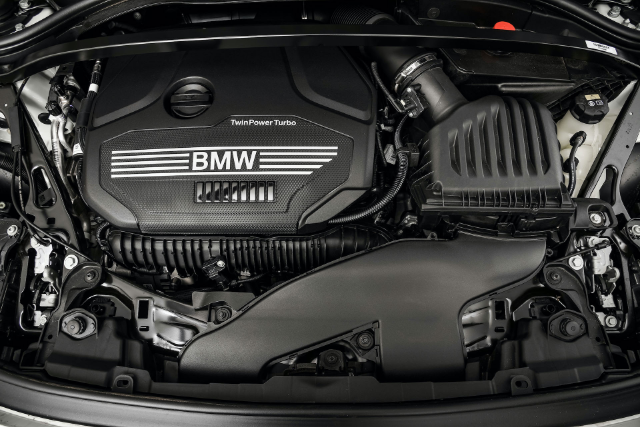
Under the bonnet lives a variant of BMW’s corporate “B48” turbocharged, 2.0-litre 4-cylinder petrol engine, tuned for 180 kW and 380 Nm in this application’s South African spec. Strangely, the exhaust doesn't crack and bang during gearchanges in the way of many opponents, and at most politely clears its throat. Plenty of "Vrrrr", then, but very little "Pah!"
Power is sent to the front wheels through an 8-speed automatic transmission and a limited slip differential. You read that right: there’s a proper mechanical (Torsen) limited slip diff between the front wheels, just like you’d find in hot hatch favourites like the Honda Civic Type R and Hyundai i30N.
Single-mindedly sporty
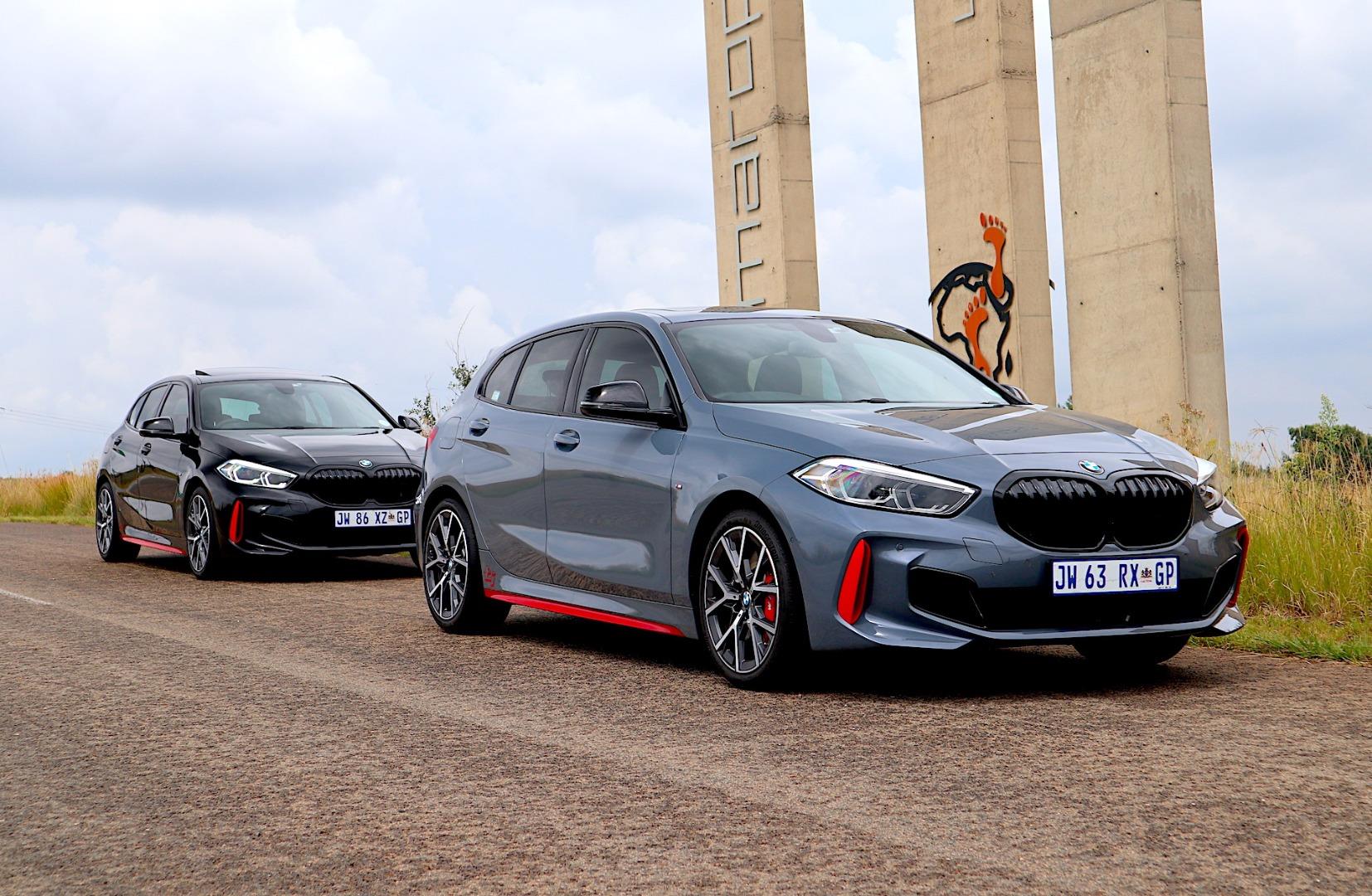
In comparison to the effect of that diff (and other improved oily bits) on the driving experience, the 128ti’s styling additions are actually quite subdued, yet merit a mention. Apart from the M Sport bodykit and 18-inch alloy wheels, red stickers and glossy red- and black trim pieces add some welcome aggression to the rather generic 1 Series body shape, and brings some youthful verve to the 128ti’s appearance.
Unseen changes are more comprehensive, and starts with a suspension that’s unabashedly tuned for control at the expense of comfort. It’s not tooth-rattling or harsh by any means, but those who desire a magic carpet ride should best look elsewhere. Good. This isn’t meant to be a soft option, after all.
Instead, it’s pretty intensely focused on those drivers who actually enjoy being part of the process of going fast, and is, as a result, surprisingly extroverted as well. Don’t let the fact that it can’t do RWD power slides deter you, because this BMW delivers really un-BMW-like thrills.
Related: Reviewing the BMW 220d Gran Coupé revealed some personality quirks in BMW’s smallest “4-door coupé”.

Getting the torque down
Do not be fooled into thinking that the BMW 128ti comes from the “press Sport mode button, go vroom quickly” school of thought, because it’s a bit more involved than that. One of the BMW 128ti’s most noticeable characteristics actually recalls the early days of hot-hatch development: torque steer.
In short: when enough drive torque is applied to the front (steering) wheels of a car, it results in a definite tug at the steering wheel – usually followed by the car heading off into its own direction. Torque steer is usually A Bad Thing for the driver, as anyone who’s ever driven an old Superboss or Kadett TS in anger would confirm. It kind of ruins the whole driving experience, prompting engineers to chip away at this FWD bug through decades of development.
Their solutions include trick multi-link front suspension systems, e-diffs, and clever chassis control software (in recent years), and some of the applications are remarkably successful. As examples, think of the current Honda Civic Type R and Hyundai i30N (again), or the final GM-era Opel Astra OPC – there’s no fidget or tucking at the wheel under power, just giant heaps of traction.
Well, the BMW 128ti is not like those examples. The torque steer is not at all dangerous here, mind you – you really have to want to provoke it, and the electronic nanny stays active in the background all the time – but the mere presence of this effect shows that the 128ti likes to party.
Related: We compare the BMW M235i xDrive to the Mercedes-AMG A35 4Matic sedan in this video review.

The return of driver involvement
Yes, the software and limited-slip diff do mitigate the torque steer, but that doesn’t mean that it’s completely gone: the driver still has to concentrate that little bit harder when pushing on. This trait arrives at the party with its old friend, wheelspin, but they both only appear when the electronic chaperones are absent.
Prod some buttons to sharpen the throttle response and put some weight in the steering, and get the gearbox to drop a few cogs via the paddle shifters, then get ready to play. The mere fact that some torque steer and tyre squeal can be experienced at all, points towards the 128ti’s playful nature, even if they’re well-contained in normal driving.
Further fun boxes are ticked by that firmly-controlled suspension, well-contained understeer and pleasingly direct steering, resulting in a small FWD BMW that makes any trip feel like an occasion. It's also good to know that BMW has improved the brakes to M Sport specification along with the suspension, when they installed the power upgrade.
Related: In this review, we didn’t exactly fall in love with the BMW M235i xDrive, but appreciated its good points.

Can it beat a GTI?
Maybe, maybe not. Its claimed figures are certainly promising enough, with a 0 – 100 km/h dash in 6.2 seconds and a top speed of 243 km/h on the cards. We’ll have to see how it compares to the GTI when the eighth-generation Golf arrives in a few months, but prior experience with VW Group’s high-performance MQB-platform cars suggest that the 128ti’s figures should be competitive.
Where they will likely be vastly different, is in the driving experience. The GTI will probably again be highly accomplished but a bit anodyne, while the 128ti is rather more engaging (than the outgoing Golf), even at lower speeds. But, crucially, the BMW feels more exciting to drive than the GTI 7 does, even if its ultimate handling characteristics aren’t all that exceptional.
The bottom line is that, because you have to pay attention and work with the car to make it go fast, instead of just pointing it in a direction and flooring the throttle, driving the 128ti with enthusiasm is a very immersive (and possibly addictive) experience. A small FWD BMW that could be fun at a track day? What a time to be alive!
Related: 5 Things you need to know about the latest BMW 1 Series.

Other distinguishing features
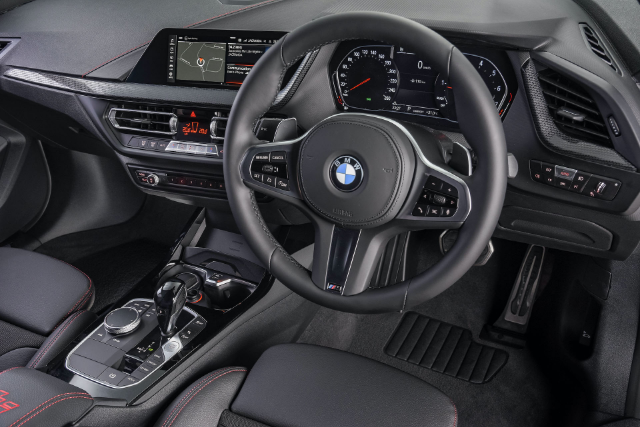
Inside the cabin, front-seat occupants are greeted by lovely sports seats with a big red stripe down the middle, red contrast stitching everywhere, and an embroidered “ti” logo on the centre armrest. That’s about it, though – this is a low-frills kind of car, and most additions are meant to be functional.
Standard equipment includes LED headlamps, a fully-digital dashboard with a 10.25-inch centre-mount colour touchscreen display (with smartphone mirroring) and another 10.25-inch instrument display, with further customisation possible from a long option sheet. Included in the BMW 128ti starting price of R 687 418 is a 2-year/unlimited distance warranty and a maintenance plan for 5 years or 100 000 km.
Related: We compared the latest BMW 1 Series infotainment system to those of two competitors.
Recommended Next:
Shop for new or used current-generation BMW 1 Series cars for sale here.
Shop for used older-generation BMW 1 Series cars for sale here.
5 Extras you should fit on a new BMW 1 Series.