
2020 Nissan GT-R: More of the same, but improved in every way
Officially, South Africa missed out on the first four decades of the Nissan Skyline GT-R’s history. Only a select few buyers (with deep pockets and a penchant for bureaucratic paperwork) managed to lay their hands on earlier, specially imported examples of this iconic model, while the rest of us had to be content with drooling at YouTube videos and gaming console simulations.


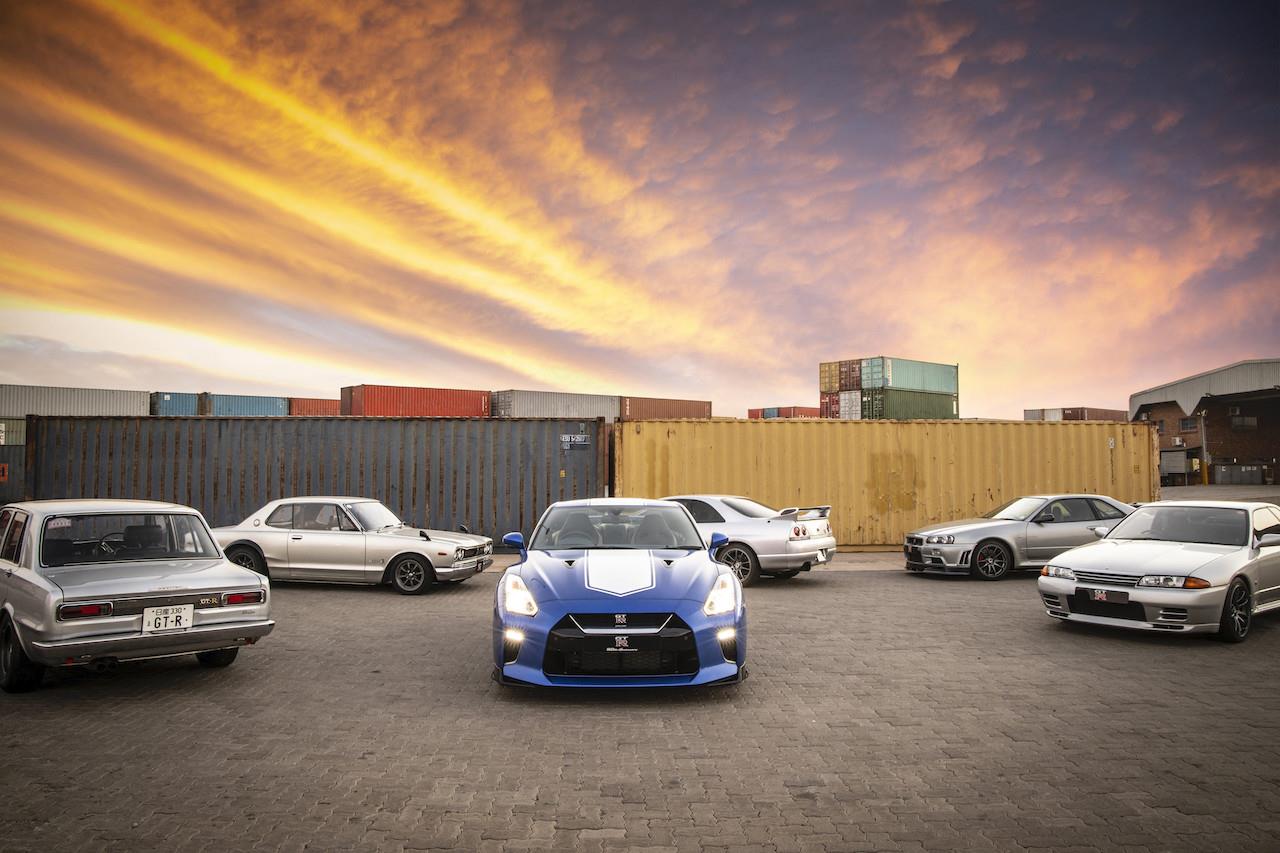

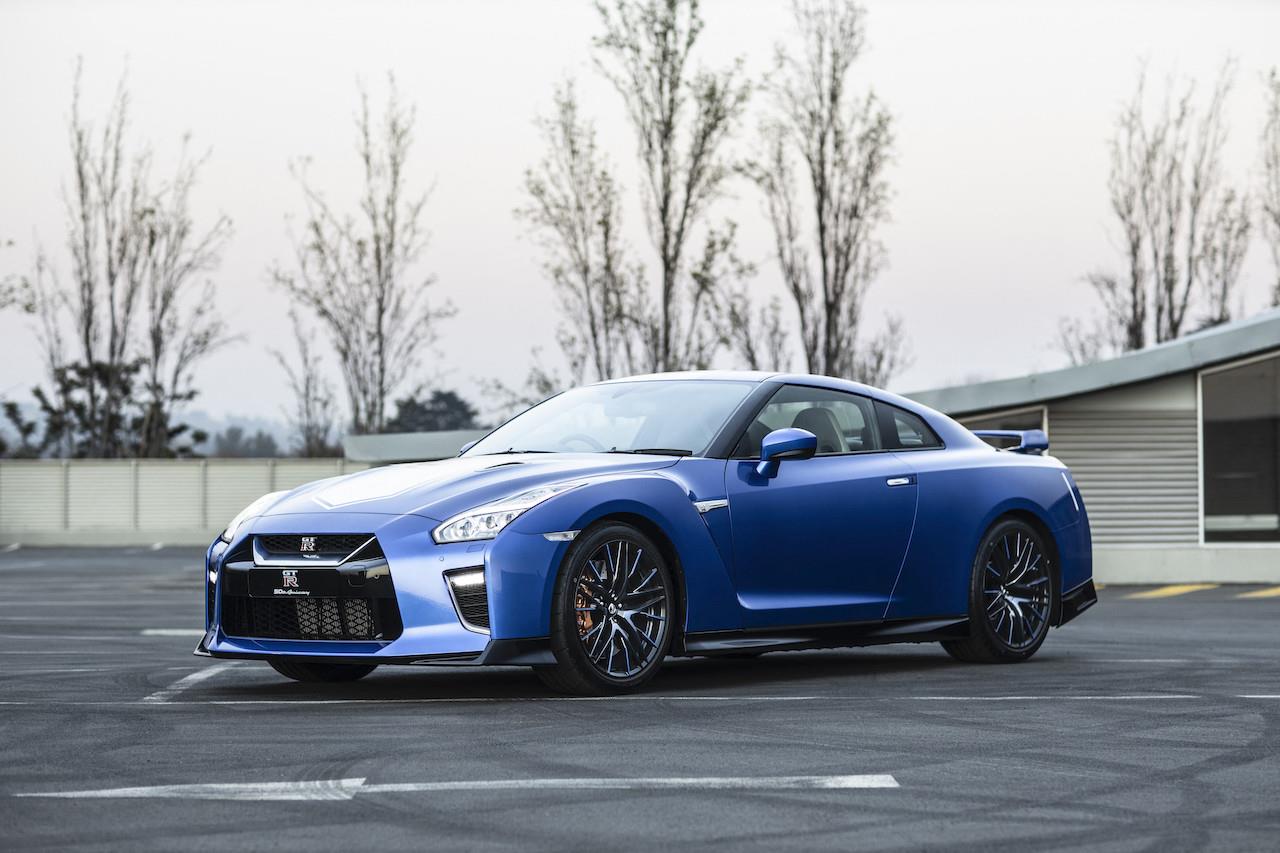
But all of this changed when the R35-generation GT-R arrived on local soil a decade ago (now minus the “Skyline” moniker), and it almost immediately attained a fanatic following. To be honest, those early R35s were a bit of a performance bargain, offering supercar-rivalling (or -beating) performance for a fraction of the price.

Blessed with an engine with apparently unlimited tuning potential and handling abilities which seem to ignore the laws of physics, the R35 GT-R has proven its worth in motorsport, with an impressive list of accomplishments on drag strips and at hill climb events. And, thanks to regular updates, the GT-R kept up with the times in terms of power: from 357 kW in the beginning to the current 410 kW, it’s only grown faster and faster.
It’s no longer a performance bargain, though. Its current base price of R 2.25 million puts the latest GT-R up against some very serious high-performance coupés, many of which match it on power (and offer an even more prestigious badge on top of it). Meanwhile, those supercars which the GT-R used to slay back in the day have moved on to even higher-performance realms. As a result, the GT-R has had to move into a new direction, forced into taking aim at the newer crop of high-performance luxury coupés.
So what’s changed for 2020?

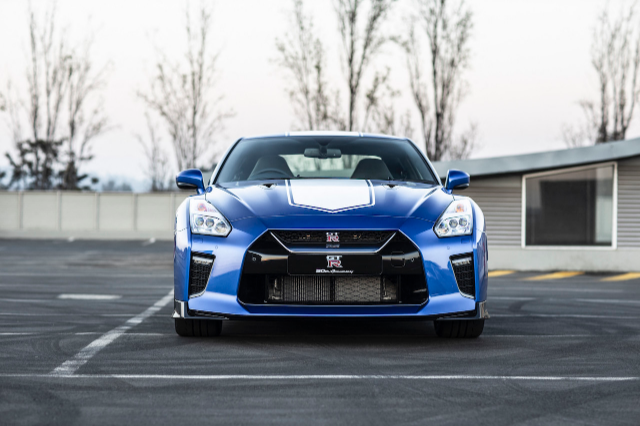
The fact that the latest GT-R still looks very much like last year’s (or one from 4 or 10 years ago, for that matter) should make it clear that this isn’t an all-new car. Instead, it’s a meticulous and thorough re-development of the outgoing car: even though its skeleton and most of its skin are the same as before, the support systems have received a host of detail changes.
Take the revised engine as an example: It’s still the same 3.8-litre twin turbo V6 nuclear reactor as before (the famed VR38DETT), but new turbos and redesigned exhaust manifolds provide quicker boost response, even if the absolute outputs remain the same at 410 kW and 632 Nm. About those new exhaust manifolds: they’re specifically designed to allow easier fitment of upgraded turbos, acknowledging the importance of the tuner market for those who consider the standard output as not quite insane enough, and would like twice as much, please.

One of the most significant improvement can be found in the recalibrated gearbox control software. New adaptive and predictive shift programming completely changes the behaviour of the twin-clutch transmission, making it unobtrusive and slick-shifting in normal driving, but sharp and intuitive when you start leaning on the throttle pedal or hurling the GT-R through a set of curves.
Underneath, the adaptive suspension has been re-calibrated to give a more compliant ride quality, as well as firmer damping in “R” mode. Combined with a revised steering setup, this allows for greater stability on road and more responsive cornering.

It’s still really fast, then?
Yes, and then some. No R35 GT-R has ever been slow or lazy to respond to power demands, and the latest version is no exception. It is, as expected, a cruise missile, with a 0 – 100 km/h sprint in as little as 2.7 seconds (under ideal conditions, so probably closer to 3 seconds in the real world) and a top speed of 315 km/h. In other words, very fast.
Drag racers can expect quarter-mile passes in the mid-11 second range at 190+ km/h, exactly as it comes from the factory. With such a capable starting point, it’s no wonder that the tuning- and aftermarket industries have adopted these cars so enthusiastically. Here’s the thing, though: in its latest configuration, the GT-R makes driving very fast very easy. It’s literally a point-and-squirt kind of car, dropping the horizon in your lap the moment you bury the accelerator pedal in the carpet.
With the re-calibrated gearbox and suspension systems at work, it feels composed and planted, with a smooth ride and imperceptible gearshifts when you’re just cruising along. Flick a few switches on the console or just floor the accelerator, and it becomes a firmly-controlled speed monster with only one mission: hurling you down the road as quickly as possible. That said, there’s still a significant amount of tram-lining on uneven roads at very high speeds, where those fat low-profile tyres seek out ridges or irregularities in the surface, and then try to follow them.
What else is new?
The 2020 GT-R model range still offers the same two trim levels as before, namely Premium Edition (R 2 250 000) and Black Edition (R 2 360 000), and their specifications remain unchanged (apart from the hardware- and software revisions listed above). The big news is the arrival of a new range-topping GT-R 50th Anniversary Edition, commemorating the arrival of the very first Skyline GT-R back in 1969.
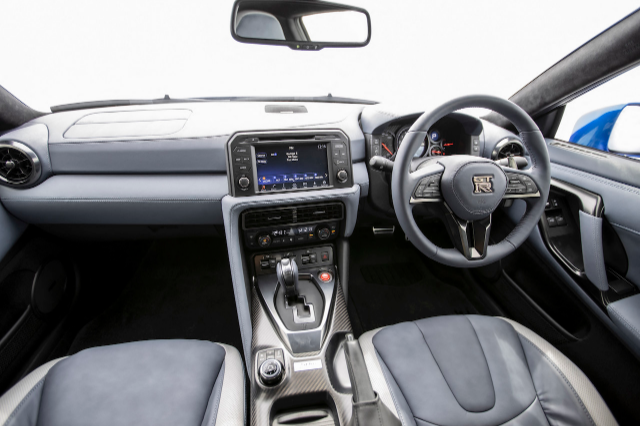
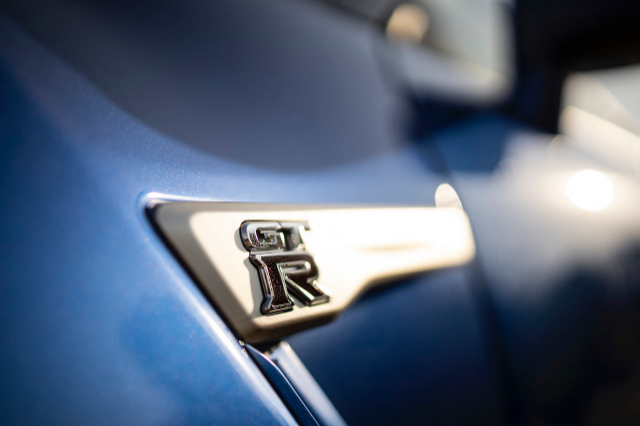
Nissan’s anniversary gift to themselves is a package of cosmetic enhancements, in the form of a more-luxurious cabin and special decals on the outside. This limited-edition car can be ordered in a choice of three colour combinations: Pearl White with red stripes, Super Silver with white stripes, and the one to get: Wangan (Bayside) Blue – a colour last seen on the R34, with white racing stripes. That last one is definitely worth its R 10 000 price premium over the other two colours.
The changes inside are more extensive, and includes a switch to a grey trim colour scheme, new gearshift knob and steering wheel, special seat embossing, and Alcantara wrapping for the roof lining and sun visors. It definitely feels a fair bit more upmarket as a result, and brings the cabin quality closer to parity for the GT-R’s price point.
Verdict
It’s amazing how the R35 GT-R has evolved so much over its very long production run, paying testimony to the basic design’s soundness way back then. That it could be adapted to offer a completely different set of virtues, and still remains so competitive after so many years, is a bit of a miracle in itself. Yet, at its heart, this is still the GT-R that was introduced to the world 12 years ago, and it’s seen that world change a lot in the time it’s been around.
Blindingly quick over almost any road, quiet and civilised in traffic or on the freeway, well-equipped and fairly plush inside, the 2020 GT-R represents the (current) state of the art for Nissan’s performance vehicles. But, with all of its virtues, it is getting on in years, and may soon be replaced by something that will undoubtedly be a lot more environmentally-aware and sophisticated.
And that is exactly why the 2020 GT-R (especially in Bayside Blue) may just represent the pinnacle of its line. Underneath that veneer of civility and user-friendliness lives a snarling monster, kept on a leash by properly developed electronic guardians – character traits which may just fade away when the next-generation GT-R arrives in a few years’ time.

The Nissan GT-R is a throwback to an earlier era, refined over and over, until it’s honed so closely to perfection that it can still stand its ground among newer, more-potent challengers. It’s an uncompromising performance machine, plays by its own rules, and beats its opponents at their own game. That it manages to do that in spite of its age only proves how far ahead of the game it’s always been.
2020 Nissan GT-R Range:
GT-R Premium Edition: R 2 250 000
GT-R Black Edition: R 2 360 000
GT-R 50th Anniversary Edition: R 2 405 000 – R 2 415 000 (depending on colour)
Related Reading:
The GT-R is up against some very strong opponents. The Mercedes-AMG GT is one of them.