
Latest Information on Saab

Saab Automobile is a Swedish automaker that established business in 1945. Prior to this and before building cars, when World War II ensued, the Royal Swedish Air Force needed aircrafts. Saab supplied them with bombers and fighters. Having modernized their production processes, the Saab factory was equipped for the task. However the planes designs were German and American copies. Saab’s first in-house designed aircraft came off production lines in 1941. It had several imperfections but were swiftly sorted. When World War II was reaching its end in 1944 Saab then began working on non-military aircrafts. Passenger planes seating 25-30 people were then introduced. Saab continues to produce high quality civilian and military aircrafts. In addition Saab also produces trucks, buses, spacecrafts and the famous jet fighter Viggen and the latest innovation Gripen. The first prototype automobile produced was the Ursaab. The company made use of a numeric naming convention and since 90 and 91 were used for aircrafts, they labelled the first production car the Saab 92. Saab’s first car was launched in 1949. Business Ownership In 1968 the parent company, SAAB AB, merged with Scania-Vabis. Then by 1989, the Saab-Scania division was restructured into an independent company called Saab Automobile AB. GM (General Motors) then bought a 50 percent ownership stake by investing US$600 million. By 2000 GM then acquired the other 50 percent for a further US$125 million. After being a wholly owned GM subsidiary for almost ten years, GM then sold off Saab Automobile AB to Spyker Cars N.V., a Dutch automobile manufacturer. In 2011, the company petitioned for bankruptcy and in 2012 a new company called National Electric Vehicle Sweden (NEVS) bought over Saab Automobile's bankrupt estate. In 2014 NEVS lost its license to produce vehicles under Saab’s name but is planning to produce electric cars under its own name.



Related car reviews
 Changan CS75 Pro 1.5T CE 7-seater (2026) ReviewWe review the top-spec Changang CS75 Pro to find out if it's a R499k seven-seater gamble or the ultimate high-class budget SUV!
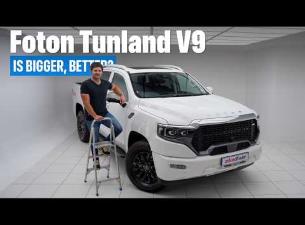 Heavyweight Hitter, or just a Heffalump? Foton Tunland V9 2.0TD LTD reviewThe Foton Tunland V9 shakes up the local bakkie scene with bold, near full-size proportions, a feature-packed SUV-like interior, and a sub-R800k price tag. It prioritises comfort, tech, and presence over outright workhorse ability, making it a compelling lifestyle alternative to established rivals—if you can live with modest performance.
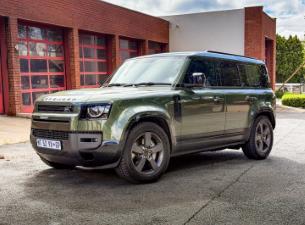 Land Rover Defender 110 D250 X-Dynamic SE (2025) ReviewLand Rover upgraded the already capable Defender 110 with additional safety and comfort technology. Find out what sets this new model apart from its predecessor.
 Deepal S07 L (2026) Quick ReviewThe Deepal S07 L is Changan’s opening gambit in the South African Electric Vehicle (EV) space. Priced at a hair under R1-million, it bypasses the traditional 'entry-level' EV tropes and offers a mid-size option with all the bells and whistles. With a large 80 kWh battery and the promise of near-silent operation, I approached my time with the newcomer with enthusiasm.