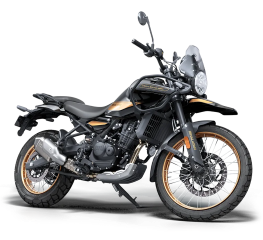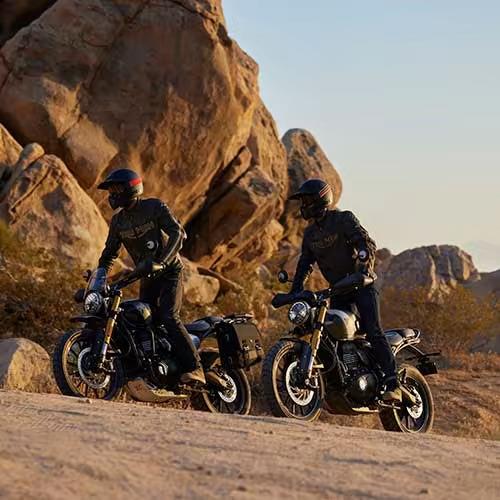
The Triumph Scrambler 400 X has quickly become a favourite in the sub-500cc category, blending Triumph's legendary "Modern Classic" styling with a punchy, accessible platform. Here are the top 5 things to love about it.
How does the Ducati Scrambler compare to the Triumph Scrambler?

1. That "Big Bike" Presence
Unlike many entry-level motorcycles that feel small or "toy-like," the Scrambler 400 X has a surprisingly commanding stature. With its 835mm seat height, wide handlebars, and larger 19-inch front wheel, it feels like a full-sized motorcycle. It offers a dominant, upright riding position that provides great visibility in city traffic and a natural "stand-up" ergonomics for light off-roading.

2. The Punchy TR-Series Engine
The all-new 398cc liquid-cooled single is a gem. It’s tuned for character rather than just raw speed, delivering:
29 kW of power.
37.5 Nm of torque, with a significant portion available low down in the rev range.
It has a "chuggy," tractable nature that makes it incredibly easy to ride at low speeds, yet it’s happy to rev out on the highway when you need to overtake.

3. Class-Leading Build Quality
Triumph didn’t cut corners on the finish. From the finned cylinder head and traditional exhaust clamps to the high-quality switchgear and tucked-away liquid cooling, the bike looks and feels premium. You get "big bike" details like:
All-LED lighting with a distinctive DRL.
Stainless steel headers.
Anodised parts that make it indistinguishable from its more expensive 900cc and 1200cc siblings from a distance.

4. Genuinely Capable "Scrambler" Hardware
Many "scramblers" are just street bikes with knobby tyres, but the 400 X has hardware designed for the dirt:
Suspension: 150mm of travel at both ends (front and rear), which is significantly more than its sibling, the Speed 400.
Brakes: A larger 320mm front disc with a dedicated Bosch ABS setup that can be switched off for off-road control.
Protection: It comes standard with a sump guard, headlight grille, radiator guard, and handguards.

5. Incredible Value and Ownership Costs
Perhaps the most loved feature is the price-to-performance ratio. In most markets, it sits comfortably below its competitors like the BMW G310GS or KTM 390 Adventure while offering:
16 000 km service intervals, which is massive for a single-cylinder engine.
Excellent fuel economy, averaging around 3.5L/100km.
Torque-assist clutch, which makes the lever pull incredibly light—a lifesaver in heavy urban traffic.