Neck brace vs. Neck roll: Which motorcycle protective gear is safer?
Competitive off-road riders know the pain of rapidly dismounting their bikes all too well. Over the handlebars excursions can happen at any time, and the threat of spinal injury is real. Riders can protect themselves as far as possible, but some protection systems are better than others.


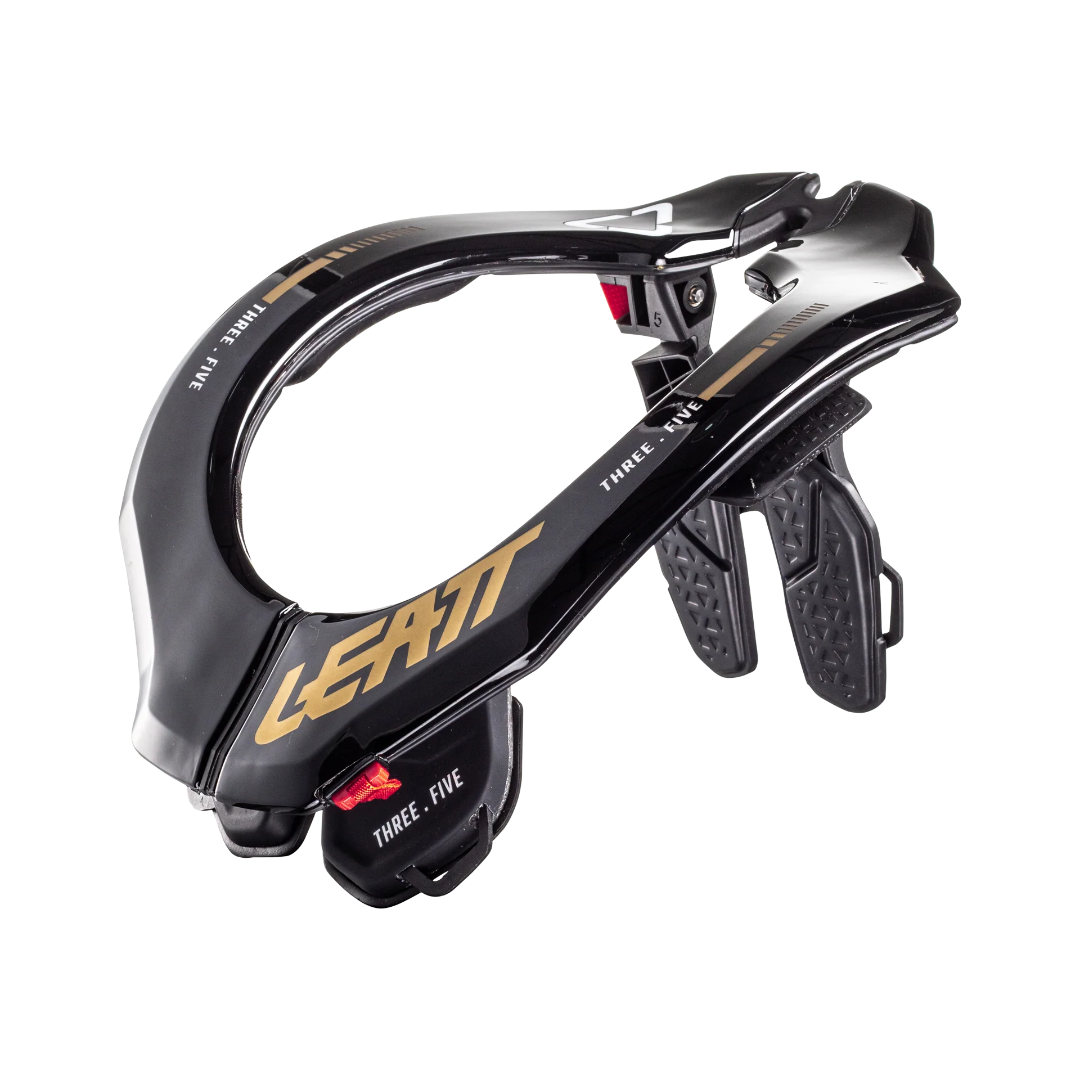

There has been much debate in the off-road world about the effectiveness of neck braces and which types are best to use. HANS (Head and Neck Support) devices have evolved from a suggestion to often being required equipment for riders in professional series, so adopting them must be a good thing just by that action. Riders essentially have two choices when it comes to neck safety equipment.
Related: Helmet safety standards - What is ECE and DOT certification?
Below, we have listed these options along with their benefits and drawbacks. Even though there is a very obvious outcome, you should never put a price on your well-being. If you are pushing the limits of your riding, you should really prioritise your safety over your bank balance.
Essential motorcycle gear for South African riders

Neck Brace
A modern, rigid, or semi-rigid neck brace, such as those made by Leatt, Alpinestars, BNS, or Atlas, is an engineered piece of safety equipment designed to prevent or reduce severe spinal injuries by limiting the extreme movements of the head and neck during a crash. These braces are not cheap, often costing thousands of rands, but you cannot put a price on your ability to walk.
| Area of Protection | Mechanism |
| Hyperflexion | Limits the chin-to-chest movement (forward snap). |
| Hyperextension | Limits the head-to-back movement (backward snap). |
| Lateral Hyperflexion | Limits the ear-to-shoulder movement (side bending). |
| Axial Compression | Designed to redirect the force of an impact (e.g., landing directly on your head) from the base of the skull/neck down to the stronger bones of the shoulders and upper torso (sternum/back). |
Safety Data
While there has been debate over the years, several real-world studies, such as the extensive one conducted by Action Sports EMS, provide compelling data.
Riders without a neck brace were 82% to 89% more likely to sustain a critical cervical spine injury.
Riders without a neck brace were also 69% more likely to die from a cervical spine injury.
The Trade-Off
The main counter-argument against neck braces is the risk of a broken collarbone (clavicle), as the brace transfers impact force to that area. However, most riders and experts agree that this is a very acceptable trade-off: a broken collarbone is preferable to a broken neck and potential paralysis. Modern braces are also designed with cut-outs and engineered fracture points to try to mitigate this risk.

Neck Roll / Collar
A neck roll is a simpler, mostly foam or padded fabric ring between your helmet and shoulders. It is inexpensive and sometimes a bare minimum requirement at informal racing events.
| Area of Protection | Mechanism |
| Cushioning | Provides a soft barrier for the helmet to land on in a minor fall. |
| Minor Movement Limitation | Offers very minimal restriction of movement. |
Safety Limitation
A neck roll does not offer the same engineered protection as a rigid neck brace. Because it is soft and has no rigid structure to transfer force, it is ineffective at preventing the extreme hyperflexion, hyperextension, or axial compression that causes severe spinal injuries in high-energy crashes.

Conclusion
The overwhelming consensus in the motorcycling community, especially for off-road activities like motocross or enduro riding, or any high-speed activity for that matter, is that the clear winner for protection is the neck brace. It is a specialised safety device engineered to manage the forces that cause catastrophic neck and spinal injuries. While a neck roll is inexpensive and comfortable, it only provides minor cushioning and is not a substitute for the structural protection offered by a purpose-built neck brace. If you are serious about reducing the risk of a severe neck injury, a high-quality, properly fitted neck brace is the safer choice.