
Vauxhall Combo 1.3 CDTi EasyTronic 2009 Van Review
With the introduction of the 2009 Vauxhall Combo 1.3 CDTi EasyTronic, we ask the question, is it too early for us to be driving diesel autos for commercial purposes?


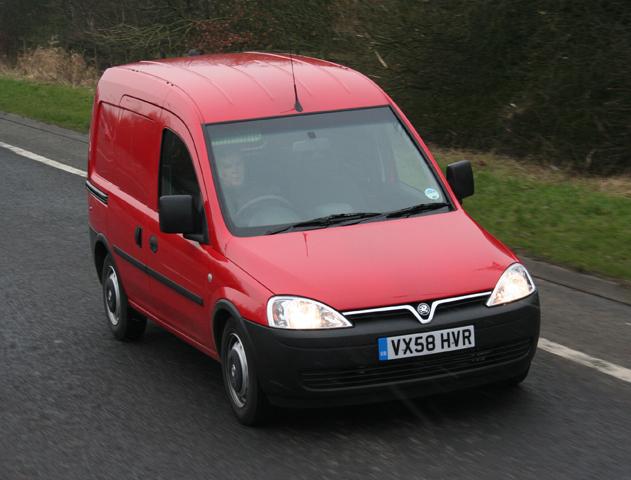

With the introduction of the 2009 Vauxhall Combo 1.3 CDTi EasyTronic, we ask the question, is it too early for us to be driving diesel autos for commercial purposes?
Until very recently, the concept of automatic transmissions in light commercial vehicles was virtually unheard of, but now most of the major manufacturers have some form of automatic or automated gear changing system – but mostly in the bigger vehicles. So how well does it work in a small van? Tim Campbell finds out.
At first look Vauxhall must have it all wrong – offering a relatively small capacity 1.3 litre diesel engine as an alternative to its ever popular 1.7 litre turbocharged ‘standard’ diesel for the Combo.
Even more questionable is the fitting of the EasyTronic gearbox, Vauxhall’s answer to an automatic gearbox for the commercial vehicle user, to the 1.3 CDTi unit.
A few years ago the thought of a light commercial vehicle manufacturer fitting any of its diesel engines to an automatic gearbox would have been regarded as the equivalent of asking Boris Johnson and Ken Livingston to work together for the good of London!
So is the £385 that Vauxhall charges for the Easytronic gearbox worth the investment? Or is it too early for us all to be driving diesel autos for commercial purposes?
The Driveline
Although Vauxhall offers three engine alternatives (two diesel and one petrol) it only offers the Easytronic on the 13 litre CDTi version.
If truth be known, this is one of my favourite small diesels, the result of an original joint venture with Fiat. It has a nice balance of power and usable torque with the Euro-4 four cylinder engine developing 75 bhp @ 4000rpm and more importantly,170 Nm of torque.
The Easytronic gearbox is not a new automatic transmission, but the standard five speed manual with a built-in fully automated mode. In theory, it boasts the benefits of a manual transmission matched to a quicker and more efficient method of gear selection.
Weight / Dimensions
There are two basic gross vehicle weight choices, loosely based around 1800 kgs and 2000 kgs, with payloads stretching from 600 kgs to 800 kgs respectively, and a towing allowance of up to 1000 kgs.
The Combo has a basic loadspace capacity of 2.7 cu.m with an extra 0.5 cu.m available if the optional ‘flexcargo’ front passenger seat is ‘flattened’.
As far as the load area is concerned, you can't quite fit a 6 foot panel (it’s 2 inches short!) into the back unless you have the ‘flexcargo’ option, but there is good news. The Combo can swallow a pallet through the rear cargo doors (assuming it isn't loaded higher than around 4 feet – 46 inches to be exact) and more importantly, it fits between the wheel arches.
On the Road
Settling into the driver’s seat is achieved via a wide opening door while the steering wheel features multi-functional controls which come as standard with the Sat Nav system and Traffic Message Channel upgrade at £850.
To the left is the central binnacle, which has the black and amber LCD screen on the top, and looks like a bit of an after thought - because it is - but don't get me wrong; the fit'n'finish is actually first class.
Starting the Combo, and more importantly the Easytronic, is simply a matter of pushing the gear lever to the right into Neutral. The engine won't start if it’s not in neutral, and you have to keep your left foot on the brake at the same time.
The fascia display confirms which gear you are in, if you have decided to go ‘off piste’, as well as indicating the standard Neutral, Reverse and Auto settings. A quick push to the left puts the van into fully automatic mode, and we are ready to go.
In normal driving, the ‘up’ changes happen around the 2500 rpm mark which is the top of the maximum torque range, but if you need a little faster acceleration, then it holds the gear for an extra few hundred revs, like a kickdown facility. And just like a standard automatic gearbox, you can anticipate the up-change after a little practice.
Changing from auto mode to manual requires a simple push of the short gear lever forwards for the up change or pull backwards for the down change with the dashboard confirming your selection.
Good in-cab visibility is a real necessity in heavy traffic, and the little Vauxhall scores well looking forward, but not so good when looking backwards.
The door mirrors are first class. They are wide as well as deep, but if you are using the rear view mirror, the non-asymmetric rear door central pillar intrudes and prevents meaningful rearwards vision.
Out of town and on the motorway, the Easytronic does not feel so much at home with the revs reaching 2500-3000 rpm making the Combo appear to ‘over-reach’ but it settles down nicely as we take the exit slip road and re-enter its urban comfort zone.
Conclusion
The Vauxhall Combo with the Easytronic shift is very definitely an urban delivery animal which eats up the town miles and will thrive on those start-stop operations, perfectly matched to its environment. Overall this is a van that thrives in the city!
(All prices current as at Jul 2009)