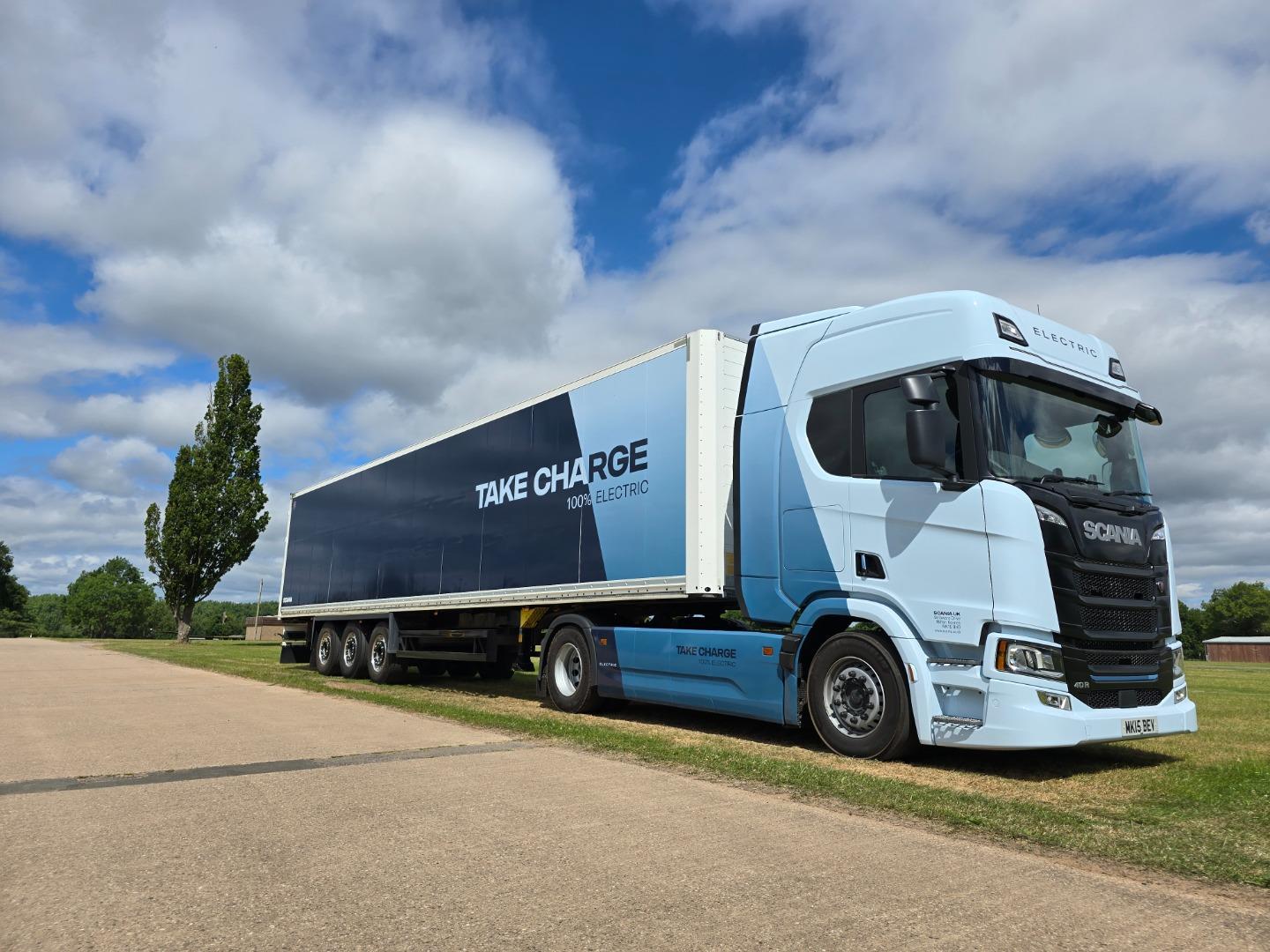
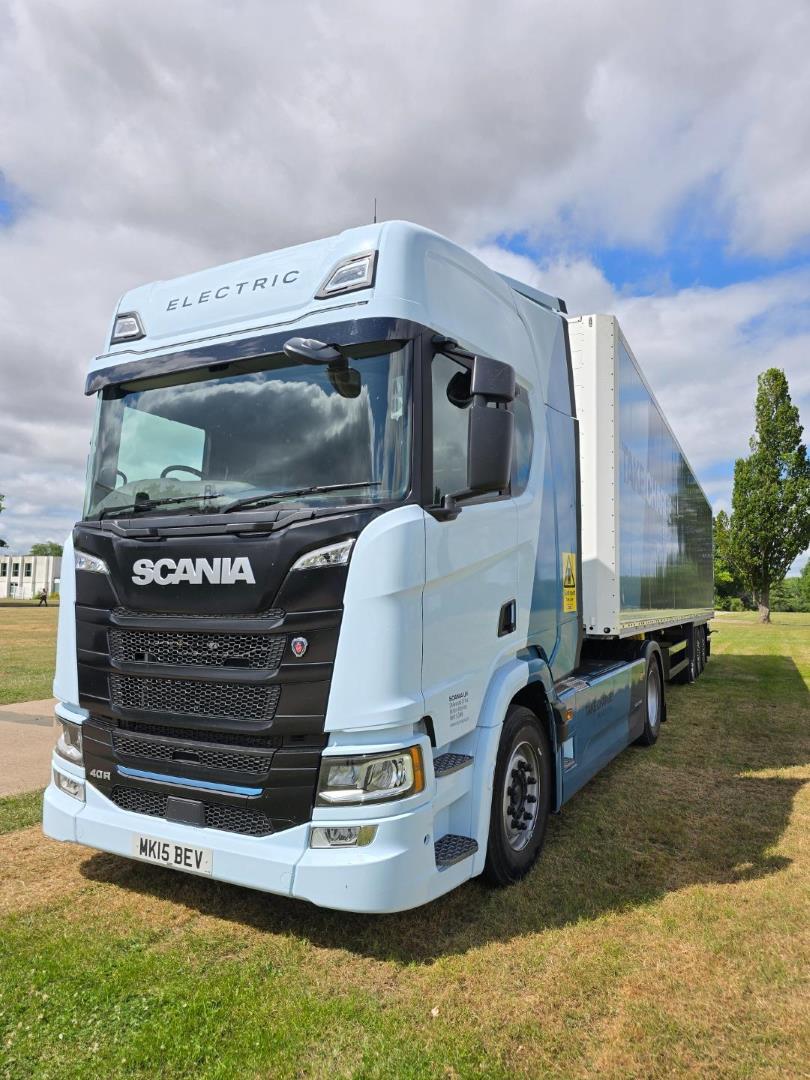

Earlier this month, we jetted over to England to attend the utterly incredible Road Transport Expo (RTX). One of the highlights of the show (which, incidentally, is a must-visit event) was the ride and drive section.
Introducing the R 400E A4x2NB
The move towards decarbonising South Africa’s road freight sector may be slow, but milestones are steadily being reached. One of those came in August 2022, when Scania South Africa handed over the country’s first fully electric truck to the Shoprite Group, Africa’s largest food retailer. The pilot vehicle was delivered to Shoprite’s refrigerated transport division in Cape Town, where it was used for short-haul deliveries of perishable goods.

The truck, an earlier-generation Scania battery-electric model, operated on a dedicated city-centre route, returning to base daily for overnight charging. According to Scania and Shoprite, the pilot aimed to measure real-world energy consumption, range performance, and uptime in South Africa’s demanding operating conditions – including heat, heavy traffic, and the realities of load shedding.

Shoprite fitted solar panels at its distribution centre to help power the truck sustainably and reduce reliance on the grid. The pilot provided valuable insights for both companies, laying the groundwork for further electrification of South Africa’s commercial fleets as technology and infrastructure continue to evolve.

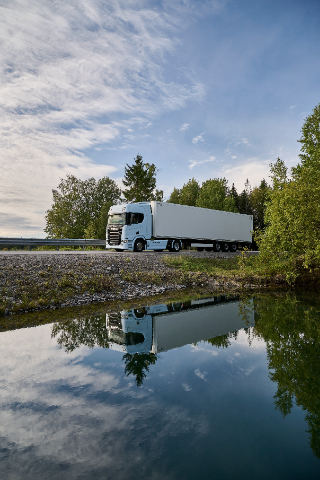
Of course, Scania’s electric truck portfolio is certainly not limited to the South African market – far from it! While Scania isn’t the market leader (that honour goes to Volvo, the segment leader in Europe for heavy electric trucks for the last five years), the company does have a robust lineup of electric trucks. Just one is the latest-generation R 400E A4x2NB electric tractor unit, which we drove at RTX.
The truck in a nutshell
The R 400E A4x2NB represents the second generation of Scania’s battery-electric trucks. The “400E” denotes its continuous power output of 400kW, or roughly 540hp. The A4x2NB configuration identifies it as a 4x2 normal-height tractor unit with air suspension on the rear axle. Power comes from a battery pack with up to 624kWh installed capacity, of which around 560kWh is usable, giving the truck a real-world range of about 250 to 350km (depending on the load and driving conditions).
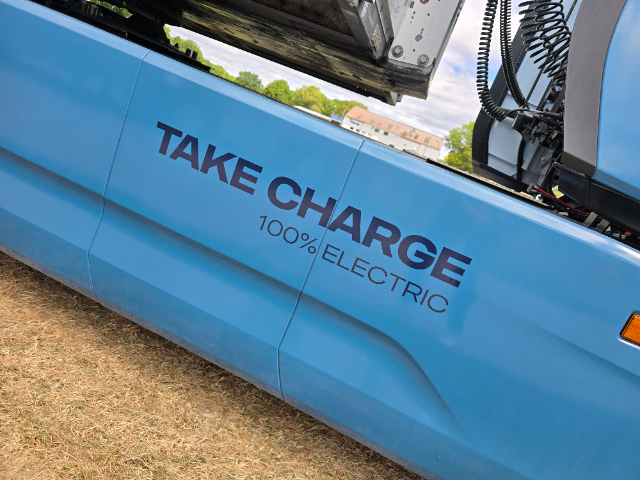
Scania positions the R 400E as a zero-emissions alternative for regional distribution and short-haul applications where trucks return to base for overnight charging. It’s not yet aimed at long-distance line-haul work, and that’s an important distinction for operators considering where this technology fits into their operations.
Exterior
Visually, the R 400E is immediately recognisable as part of Scania’s modern R-series family. From the outside, the cab design is unchanged from the diesel equivalent. This is no bad thing: the R-series cab remains a benchmark for aerodynamic efficiency, build quality, and driver visibility. Only discreet clues, like the lack of exhaust, subtle badging, and charging port, hint at the electric heart of this machine.

In this spec, with its standard-height cab and 4x2 layout, the tractor looks well-proportioned and purposeful. The design avoids gimmicks or dramatic styling departures, signalling that Scania wants drivers and operators to see this as a working truck first and foremost.
Interior
Climbing into the cab, there’s a reassuring familiarity that will appeal to fleet drivers transitioning from diesel to electric. The seating position is excellent, with plenty of adjustment in the air-suspended seat and steering column. Storage space and build quality are in line with what we’ve come to expect from the R-series.

The main differences lie in the digital instrumentation. The central screen provides information on battery state-of-charge, remaining range, energy consumption, and regenerative braking status. These displays are clear and easy to interpret, which is critical for driver confidence in electric trucks. A touchscreen infotainment system, optional on some models, integrates navigation and telematics functions.
In operation, the cab remains impressively quiet, with no engine vibration or diesel clatter. Wind and tyre noise are far more noticeable at speed, although Scania has worked hard on insulation to ensure the driving environment remains calm and comfortable.
Drivetrain
The R 400E delivers its power through a single-speed transmission to the rear axle. Peak output is 400kW (540hp equivalent), with a huge 3,500Nm of torque available virtually from standstill. This makes for impressively smooth and effortless acceleration. In fact, during our test, it was easy to forget we were driving a fully loaded tractor unit – it didn’t miss a beat over the undulating test track.
Regenerative braking is adjustable via steering column paddles, allowing the driver to select how aggressively the truck slows when lifting off the accelerator. The strongest setting enables near one-pedal driving in urban environments, helping to reduce reliance on the service brakes.
Charging is via a CCS connector, with DC charging speeds of up to 375kW supported. A 10 to 80% charge takes about 90 minutes at maximum power – adequate for depot-based operations with planned charging windows.
Safety
Scania has equipped the R 400E with its full suite of advanced driver assistance systems (ADAS). Standard features include adaptive cruise control, lane departure warning, electronic stability control, and collision avoidance systems. The emergency braking system is particularly sharp, a useful reassurance given that the quietness of the truck means pedestrians and other road users may not always hear it coming.
Our test truck also featured a camera mirror system, which is one of our favourite features on modern trucks (because it’s so much more effective than the old traditional mirrors). The structure of the cab is unchanged from diesel models, and Scania’s reputation for crash safety remains intact. The battery pack is protected by a robust underfloor structure designed to resist damage in the event of an accident.
Verdict
Driving the R 400E left us impressed by how seamlessly Scania has translated its long-haul expertise into the electric age. The truck feels solid, refined, and well-engineered. The performance is more than adequate for its intended role in regional distribution, and the regenerative braking is genuinely effective at reducing driver workload.
But – and it’s an important but – battery-electric trucks like this still face limitations in many markets, including South Africa. Public fast-charging infrastructure in many countries (including South Africa) is scarce and, until that changes, vehicles like the R 400E will only suit operations where trucks can return to base for charging. Load shedding, too, remains a challenge in South Africa unless operators have robust backup power or solar charging solutions in place. Yet another massively limiting factor in South Africa is the purchase price. Scania won’t divulge this for the R 400E, it is common knowledge that all electric trucks are eye-wateringly expensive. While we all know that total cost of ownership is far more important than the purchase price, the high upfront outlay is a massive deterrent.

Nevertheless, Scania deserves credit for rolling out electric vehicle technology around the world. As a piece of engineering, this truck impresses. The next step will be for the broader ecosystem – infrastructure, policy, and operator readiness – to catch up and unlock its full potential.