


Introducing the Peugeot Boxer
The Boxer is made by Peugeot, an automotive manufacturer that has been very much in the news for all the right reasons of late. That’s because, whereas the company was fighting losses, under the guidance of Carlos Tavares, Chairman of the Groupe PSA Managing Board, it is now doing extraordinarily well. This is one of the reasons Tavares was voted World Car Person of the Year for 2020. The company sold 3.5 million vehicles last year – made up of cars and commercial vehicles (CVs). The Boxer – manufactured in two factories, Sevel Sud in Italy and Sevel Nord in France, in a joint project with Fiat Chrysler Automobiles – is one of the stars of its CV range. Peugeot introduced its first commercial vehicle, the Type 13, in 1895, and it has been in the van market since 1950. It’s produced more than 1.8 million of these vehicles, including one million Boxers.
The van in a nutshell
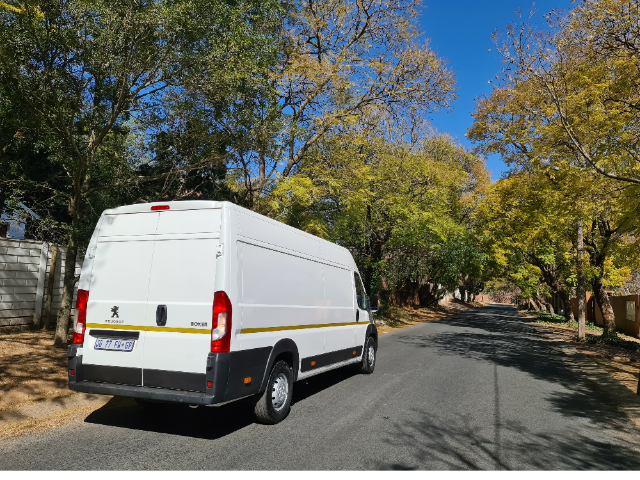
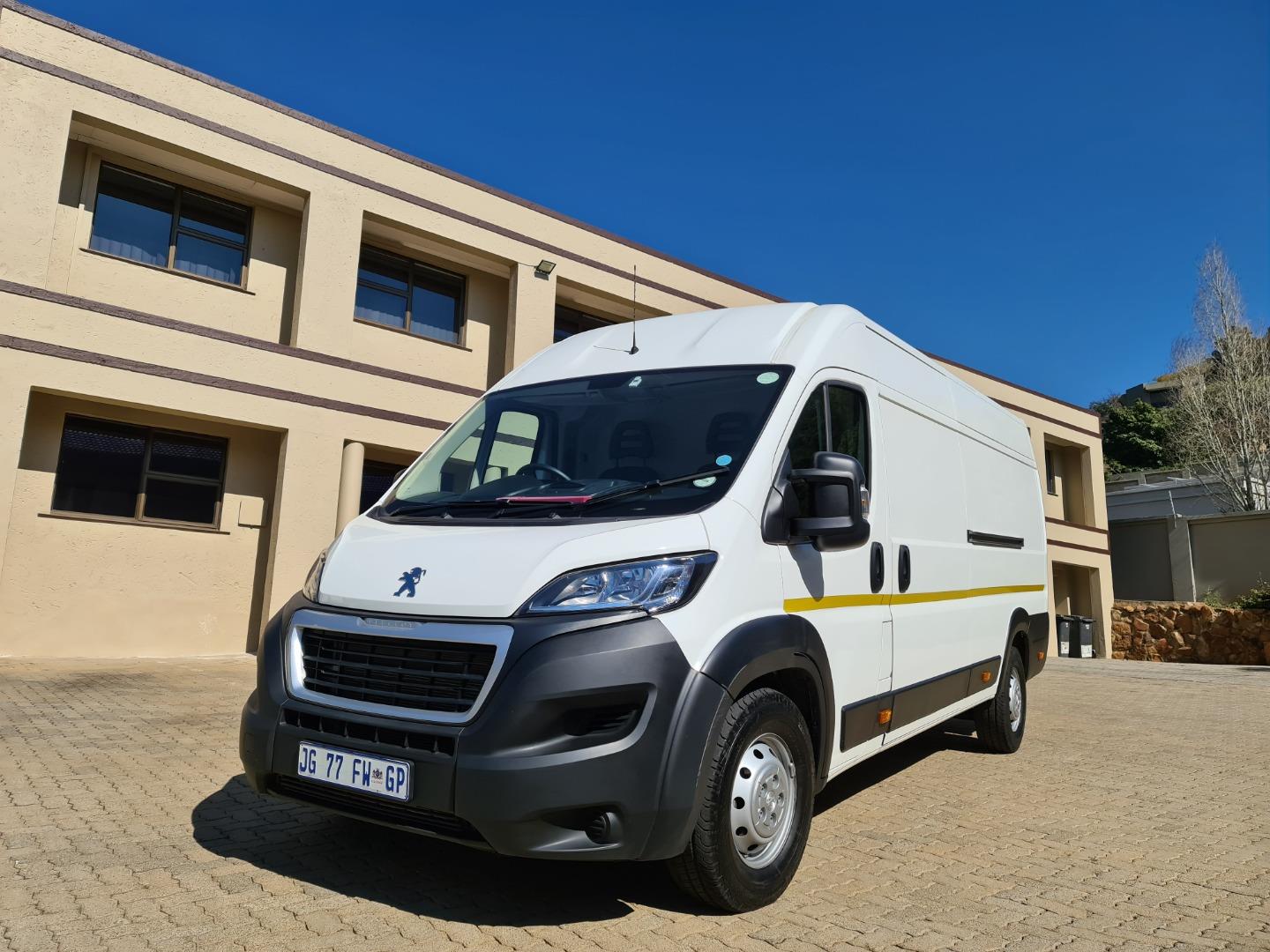
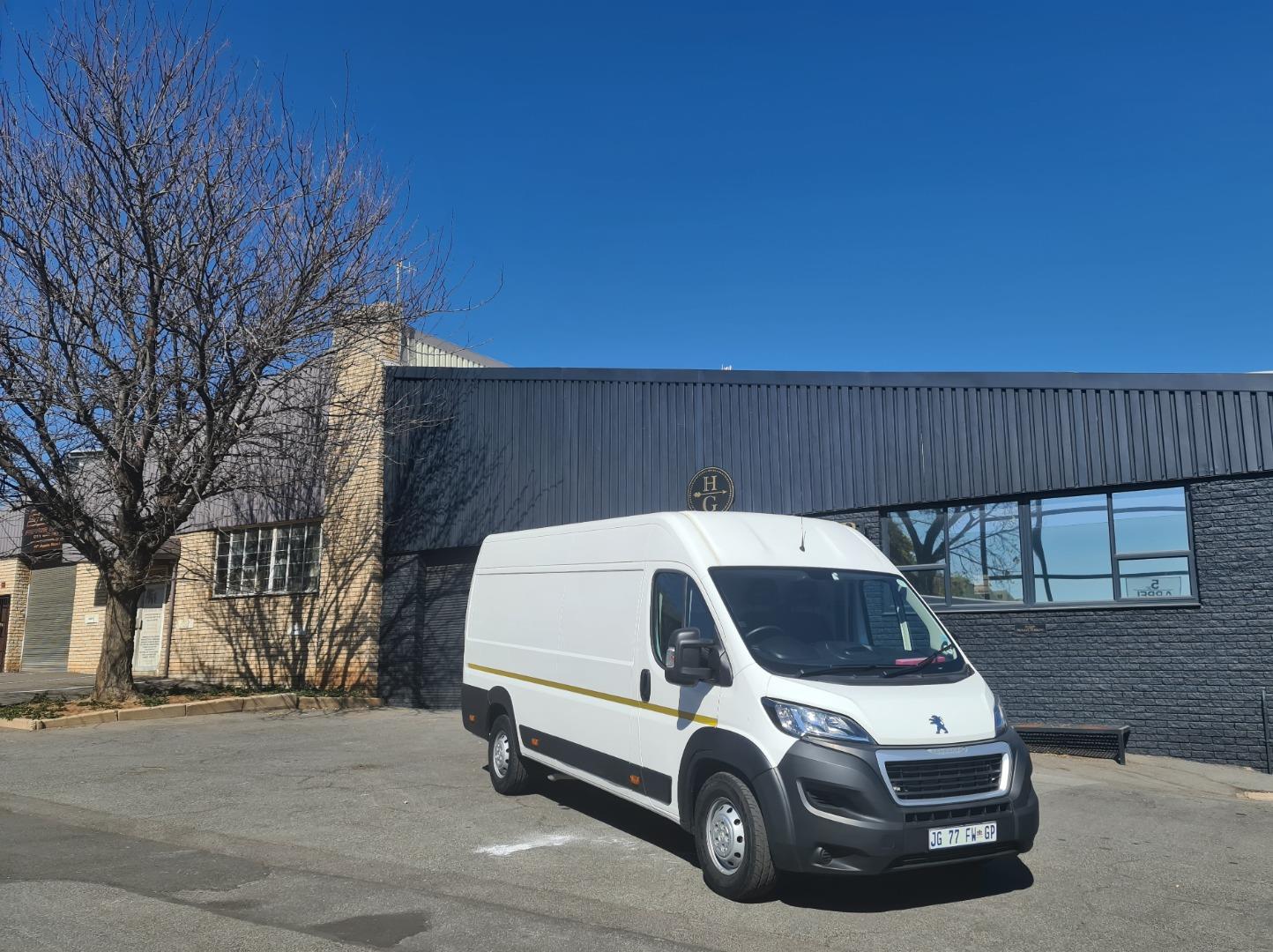
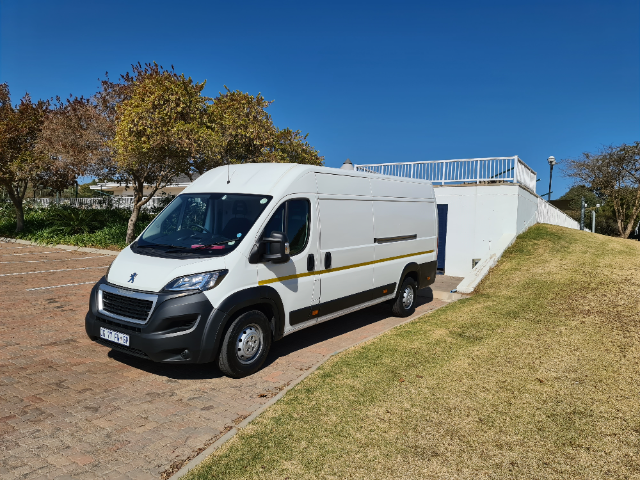
The Peugeot Boxer, launched after over four million kilometres of testing, is a van with a GVM of 3 300 or 4005 kg, depending on which derivative you purchase – either the L2H1 or the L4H2. It can be converted into a 19-seater taxi, an ambulance, a chassis cab or simply remain a panel van.
Exterior
While it’s a CV through and through, the front of the Boxer has precisely the same brand identity as the many Peugeot cars on our roads. Even from a distance, you can see that it’s a Peugeot, which is nice because, let’s face it, this French manufacturer is producing some damned good-looking vehicles. One of the most obvious exterior features is the wide grille that we’ve come to know and like on Peugeot passenger cars. The bumpers are massive, in your face and very practical.
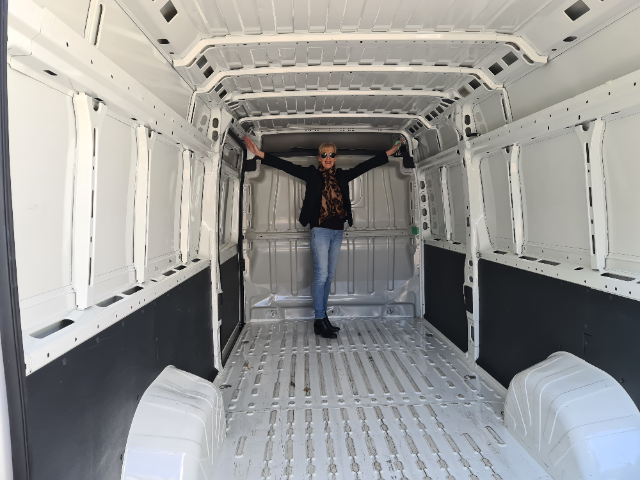
But it’s more than just a pretty face. The Boxer is there to do a solid day’s work – which means that the loading space has to be maxed. Accordingly, the designers were determined not to waste a single cubic centimetre – and it looks as though they did a pretty good job. The wheel arch, for example, is as small as possible and its clearance has been optimised to give CV operators the largest, effective load width (a width of 1.422 m at the wheel arch for a maximum interior width of 1.87 m). Furthermore, the loading sill of 503 mm is among the lowest on the market. I found it very easy to load and offload thanks to the 96-degree rear door-opening angle, which can be increased to 180 degrees with the folding check strap. The rear doors can also be swung through to 270°, but this is an optional extra. Speaking of options, you can order a second sliding side door (one is standard).
The L2H1 rides on 15” steel wheels; the L4H2 on 16”. It’s good to see that a full-sized spare wheel is provided on both models.
Interior
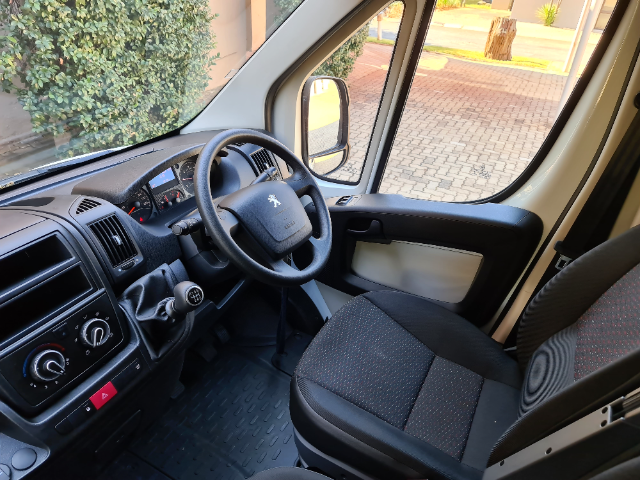
The interior – trimmed in practical dark grey cloth in the case of our test vehicle – is practical, spacious and comfortable. Thankfully, aircon is standard and there are gazillions of storage areas dotted all over the cabin (including under the seats). Both the driver’s seat and headrests are adjustable (the steering wheel is too) and there’s a very handy armrest for the driver.
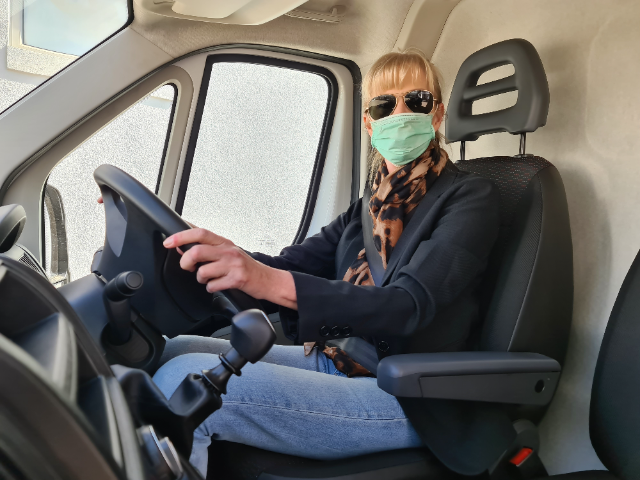
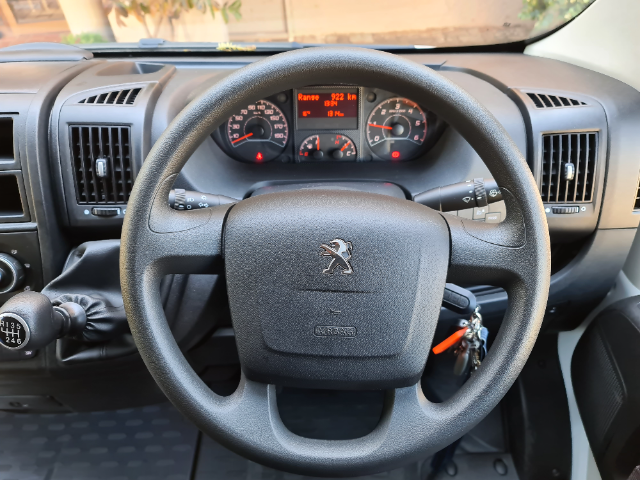
Something rather unusual (which I rather liked) was the location of the handbrake. It’s situated on the extreme right of the cab (in between the driver’s seat and door). Initially, it felt a little strange that it was there, but I soon grew to like its location – a lot. Given the fact that the majority of people are right-handed, it actually makes a lot of sense.
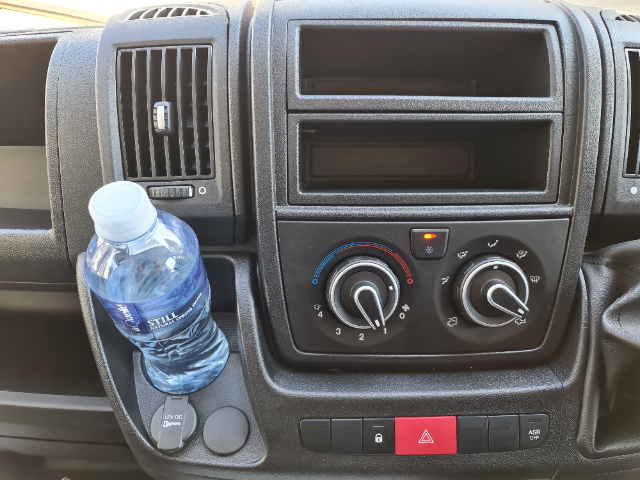
Additional interior features include a 12V socket, cup holders, electric windows and two glove boxes (the central glove box is lockable). The cubic capacity is 10m3 on the L2H1 and 15 m3 for the L4H2.
Drivetrain
As already mentioned, the Boxer comes in two derivatives: the L2H1 or the L4H2. Both have a four-cylinder 2.2-litre diesel engine featuring common rail injection. As most people know, common rail fuel injection is good news because it’s clean and efficient (by injecting fuel at high pressure directly into the combustion chamber, this system reduces fuel consumption and emissions while providing extra power). In the case of the L2H1, 96 kW and 320 Nm are on tap; with the L4H2, you get 110 kW of power and 350 Nm of torque. These figures are perfectly apt for a van such as the Boxer; the drivetrain does a more than adequate job.
Upfront, the Boxer has McPherson-type wishbone suspension with an anti-roll bar. At the back, it has rigid tube suspension. We found the van to be stable on the road.
Transmission
Unfortunately, only a six-speed manual is available. It does a great job; don’t get me wrong. But an automatic would be terrific. After all, vans are largely driven in cities – meaning drivers have to contend with nightmare traffic jams. Let’s hope an auto becomes available soon.
Safety
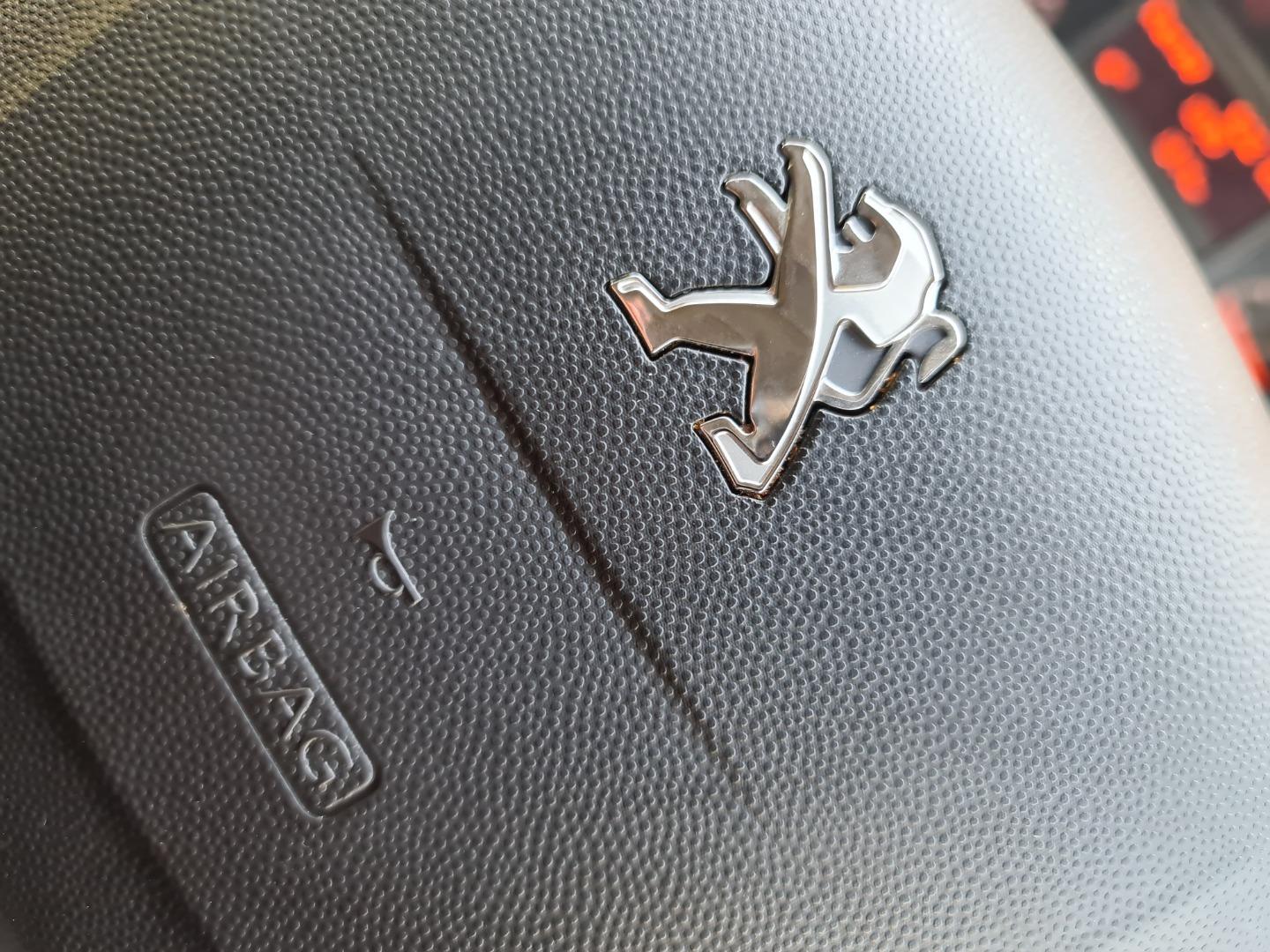
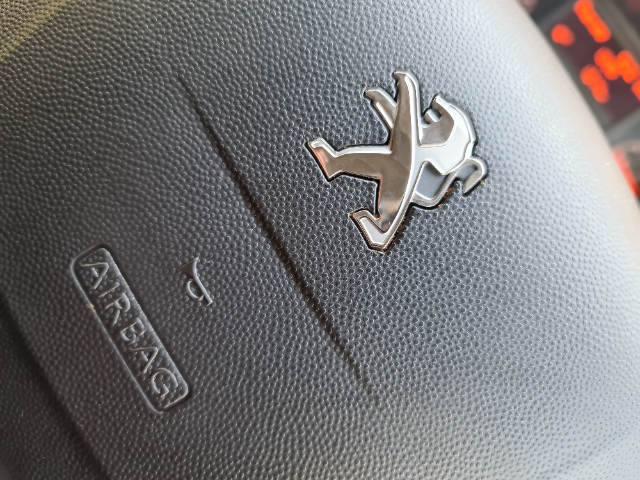
The Boxer offers a wide range of active safety features, including ABS with EBD, ESP with load adaptive control, power steering, hill assist and a driver airbag.
Other safety features include a shock absorption design that stabilizes the vehicle even when loaded, an ultra-efficient braking system and a reinforced structure with a preset deformation zone that absorbs the impact in case of an accident.
Verdict
Pricing for the Boxer starts at R499 900 for the L2H1. This includes a five-year/ 100 000 km service plan, five-year/ 100 000 km manufacturer’s warranty and roadside assistance for five-years/ 100 000 km. This means that the Boxer is substantially cheaper than its arch-rival, the Mercedes-Benz Sprinter panel van (for which pricing starts at R559 772). All new Sprinter vehicles also come standard with a five-year/100 000 km ServiceCare Best Basic contract. Of course, the Sprinter is more modern than the Boxer and it may also be slightly easier to sell one day.