
2009 Iveco Stralis AT Artic Truck Review
We road test the 2009 Iveco Stralis AT Artic, a truck that ticks all the boxes - from the balance sheet to it's high driver appeal.


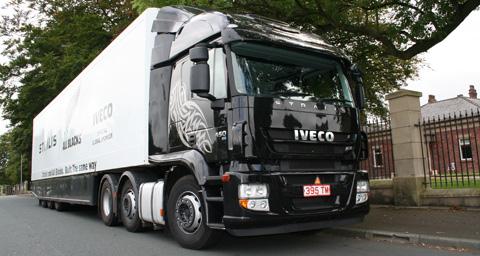
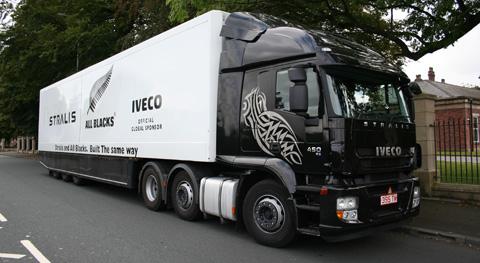
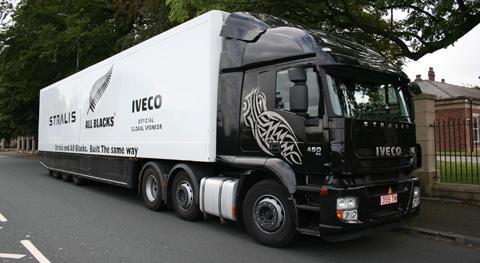
We road test the 2009 Iveco Stralis AT Artic, a truck we'd describe as a ‘gaffer’s motor’, ticking all the boxes from the balance sheet to it's high driver appeal.
We use the term ‘gaffer’s motor’ when we describe a truck that ticks all the boxes from a balance sheet perspective while providing a little extra presence on the road that lifts it above its counterparts. And when I say ‘on the money’ I mean, not just on purchase price, but the total cost of ownership. On that basis the Iveco Stralis AT (Active Time) has often been regarded as the bridesmaid living in the shadow of its brother, the bigger cabbed Stralis AS (Active Space).
When Iveco launched the AT alongside the AS it was designed specifically to fill the niche of medium to long range distribution and ideally single driver operation. The AT offers a lower and narrower cab than the AS and combined with a 10 litre engine offers a potentially lighter alternative. Even so, it still gets the Eurotronic automation which is now supplied as standard across the entire Eurocargo and Stralis range of trucks.
For my test drive, Iveco provided a Stralis AT450. Powered by the 450 hp version of the Iveco Cursor 10 engine it generated a torque figure of some 2100 Nm between 1050 and 1500 rpm which is easily handled by the well-liked and proven Eurotronic AS2330 TD 12 speed unit.
The ‘All Blacks’ sponsorship livery is still prevalent on the Iveco press and demonstration fleet and for my money it still looks damned smart. And even as I approached it, it still took a second look to make sure this was an AT. In some respects the AT is very similar to the AS, probably due to the fact that the roof has a similar shape and lines to the AS. It may not be as big as the AS, but the AT is still unmistakably Stralis with the wide gapped grille clamped between the functional and stylish headlamp clusters giving it its unique looks.
In Cab
Access is easy, and the seating position is good. Adjustment of the steering wheel is easily made using a floor mounted button at the base of the steering column and like all modern trucks, the dash display clear and easy to read.
A quick glance around the interior reveals a reassuringly roomy cab, and although its dimensions are somewhat smaller than the AS, it is by no means a small cab. In fact, all 6 ft 1 of ‘yours truly’ could find himself at home very easily.
Cab storage is also well planned while the fittings also have a solid feel to them. And although all manufacturers use moulded interiors these days, Iveco have done a good job ensuring they fit well with no unwanted squeaks and rattles.
Finishing it all off, the interior colours work pretty well with blue seats and a blend of greys around the rest of the cab.
On the Road
I opted for the mixed road route for the Stralis. As per normal, leaving Charnock Richard northbound, heading up the M65 to junction 8 before picking up the long drag of the A56. Then it was the long downhill section through Haslingden on to the M66 meeting up with the M62 /M60 interchange at Simister Island. A short hop on the M60 led back to the M61 towards junction 8 and back to Leyland, finishing the route on the edge of town, some 135 kms later.
It can be a somewhat privileged job at times, as I often get to drive the best trucks on the market. Very often these are the new high power, top-spec offerings which will mostly tackle the steepest climbs in Britain without really breaking into a sweat. So for once I got a truck which had to work its wheel nuts off!
Loaded to within a few kilos of its maximum 44 tonnes, the Stralis romped the first motorway section without any fuss.
However, on the long ascent from the M65 up and over the A56, the 10 litre engine was made to work very hard. And yet, although the road speed was a touch slower than some of its 500 hp plus adversaries, the torque held true and allowed the climb to be made in a very respectable 9th gear. At 10 litres in size, that is a real credit to the engineers who designed the Cursor 10 that such a respectable climb was achieved.
At 44 tonnes application, the industry seems to be settling at between 520 and 550-ish horse power from 13 litre-ish engines which, by implication, deliver higher torque characteristics. So a 10 litre unit is something a bit special and don’t forget the potential payload benefit of 10 litre over a 13 litre.
It’s not all about the engine though. The Stralis AT offers a great working environment for the driver. In particular, I did like the slightly ‘bucket seat’ feel to both driver and passenger seats offering a certain amount of additional support to the sides of the body and lower back both of which additional comforts are always welcome.
As you would expect, engine noise is kept to a minimum, however on this occasion it was extremely satisfying to hear the engine working hard even though it was cocooned beneath the sound deadening of the cab.
Slowing down from a cruise on the exit slip was made very easy with the progressive and stable service brakes.
Steering is also well tuned to the chassis with a nice precise and tight feel to it.
Yet again, the Eurotronic transmission never failed to please, and to be totally honest when running at full weight with not a lot of over-capacity in the engine and the need to work it hard, the automated shift is the driver’s best friend.
You don’t need to fret over which gear you should select for a long climb and there are no worries about embarrassing yourself in front of others by fluffing a change!
Conclusions
Over the last couple of years, I have spent a fair amount of time behind the wheel of the Stralis, and to be fair in never ceases to impress me. For any operation engaged on weight sensitive work, especially tanker work, the Stralis AT must rank as one of the most highly efficient options.
Let’s not forget the supermarket business either and general motorway trunking that may necessitate nights out, but without the need for block of flats on wheels. One thing that can’t be ignored is productivity and the more productive the business becomes, the more efficient it becomes which ultimately means more profit, and in these uncertain time could be difference between profit and loss.
The Stralis AT is without a doubt a true ‘gaffer’s motor’ with the added benefit of high driver appeal. From my perspective it’s a very good truck indeed.
With bit of fancy footwork from the Iveco sales team, whilst times are quiet, they have the ideal opportunity to cover the ground, knocking the doors and keeping their products under the noses of potential clients. So when the market does start to correct itself, Iveco should be in a position to benefit from their hard work.