


First Merc, now Fuso
The Mercedes-Benz Axor and Atego were discontinued because of their Euro 3 engines; many overseas markets are already on Euro 5 or 6. However, those trucks were extremely popular and remained in demand in countries such as South Africa. Hence, Daimler (parent company to both Mercedes-Benz and Fuso) decided to fill the gap created by the Axor and Atego with the Fuso FJ.
Built at the Daimler plant in Chennai, India, the Fuso FJ range was launched in South Africa in 2016; at the end of last year more models were added, while others received a facelift. According to Joel Ngubane, Fuso product specialist at Daimler Trucks & Buses Southern Africa, the “extremely popular” truck is also sold in India, Asia, New Zealand, Africa and South America. We drove it in Centurion to figure out why it has global appeal.
Related: Fuso heads down electric avenue!
The truck in a nutshell
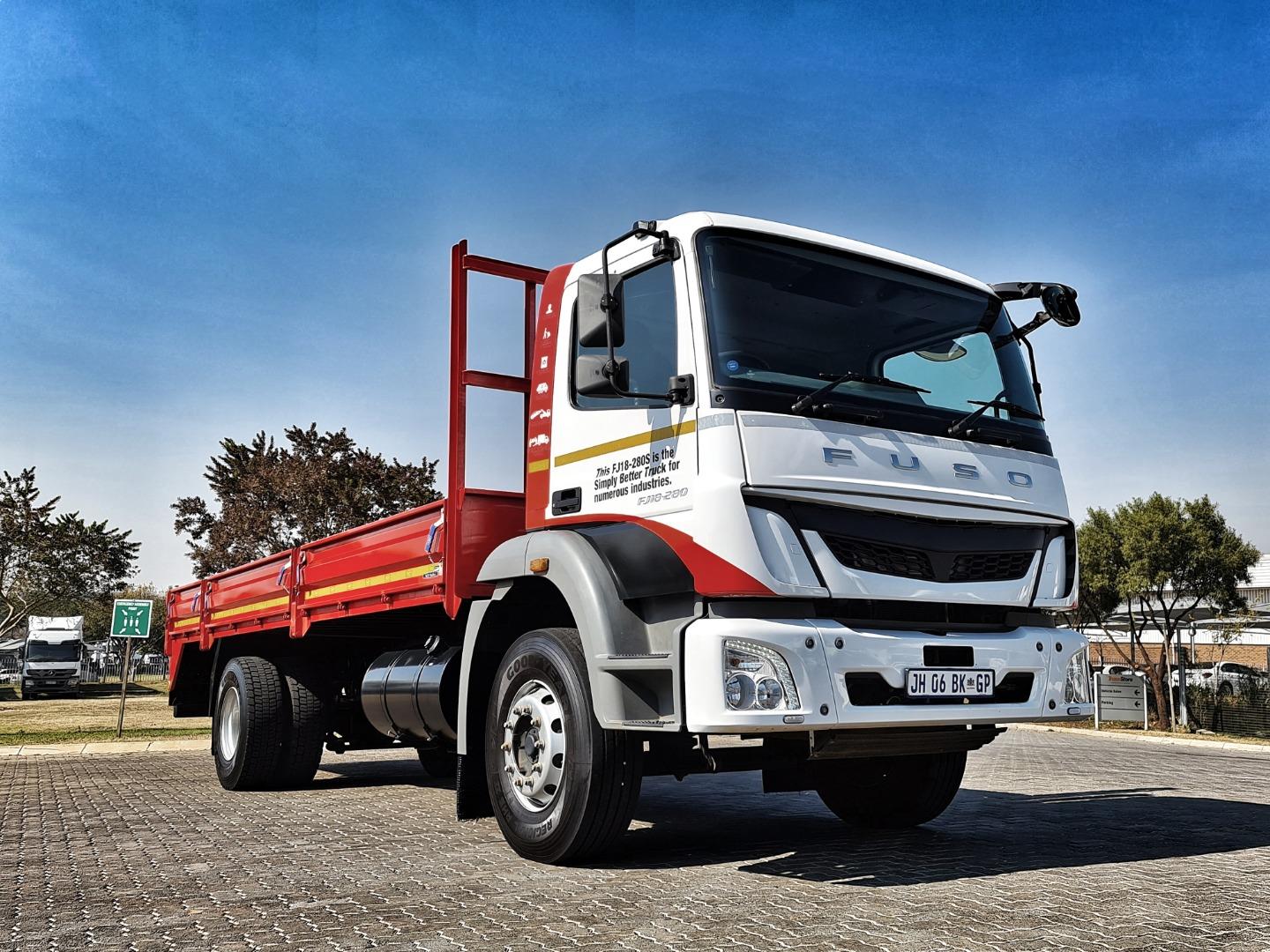
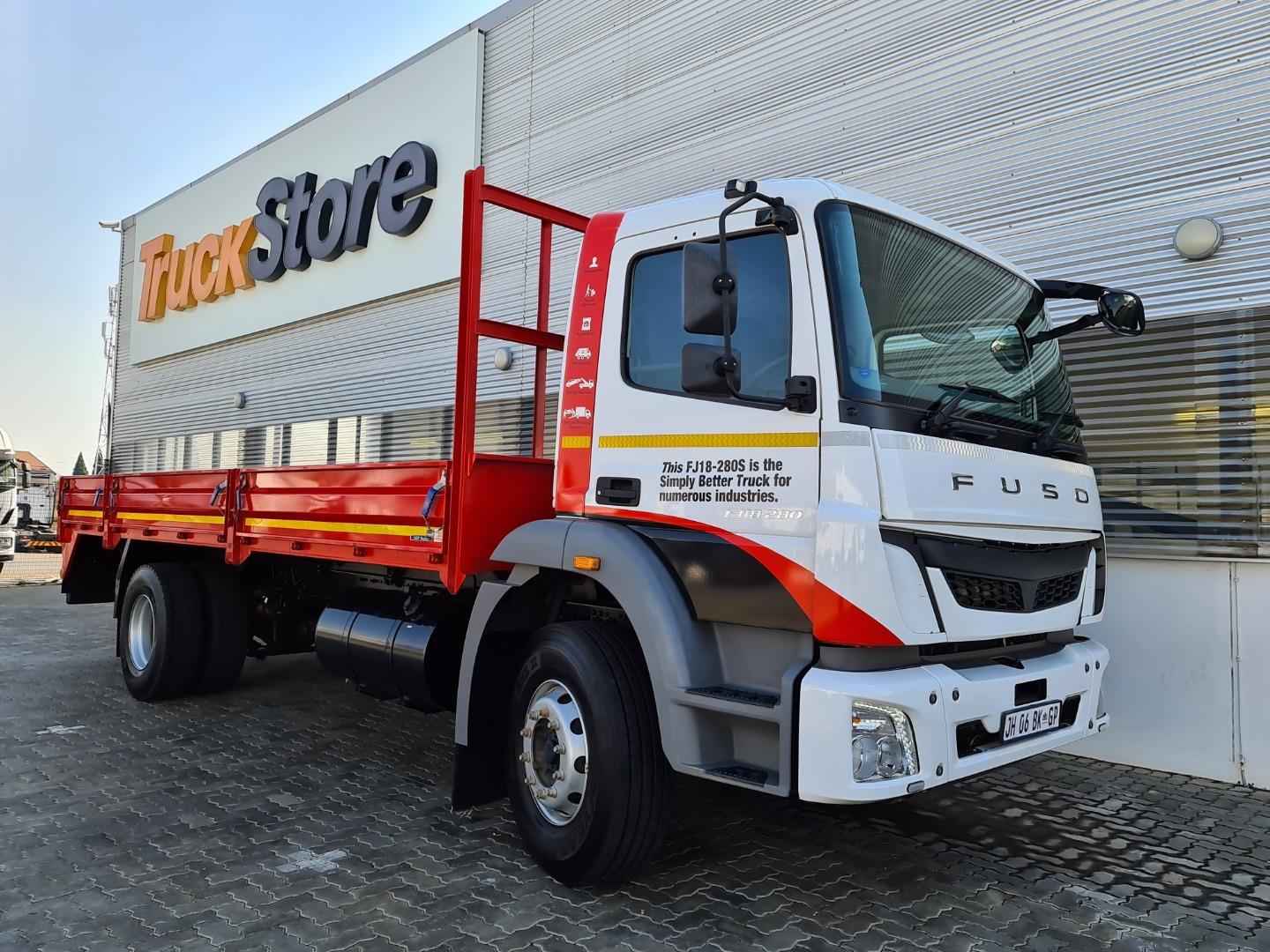
The FJ range comprises 16-, 18- and 26-ton models. The model we tested is the FJ18-280S. The number 18 stands for the GVM (this truck has a GVM of 18 500 kg). The last three digits pertain to the horsepower delivered by the powertrain, meaning that this truck boasts 280 hp of power (205 kW) and 1110 Nm of torque. The “S” stands for short wheelbase.

Aerodynamic exterior
The cab is aerodynamic, which allows for better fuel economy. It has a three-piece steel bumper, which reduces the cost of repairs (you can just replace the damaged part and not the whole thing). The lights on the front incorporate daytime LED running lights.
Maintenance is very easy; you just pop open the grille up front and everything is accessible. You can check the clutch fluid, coolant, windshield washer etc in a matter of minutes. While a physical inspection is always a good thing, there is also a selection of onboard warning lights on the instrument cluster, which inform the driver if fluid levels are running low.

There is a large front proximity mirror, which really helps the driver to see exactly what’s going on up front. This is obviously supplemented by all the normal side mirrors.

It’s very easy to tilt the cab. You switch on the hydraulic pump and then you start pumping manually. It’s quite effortless. Once you return the cab to its normal position, a warning sounds in the cab if it’s not right down.
The chassis is predrilled on the sides and smooth at the top to make body mounting easier.

The rear lights are interesting. Instead of regular lights, there are light-emitting diodes (LEDs), which reflect the required colour (amber for turning etc). The lights are much easier to see and they also use less power. I am told that the battery isn’t drained even if the lights are left on by accident.
There are two anti-slip steps that you need to mount to enter the cab. There are nice long grab handles on both the left- and right-hand side, so it’s super easy to enter and leave the vehicle.

Practical interior
The seatbelt is integrated into the seat itself (which I like very much) and the seat is almost like a bucket seat. It is more comfortable than I expected in a workhorse type of vehicle. The seat is fully adjustable; I found it quite simple to find my ideal driving position. As expected, there are three-point seatbelts for both the driver and co-driver; the centre seat has a lap belt only.
The interior design is simple but functional and practical. There is a storage compartment above both the driver’s and the co-driver’s seat (above the windscreen). There is a button that you press to adjust the angle and tilt of the steering wheel. There are electric windows on both sides of the cab. Air-conditioning is standard across the FJ range. There is a nice big window behind the driver’s seat, which is great for extra ventilation on hot days (or for times when you don’t want to use the air-con).

There is a neat little footrest for the co-driver and there is also a compartment under the co-driver’s seat. It can easily accommodate an A4 file. It could also be a useful place to hide a gun because it’s not immediately apparent that it’s there.
The instrumentation panel is simple, uncluttered and easy to read. It’s nothing fancy but it does the perfect job. It shows coolant level, odometer, average fuel consumption for the last trip (4 km/litre in the case of my test vehicle), how much fuel is in the tank, engine hours, alarm etc. The vehicle has cruise control (it is not adaptive/predictive) and a speed limiter.

Proven drivetrain
The Fuso FJ18-280S is powered by the proven straight-six turbocharged overhead camshaft 6.4-litre 6S20/OM906 Mercedes-Benz engine (I specifically say “proven” because it has been around for a while; it’s earned a reputation for durability and reliability along the way). It features high-pressure unit fuel pumps per cylinder on all six cylinders (with many regular diesel engines you have one fuel injection pump supplying diesel to all the cylinders). The advantage of this is that, if one unit pump of a cylinder fails, the vehicle will continue driving. Because it’s electronically controlled, the system will pick up that there is no supply to the one cylinder. The other cylinders will then compensate and still produce the required 280 hp. I’m told that the truck can function with just four cylinders actually operating optimally. Assuming that a third cylinder isn’t functioning, the truck will go into limp mode.
The engine has an e-viscous electronic fan. It will only activate when the coolant reaches a certain temperature and will shut off when it’s not required. This enables better fuel consumption. Speaking of fuel, this Fuso has a 290-litre diesel tank and, given the fact that it’s Euro 3, no AdBlue is required.
While not a massively powerful engine, the OM906 is ideal for workhorse applications, and so it’s right at home in the FJ.

Nine-speed manual transmission
The engine is matched to a Mercedes-Benz G131 manual nine-speed transmission (including a crawler gear) in a double-H configuration. There is no splitter button. The 131 refers to the input torque of the transmission (131 x 10). This is the same gearbox as was used by the Axor and Atego. I found it a little notchy at first but – truth be told – that’s probably because I’m so used to automatic transmissions. Once I’d got the hang of it, the G131 and I soon became good buddies.
The truck has a dry single-plate hydraulic actuated 395 mm clutch. This Fuso also has a clutch wear indicator for preventative maintenance. It is a mechanical rod, which can be measured.

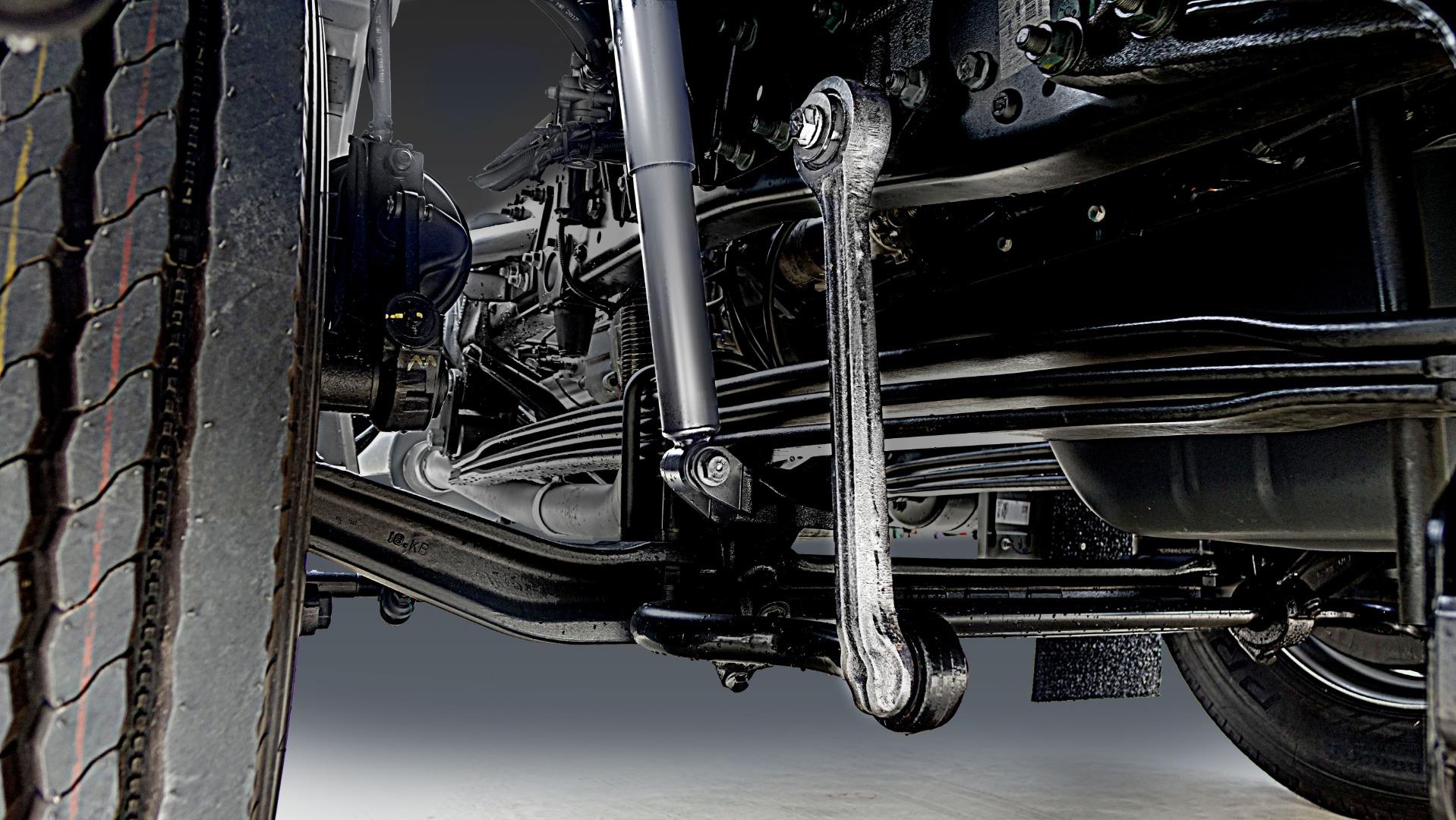
It has parabolic leaf springs upfront with shock absorbers and anti-roll bars/stabilizers. The rear system is multi-leaf, also with a stabilizer (and no shocks at the back).
The brake system is a fully pneumatic Wabco system, comprising drum brakes with automatic slack adjusters. The truck has an exhaust brake and an engine brake. There is an exhaust brake over-ride switch in the cab, which can be activated when going downhill. During my test drive, I found the brakes to be more than adequate.
The truck also has a diff lock (when it is activated, a loud buzzer sounds). The electric system is 24V (the accessory outlets in the cab are 12V). It has a single reduction hypoid drive axle with a 4.3 final drive ratio.

Conclusion
The FJ18-280S is priced from R871 500 (ex VAT), which includes a four-year/300 000-kilometre warranty. This reasonable value for money, the tough-as-nails drivetrain, Fuso’s reputation for low operating costs and the backup of Daimler’s dealer network mean that this is a truck that is certainly worth considering should you need to add a truck to your fleet.
Recommended next:
Readymix Concrete extends its relationship with Fuso
Fuso FJ 16-230 the truck of choice for medium to heavy applications in Southern Africa