
Ford Transit (2006-2013) used van guide
The word ‘Transit’ is embedded in British folklore. It’s been a mainstay for so many years that it's the industry staple.


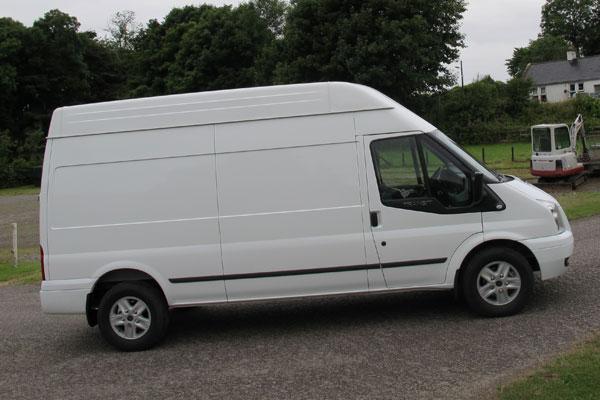

THE word ‘Transit’ is embedded in British folklore. It’s also a description. When describing rival products many van drivers say it is ‘Transit-sized’ or ‘bigger or smaller than a Transit’. First introduced in 1965, the Ford Transit was a commercial revelation then, and it has continued to set trends ever since. And with the launch of the brand new Transit next week, the icon is all set to enter a new chapter in its history.
That means the used market is due for a shakeup. If potential purchasers take to the new ‘global-van’ design, then they’ll be keen to replace their current Transits with the new one.
On the basis of its popularity, the current Transit represents one of the best used prospects in the market place. There is no price premium for exclusivity, but that also means buyers have to be careful because there is such a wide choice out there, from the good, to the bad and the ugly.
In fact the biggest advantage of running a used Transit is the sheer number. Dealers are plentiful and pretty well established, replacement parts are competitively priced and because of the numbers involved, there is a good source of non-branded quality spare parts and consumables, such as brake pads and clutches, built by other reputable firms. And if running on a really tight budget, there is a good choice of used parts and panels from the nation’s ‘vehicle recycling centres’.
The current Transit is still the only large van which offers buyers the option of front wheel drive or rear wheel drive. The most popular choice is FWD, which is better in snow or slippery conditions, but if there is a need to tow trailers, then RWD is the more common preference.
Ford dispensed with their 2.4 litre engine in 2009 so the current model Transits all have different powered versions of the Ford 2.2 litre Duratorq unit with outputs ranging from 84bhp 180lb/ft torque to 153bhp/284lb/ft and six speed gearboxes.
Since the introduction of the Ford Transit Custom a year ago, Ford have separated their 1 tonne vans from the new 2 tonne range which will be launched in Europe next week. The current ‘proper’ Transit models (i.e. not the Custom and Connect) span all working weights so check the VIN plate inside the driver’s door pillar to make sure of what’s on offer.
With current Transits offering a choice of short, medium, long and extra long wheelbase versions, and three roof heights of standard, medium and high roof options, plus front or rear wheel drive there is a van to suit all trades and all needs.
However, the new van is designed to replace the bigger Transits so if you’re in the market for a used large van, Transit has lots to offer.
Many operators bemoaned the passing of the 2.4 litre engine, but the need to reduce emissions and improve fuel efficiency has led Ford to standardise on their current generation 2.2 litre, 4 cylinder Duratorq TDCi units (designed at Dunton in Essex and built at Dagenham) with a variety of power outputs.
Apart from the exLWB van, the biggest van in the range is the Hi-roof, LWB, 155 T350 with a payload of around 1.5 tonnes depending on spec.
This is an excellent van for drivers and users. The cabin is a bit claustrophobic on first acquaintance but there is plenty of shoulder room and headroom is adequate. The seats are excellent, offering slightly more cushioning than some of it’s teutonic rivals, and if you choose the ‘Trend’ top of the range version it has in-cab equipment to rival any luxury car.
Ford was first to introduce electrically heated windscreens as a standard fitment on vans. This is ideal for frosty mornings and keeping windscreens clear in wet weather, while a heated front seat is a welcome driver’s option.
The cab is well equipped with 1 litre bottle holsters at each end of the dash plus top mounted cupholders and large door pockets. The ‘glovebox’ is big enough for A4 documents but the real bonus is the flip down ‘tray’ on top of the dashboard. Ideal for placing cups when sitting three-up in a lay-by during lunch break.
The loadbox is renowned for its large doors and square shoulders allowing users to make full use of the near 10 cubic metre loadpsace. However there is one point to bear in mind, the rear wheel drive vans have a higher loadfloor than the front wheel drive versions to accommodate a propshaft and rear axle with differential. Whilst that’s perfectly acceptable for loading purposes, elderly drivers would appreciate handrails at the rear and side doors to help climb in and out!
It’s also one of the best ‘drivers’ on the road, although newcomers should be aware that a ‘soft’ brake pedal is normal on these vehicles. It’s just a quirk that regular users won’t be aware of until they climb into a rival marque. The gearshift is excellent and the steering s light and accurate even on the bigger models.
With regular servicing, Transits are easily good for 100,000 miles, and much more if well looked after. So when the all-new Transit comes along in the Spring, keep an eye out for good deals on used Transits in Van Trader.
By John Fife
Find a used Transit in our classifieds
Ford Transit 155 T350 Trend, LWB, Hi-Roof
Engine: 2.2 litre TDCI
Power: 153 bhp/385 Nm
Transmission: RWD with 6 spd gearbox
Load length: 3399 mm
Payload: 1595 kg
Price New: £28,070 (excl VAT)
Trend Pack: £750 (excl VAT)